
Speaker Ryan Fecteau urges LD 2122 to shield Maine SNAP recipients from federal cuts
Get AI-powered insights, summaries, and transcripts
Subscribe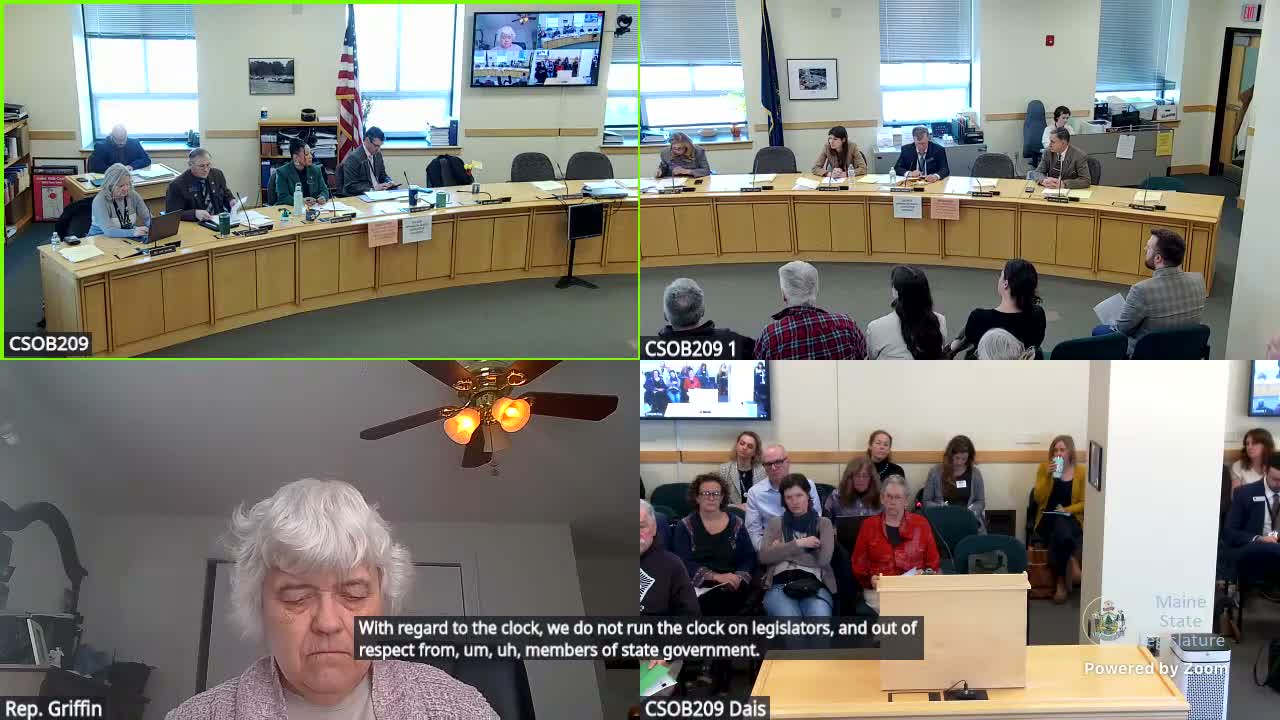
Summary
Speaker Ryan Fecteau told the Health and Human Services Committee that LD 2122 would reduce SNAP payment errors, fund community outreach, and create a contingency fund to keep benefits flowing if federal payments are interrupted. Dozens of food‑security and health advocates testified in support, citing threats from HR 1 and recent benefit disruptions.
Speaker Ryan Fecteau presented LD 2122 to the Joint Standing Committee on Health and Human Services, saying the measure is designed to blunt federal changes to SNAP and shore up state systems that connect Mainers to benefits. "These changes are going to hurt hardworking Maine families," Fecteau said, arguing the bill would reduce the state’s SNAP error rate, support outreach partners with a state matching grant, and establish a non‑lapsing contingency fund to pay benefits during federal interruptions.
The bill’s sponsor told the committee that HR 1 and related federal actions impose new work‑reporting rules and shift administrative costs to states, and that Maine faces a deadline to lower its error rate before October 1, 2027. He said that failing to meet the error‑rate target could expose Maine to roughly $54,000,000 in state liability under current program rules and that three months of SNAP benefits would cost about $82,000,000.
Why it matters: Testimony from food‑security organizations, health providers and county advocates emphasized that SNAP is a lifeline for low‑income households, older adults and people with disabilities. Supporters said outreach contractors — local organizations that help people apply, renew, and report work hours — are fragile and face a federal funding cut that would reduce their match from 50% federal support to 25%. ‘‘Outreach partners are increasingly an essential part of Maine’s SNAP program,’’ said Anna Corson of Full Plate’s Full Potential. Multiple witnesses asked the Legislature to protect trusted community partners who help recipients navigate new reporting requirements.
What supporters told the committee: Sam Zuckerman of the Permanent Commission on the Status of Racial, Indigenous, and Tribal Populations testified the bill would close gaps where food insecurity disproportionately affects communities of color. Alex Carter of Maine Equal Justice said LD 2122 seeks continuity and modernization in order to protect the 163,000 Mainers who currently rely on SNAP. Amy Stacy of Good Shepherd Food Bank and leaders of local food councils and hunger‑relief groups described spikes in demand and the operational strain their networks experienced when federal SNAP disbursements were threatened last fall.
Service and program details: The bill would direct the Department of Health and Human Services to implement systems to lower payment errors and to stand up a state match grant so community partners can retain outreach coordinators. Supporters said outreach helps residents understand letters from OFI (Office for Family Independence), complete renewals, and report work hours that are newly required under federal changes. LD 2122 also proposes a contingency fund administered by DHHS to finance benefits if federal support is disrupted.
Questions and clarifications: Committee members asked witnesses to document data sources and projections cited during testimony — for example, claims about the number of households that could lose benefits over a multi‑year horizon. Witnesses agreed to provide the committee with dashboards and source citations used to generate district‑ and county‑level estimates.
Next steps: The committee closed the public hearing on LD 2122 and will consider additional materials during the scheduled work session. No vote was taken during the hearing; the committee asked for written follow‑up on funding and error‑rate modeling.