Get Full Government Meeting Transcripts, Videos, & Alerts Forever!
Get email alerts on the Sports Tourism topic
No spam. Unsubscribe anytime.
Private bid for nine‑field baseball complex prompts fast‑track talks and Midtown planning in College Station
Summary
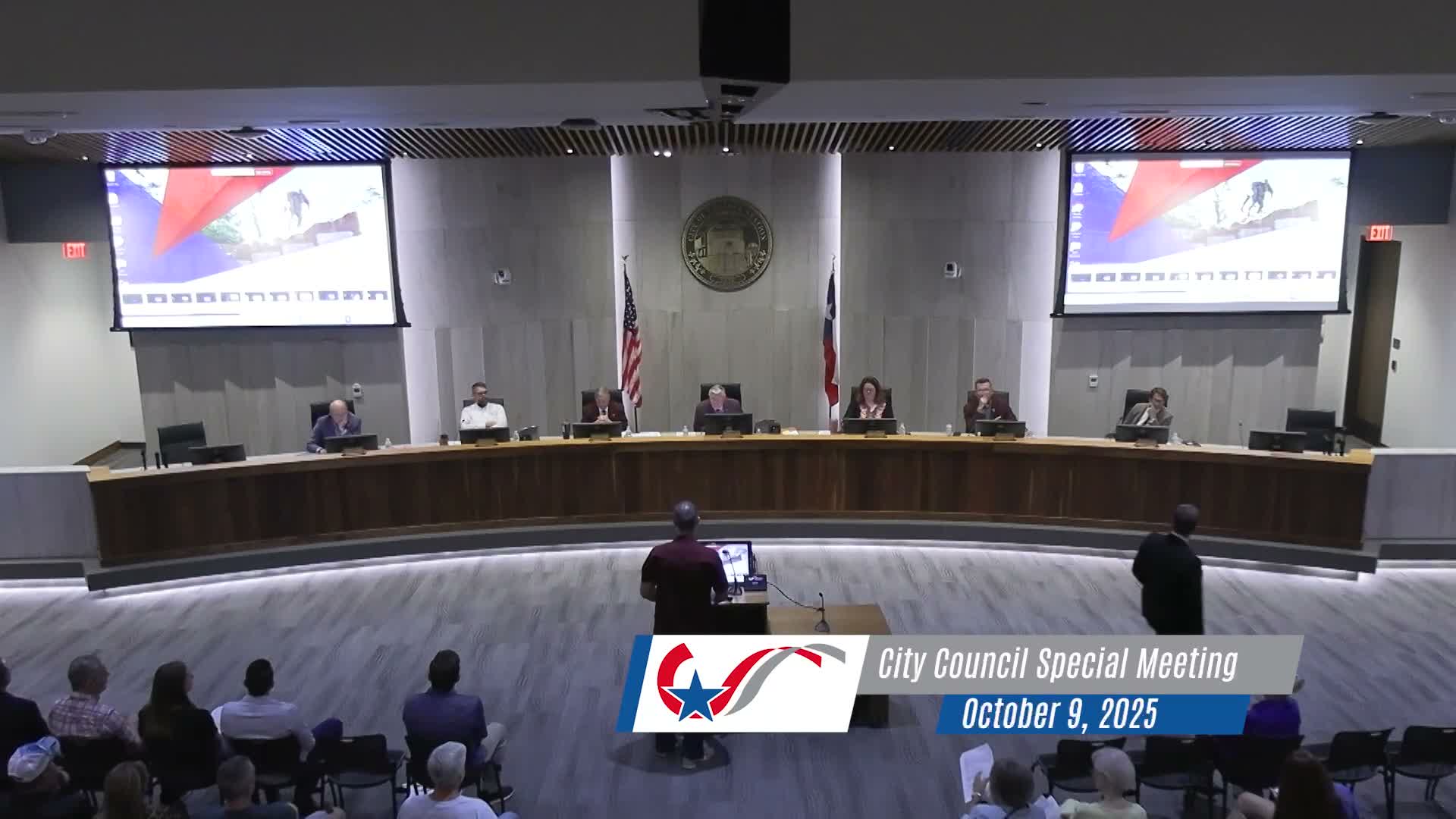
A private proposal for an 80‑acre, 9‑field tournament complex in Midtown drew broad council and public discussion at the Oct. 9 City Council workshop. Proponents say it could drive sports tourism; council asked staff to pursue due diligence and community charrettes and to return with a decision point within about 30 days.
Thomas Rogers, the managing partner of ABA Services speaking for Southern Roots, presented an 80‑acre plan on Oct. 9 to build nine all‑turf baseball fields, on‑site lodging, training facilities and hospitality amenities in the Midtown Business Park. The developer said the full project would cost roughly $55–$60 million and asked the city to consider providing land and $15–$20 million in phased capital participation to make the project bankable.
The proposal immediately drew questions from council and residents about timing, public benefit and whether the city should shift its existing plan to complete a city‑run three‑field Veterans Park project. "We want to make it so they are correlated," Rogers said of potential coordination between city plans and the private complex, and added that weekday access for local youth leagues would be free.
Council members pressed the Southern Roots team for details on phasing, infrastructure costs and who would operate and maintain the fields. Chief Development Officer Michael Ostrovsky told the council the city has about $2.8 million available in Midtown‑focused tax‑increment funds that could be considered for catalytic projects, but cautioned that utilities and roadwork would likely be required as part of any large development. Council members also compared the Southern Roots request with the city‑controlled Veterans Park project, which staff said has greater schedule certainty and is on track for a 2027 opening unless council redirects the investment.
Public commenters from Midtown and surrounding neighborhoods largely welcomed more fields but urged firm community protections: preservation of trails and parkland, guarantees for weekday local access, and clear limits on nighttime light and noise. James Murr, the Midtown developer, stressed the need to preserve the project’s original value to nearby residents and asked that any use of Midtown tax‑increment funds not be taken from amenities the district expects.
After extended discussion, council asked staff to convene an abbreviated Midtown land‑plan charrette and to pursue targeted due diligence and negotiation points with the Southern Roots team. Several members said they wanted a clear "go/no‑go" recommendation within roughly 30 days so the council could decide whether to fold a large privately run complex into Midtown plans or continue with the Veterans Park course already in motion. Staff agreed to coordinate community engagement and to brief the council on potential deal terms and scheduling constraints.
If the council moves forward with a public‑private deal, staff said it would return with concrete terms for how city land, capital participation, community protections and operating commitments would be structured. If not, planners will continue the Midtown small‑area planning process without the baseball complex as a design assumption. The charrette and focused outreach are intended to capture resident priorities and the tradeoffs between commercial, park and sports‑tourism outcomes.