
Witnesses urge seller‑identity checks to block deed fraud; industry groups urge more study
Get AI-powered insights, summaries, and transcripts
Subscribe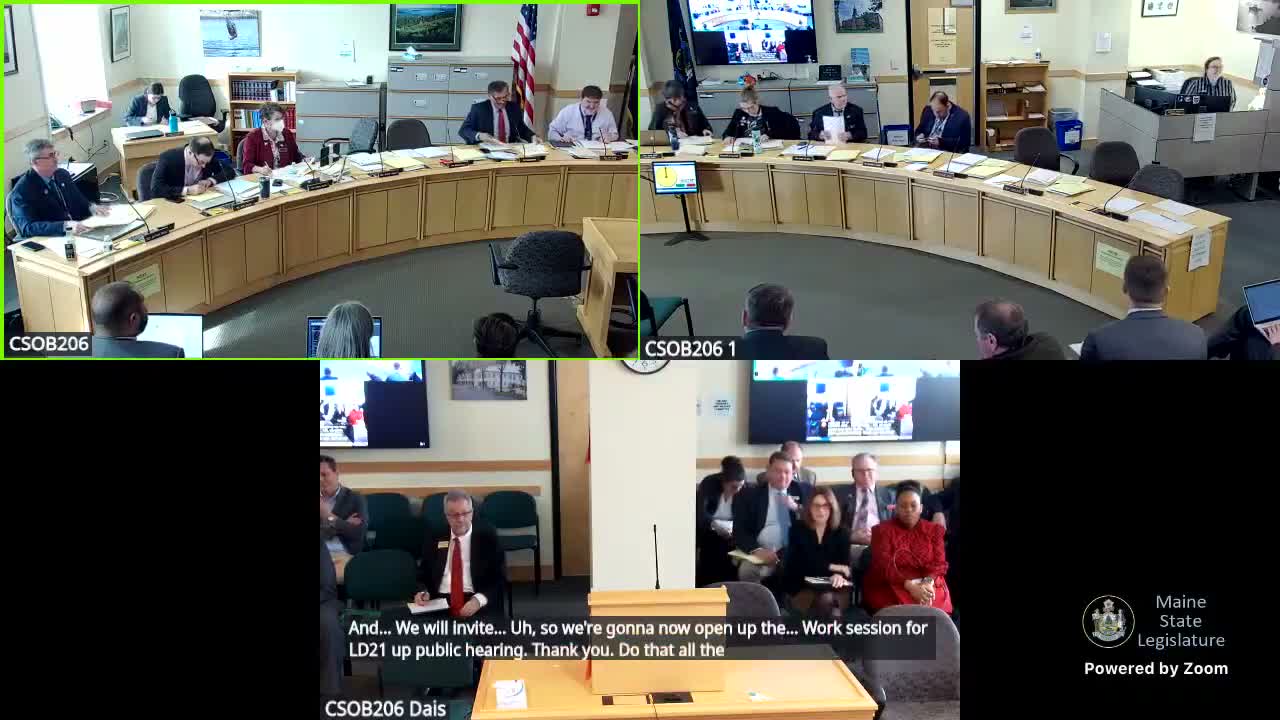
Summary
A broad set of witnesses—legal aid groups, credit unions and AARP—testified for LD 21 82 to require seller identity verification in certain real‑estate transactions to deter deed fraud targeting older Mainers. Title insurers and industry groups urged additional work, coordinated rulemaking and industry input.
The Joint Standing Committee on Housing and Economic Development heard hours of public testimony on LD 21 82, a bill prompted by a commission report that would require verification of sellers’ identity in specified real‑estate transactions.
John Bridal, executive director of Legal Services for Maine Elders, said the commission’s work showed deed fraud need not be solved perfectly to be deterred: “What we need is friction,” he said, arguing that identity checks would make Maine a harder target for fraudsters. Jared Gay of the Maine Credit Union League and Riley Worth of AARP Maine said verification would prevent many fraudulent transfers from reaching registries and would protect homeowners—particularly older adults who often own unencumbered property.
Industry witnesses urged caution. Robin Watts of First American Title Insurance Company said the recommendation from the deed‑fraud commission was not unanimous and warned that rigid, technology‑prescriptive rules could become quickly outdated. She recommended an advisory group with title insurers, settlement agents, brokers and regulators and noted a Uniform Law Commission effort to develop coordinated national standards.
Representatives of the real‑estate industry and regulatory officials asked the committee to ensure rulemaking does not prescribe specific technologies, to address which regulatory body adopts rules for settlement agents and brokers, and to clarify enforcement, liability and good‑faith protections for practitioners conducting verifications. Deputy director Christina Lunner (OPOR) noted the bill’s effective date language and offered suggested statutory adjustments to cover all transaction types if that were the committee’s intent.
The committee heard multiple examples of how deed fraud operates, including a remote‑notary and online‑listing pathway cited by witnesses, and a first‑person account from a Maine property owner who found her rural parcel offered for sale on multiple social platforms. Several members asked staff to gather additional technical information—on notary practices, the scope of transactions covered (sale vs. mortgage), and the Uniform Law Commission timeline—before a work session.
Next steps: Committee members requested additional material for the work session, including sample rule language, clarity on the intended enforcement body, options for good‑faith protections for professionals, and information about the Uniform Law Commission’s progress.