Get AI Briefings, Transcripts & Alerts on Local & National Government Meetings — Forever.
Florida House approves bill limiting products‑liability claims tied to optional firearm safety features
Summary
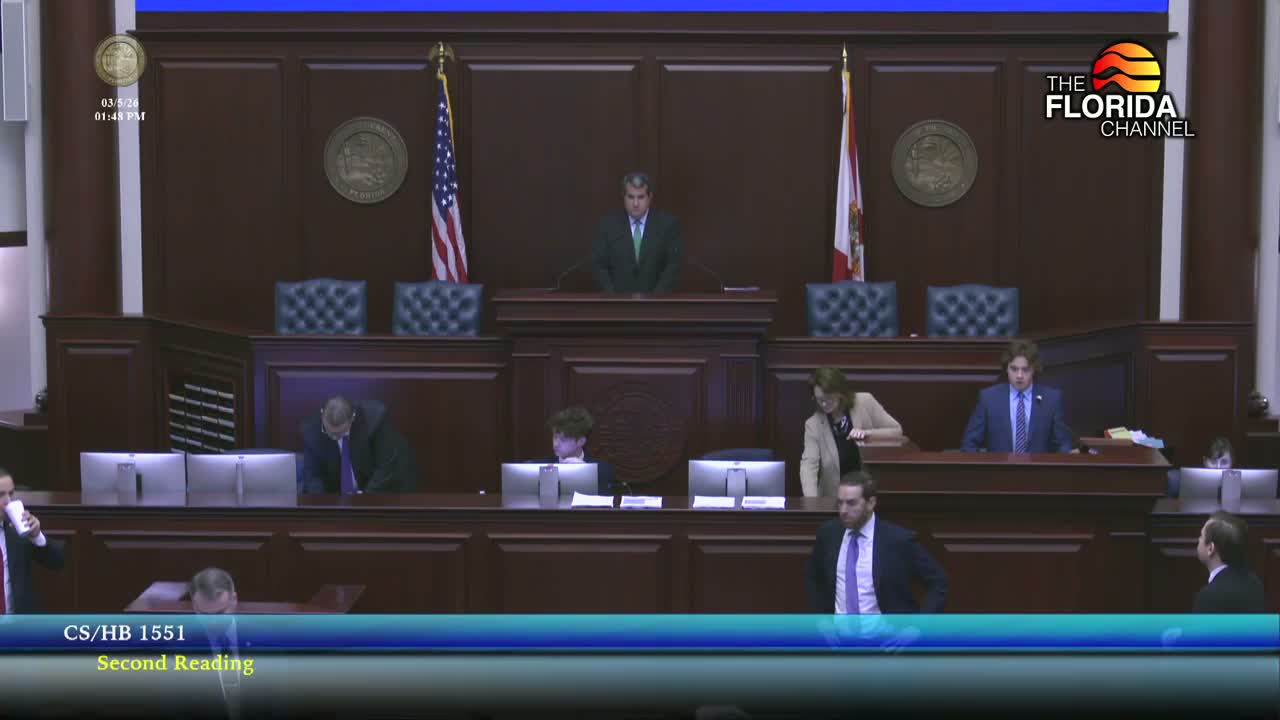
CS/HB 1551 passed the House after heated debate and failed amendments; the bill prevents the absence or presence of optional external safety features not required by federal law from being used as the basis for certain product‑liability claims. Final vote: 75‑29.
CS for HB 1551, introduced on the floor by Representative Wyman Duggan, narrows the legal theories plaintiffs may use to pursue products‑liability suits against firearm manufacturers by excluding from per se defect theories the mere presence or absence of optional external safety features not required by federal law.
“Members, this bill provides that the presence or absence of any design feature, functionality, safety mechanism, or performance standard that is not required by federal law does not provide the basis for a product's liability lawsuit,” Duggan said during his explanation. He and other proponents argued the measure stops litigation strategies that treat optional consumer‑chosen features as per se defects.
Opponents warned the bill could leave law enforcement officers and private gun owners without an effective civil remedy where optional safety features (for example, manual safeties, magazine disconnects or loaded‑chamber indicators) are absent and harm results. Representative Nixon offered amendments to replace absolute immunity with a rebuttable presumption and to preserve failure‑to‑warn and marketing claims; the House rejected those amendments. Representative Eskamani and others cited ongoing cases and alleged manufacturer awareness of risks in some models as a reason to preserve full judicial review.
Representative Bartleman and other speakers described multiple law‑enforcement injuries nationwide linked in testimony to alleged malfunctions; defenders of the bill said manufacturing‑defect claims and warranty claims remain viable under the text. Representative Duggan noted the bill preserves remedies for manufacturing defects and violations of warranty and emphasized that federal regulatory requirements remain outside the statute’s protections.
After structured debate and consideration of multiple amendments that failed on the floor, the clerk announced final passage by a vote of 75 yeas and 29 nays. Sponsors said the bill provides clarity for manufacturers and purchasers; opponents said it removes accountability in cases where design decisions—allegedly made for cost reasons—contributed to harm.
What’s next: The bill proceeds to the Senate. Court decisions and ongoing litigation may inform future changes if the Senate or subsequent sessions revisit product‑liability law for firearms.