
Riviera Beach leaders hear urgent appeals as projected water‑bill hikes worry residents
Get AI-powered insights, summaries, and transcripts
Subscribe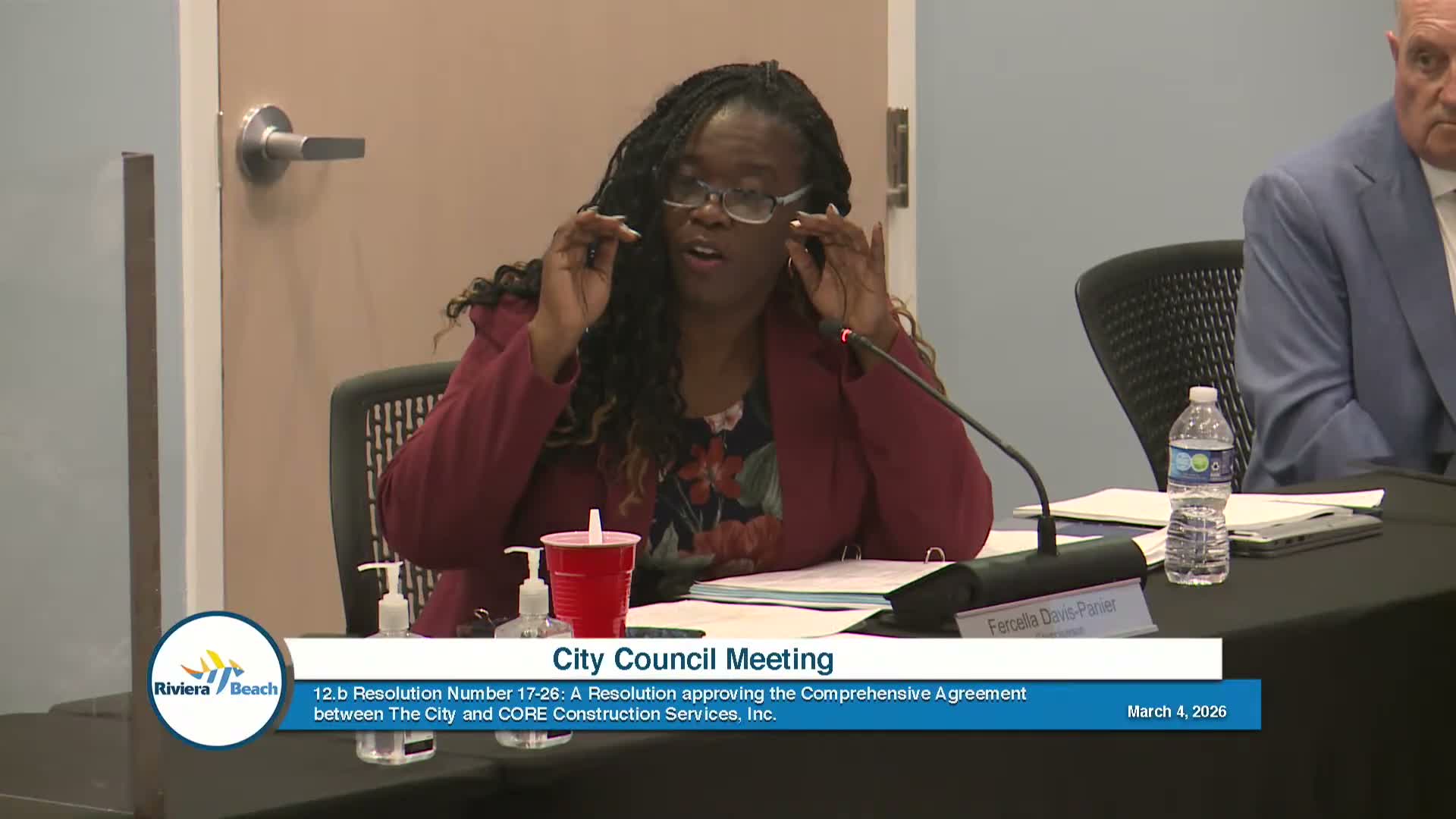
Summary
Council members and residents clashed over looming water‑and‑sewer rate increases the finance director said could reach about 28% next year and double over five years; council asked staff for workshops and grant‑seeking plans to limit impacts on low‑income households.
During the March 4 meeting, council members and residents pressed city staff for clarity and relief as officials described multi‑year increases tied to a new water treatment program.
Chief Financial Officer Randy Schirminger told the council staff had preliminarily estimated a water and sewer rate increase of roughly 28% effective Oct. 1, 2026, as part of a multi‑year plan that could more than double charges over five years. "I believe it's somewhere around 28% ... So, again, it's just the water and sewer component," Schirminger said during the RFP discussion and finance Q&A.
Councilmembers repeatedly asked whether consultants and financial advisors would pursue federal, state, and county grant opportunities to offset rate pressure. Councilmembers urged staff to hold an early workshop with the utility district to explore options "to buy down the rates" for low‑income customers and to publicize existing senior assistance and voucher programs for residents in need. Manager Jonathan Evans and staff confirmed the city offers a senior assistance program and that grant teams (including CDM Smith) are actively pursuing funding for the water plant.
In the public comment period dozens of residents testified about unaffordable bills and hardship, with one resident saying bills had risen by tens of dollars per month and another saying the increases were "catastrophic" for low‑income families. Council agreed to accelerate outreach and to consider mitigation strategies that could include expanding senior assistance, coordinating with county and state grant programs, and timing tap‑in charges carefully.
What’s next: staff will provide detailed rate projections, identify grant opportunities and the status of current utility capital charges, and convene a workshop to discuss mitigation measures for residents before the next budget cycle.