Khan Academy argues AI and training, not silver bullets, are the path to scaled classroom gains
Get AI-powered insights, summaries, and transcripts
SubscribeSummary
Sal Khan and Dr. Phil Masiko discussed Khan Academy's approach to AI tutoring, pilot outcomes, price points (~$15 per student/year), efficacy thresholds (about 18 hours/year) and cited a study showing a 0.44 effect size.
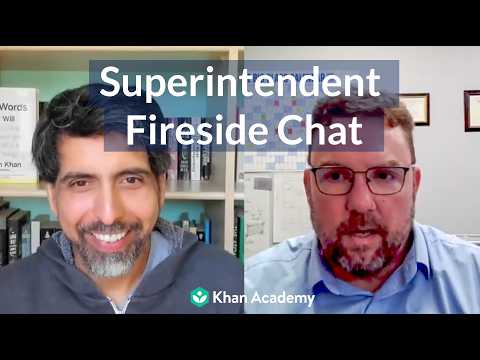
Sal Khan of Khan Academy and Dr. Phil Masiko discussed how AI-driven tools and careful district implementation can expand personalized practice without replacing teachers.
Khan said Khan Academy's core is adaptive practice exercises and that AI features (including Khan's Conmigo/KhanMigo tools) should be used to meet clear academic objectives rather than adopted as a technology novelty. "Our primary objective at Khan Academy is we wanna improve academic outcomes... That's number 1 goal," Khan said.
Khan described price and funding realities for districts, saying Khan Academy is a nonprofit whose R&D is philanthropy-funded and that support for districts is "on the order of of $15 per student per year." He said Khan Academy works with districts to find local philanthropy, corporate or state resources to offset costs.
Both speakers highlighted that teacher involvement is central: teachers must stay "in the loop" to monitor and intervene when tools alone are insufficient. Masiko described a classroom change where his district stopped assigning homework in math to prioritize in-class practice and said an AI tutor can help prevent students from practicing incorrect methods.
Khan cited research and implementation thresholds: he said districts that reach roughly 18 hours a year of student engagement and about 60 skills to proficiency see measurable gains, and he referenced a study in India showing an effect size of about 0.44 over seven months. He also pointed to district-scale results in Newark, New Jersey, where increased adoption coincided with higher state test scores.
Khan and Masiko also discussed pilot initiatives: a new GEMS Challenge piloted in Masiko's district, and Khan noted Schoolhouse.world is an official College Board partner for free live SAT tutoring staffed by high-performing students. Khan said these initiatives are in pilot or early rollout and that training and local leadership are essential to scale adoption.
The conversation emphasized practical implementation steps—identify teacher champions, run trainings (preferably in-person), celebrate early adopters and track teacher engagement—rather than forcing uniform adoption across every classroom.
The session did not announce formal contracts, procurements, or policy decisions; Khan invited interested districts to contact Khan Academy via the shared QR code and said a replay would be provided.