Harpers Ferry council votes 4–1 to have mayor send amended letter opposing West Virginia House Bill 5477
Get AI-powered insights, summaries, and transcripts
SubscribeSummary
After debate and a public correspondence condemning ICE practices, the Harpers Ferry council voted 4–1 to have the mayor send an amended letter to the West Virginia House Judiciary Committee opposing House Bill 5477, which members said would mandate local cooperation with ICE and could strip state grants and impose fines.
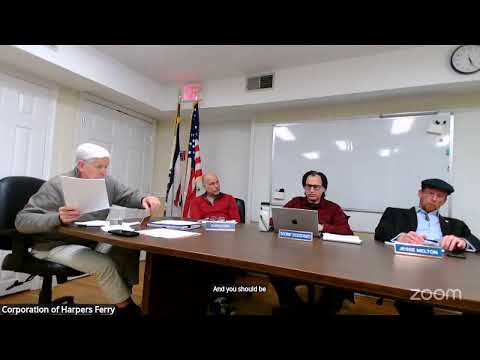
The Harpers Ferry Town Council voted 4–1 to authorize the mayor to send an amended letter opposing West Virginia House Bill 5477 to members of the House Judiciary Committee and to the bill’s sponsors.
Councilors discussed the measure after staff and members summarized how it differs from prior state law. Speaker(s) noted that an earlier statute (discussed as Hallmark/2008-era provisions) allowed municipalities to opt into cooperation; by contrast, HB 5477 (introduced Feb. 12 by Delegate Bill Ridenour) was described by speakers as requiring mandatory cooperation with U.S. Immigration and Customs Enforcement (ICE), potentially imposing fines and removing state grants from municipalities that do not comply.
Storm (speaker 1) read correspondence from Michael Rock, dated Feb. 27, urging the council to pass a resolution against the bill and criticizing ICE practices. Excerpts included accounts and citations intended to support the writer’s opposition to forced local collaboration with federal immigration enforcement.
Members debated strategy and risk. Some councilors urged immediate, factual outreach to committee members and emphasized the town’s reliance on tourism, warning a restrictive posture could harm visitors and local businesses. Others urged caution, saying an explicit public stance could expose vulnerable residents and that the town could make a visible, inclusive statement modeled on nearby municipalities instead of a confrontational declaration.
The mayor asked three members (Storm, Christian and Jesse) to finalize a short amended letter for the mayor’s signature and to send it promptly; members discussed the urgency because the bill was in committee and legislative deadlines (crossover) were imminent. A motion to send the amended letter (moved by a councilor in the meeting record and seconded by Chris) passed 4–1; the meeting record shows one dissenting vote.
The council’s action was to authorize the mayor to send the amended letter; there was no formal adoption of a resolution on the floor that evening. The council also discussed later drafting a broader, visible resolution similar to documents other towns had adopted.
What is next: the three‑person drafting group will produce the final text, the mayor indicated he would transmit the letter to the Judiciary Committee and the bill sponsors, and councilors indicated they could consider a separate resolution at a later meeting.