Get Full Government Meeting Transcripts, Videos, & Alerts Forever!
Get email alerts on the Administrative Hearings topic
No spam. Unsubscribe anytime.
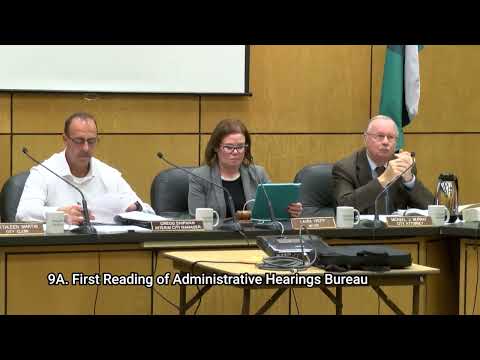
Mount Clemens advances first reading of ordinance creating administrative hearings bureau amid debate over civil fines
Summary
The commission approved the introduction and first reading of Ordinance 19.3 to establish an administrative hearings bureau that would shift certain blight and code enforcement violations from misdemeanor prosecution to civil fines; commissioners pressed staff on maximum fines, lien enforcement and a promised review schedule.
The Mount Clemens City Commission on first reading approved an ordinance to establish an administrative hearings bureau that would move many blight and code‑enforcement matters from criminal misdemeanor proceedings to civil penalties handled by an administrative hearing officer.
Administration presented the draft ordinance and the commission voted to introduce Ordinance 19.3 and set a second reading for Dec. 5. The ordinance, as presented, would allow a hearing officer to impose civil fines, create a process for defaulting recipients who fail to appear and permit collection mechanisms including liens on property.
Why it matters: Proponents said an administrative system would streamline enforcement and reduce criminal processing, while critics warned it could reduce criminal penalties and raise questions about collection and fairness. The ordinance references state statutory authority, which staff cited in explaining the maximum penalty language.
During discussion a commissioner asked why the city would convert some violations from criminal to civil enforcement rather than retaining misdemeanor penalties. A staff member replied, “That’s because the commission has been presented with the proposal that an administrative hearings is a more effective way of dealing with the problem,” and pointed to other municipalities that have used similar systems.
On maximum penalties, a commissioner noted language in the draft that permits fines up to $10,000 in the aggregate and an additional $10 justice‑system assessment. A staff member said the draft follows the underlying statute and explained: “The statute … provides that the maximum fine could be $10,000. Now I can’t fathom a fine of $10,000 being imposed for a blight violation. But the statute allows that so that’s why it’s in this ordinance.”
Commissioners also asked how the city would collect unpaid civil fines. Staff said unpaid amounts could become liens on property and that, when properties are sold, the lien could be paid at closing; staff cautioned foreclosure or tax foreclosures could complicate collection.
Several commissioners requested operational oversight if the bureau is implemented. One commissioner asked for a six‑month review after the bureau began operation and a one‑year full review to assess cost effectiveness and whether the new process delivered the expected enforcement outcomes.
What’s next: The commission approved the ordinance’s introduction and scheduled a second reading and adoption vote for Dec. 5. Staff said the ordinance would take effect 120 days after publication, allowing time to amend related ordinances, conduct public education, and hire or contract for a hearings officer and supporting staff.