Texas Supreme Court hears argument over beach‑closure law tied to rocket launches
Loading...
Summary
The Supreme Court of Texas heard consolidated argument on whether a law (referred to in argument as "House bill 26 23") that enables beach closures for spaceflight activity is a permissible exercise of the state's police power or an unconstitutional restriction of the public's easement under Article I, Section 33 of the Texas Constitution. Petitioners and the state defended the statute; respondents said it effectively grants private actors (SpaceX) exclusive use of public beaches.
The Supreme Court of Texas convened a special oral‑argument session at the University of Texas to hear consolidated challenges to what counsel and justices referred to during argument as "House bill 26 23," a statute authorizing closures of public beaches for spaceflight or related operations.
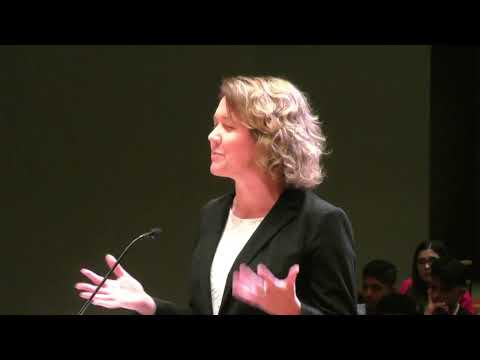
Chief Justice Jimmy Blacklock opened the session and listed the consolidated dockets before the court. Petitioners' counsel, Ms. Klusman, told the court the Open Beaches Amendment in Article I, Section 33 creates a public easement but that all property rights remain subject to the valid exercise of the state's police power. "We are talking about a . . . a property right," Klusman said, arguing the statute falls within police‑power limits and that the court should reverse the court of appeals and uphold the law as constitutional.
Several justices pressed petitioners about the scope of relief sought and whether standing and private‑right questions had been abandoned in part. Petitioners confirmed they had not pressed a standing argument and did not adopt the state's private‑enforcement argument, reserving that portion to Mr. Allison.
Cameron County's counsel, Mr. Allison, argued the amendment's unique subsection d (read in argument as "does not create a private right of enforcement") should be read to reserve enforcement authority to public entities rather than create private causes of action. "There remains the public enforcement," Allison said, listing examples (criminal law, writs of quo warranto) where public officers, not private individuals, bring enforcement actions.
Respondent counsel, Miss Morales, argued the statute, as applied at Boca Chica, operates at the request of SpaceX to permit it to "take possession of the beach, exclude the public from it [and] use it as its blast zone for its space flight activities." Morales urged the court that the law "creates those very events" and cannot be justified as a routine public‑safety exercise because the statute enables private launches that require exclusion of the public.
The bench and counsel debated familiar doctrinal lines. Justices asked whether the Open Beaches Amendment creates a single statewide easement or multiple parcel‑level easements and whether recognized police‑power closures (hurricanes, oil spills, limited permits for gatherings) are materially different from closures to accommodate launches. Counsel on both sides invoked the court's police‑power framework from Robinson and noted the inquiry can be fact‑specific.
Several justices tested doctrinal limits with hypotheticals — 365‑day closures, overnight closures, fireworks on July 4, signage warning the public — pressing whether the amendment's characterization as an "unrestricted" right precludes the state from authorizing certain closures and how to reconcile that text with established police‑power doctrines. Respondent counsel repeatedly distinguished closures justified by natural disasters or imminent danger from closures that the statute allows because they facilitate private hazardous activity.
Petitioners returned for rebuttal, reiterating that under the pleaded facts and applicable precedent the statute is a lawful exercise of the police power. The court recessed for a short break before the scheduled second argument in State of Texas v. City of McAllen.
The arguments focused on legal interpretation and remedial questions; the court did not announce any decision or vote during the sitting. The court indicated some issues may require further factual development for an "as‑applied" determination while holding open the possibility of deciding facial validity where appropriate.