Get Full Government Meeting Transcripts, Videos, & Alerts Forever!
Get email alerts on the Budget topic
No spam. Unsubscribe anytime.
Sumner County superintendent previews 2025-26 budget with pay raises, new behavioral supports and Aviation Academy plan
Summary
Sumner County Schools’ director of schools framed the 2025-26 draft budget around expanded student supports, a push to $50,500 starting teacher pay, investments in career/CTE programming including an Aviation Academy, and new behavioral staff; the board asked for clarifying vacancy and cost figures.
Sumner County Schools’ director of schools delivered an extensive presentation on the draft 2025-26 general purpose budget on May 13, telling the board the plan centers on staffing, safety and career-technical expansion while leaving formal votes for later. The draft shows roughly $356.7 million in total revenue, including about $216 million from TSA and other revenue and $140 million from the county, with staff reporting a net county increase of about $6 million and an unexpected local-contribution reduction of nearly $1 million that they said they will investigate.
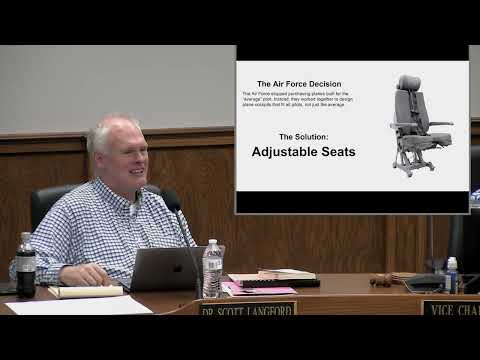
The superintendent said the budget is intended to move the district from “average”-oriented designs toward more flexible, student-centered systems — an approach he likened to the Air Force’s midcentury cockpit redesign. “If it doesn’t make it into this book, then we don’t really believe it,” he said, arguing the budget should fund programs the district intends to sustain.
Key investments outlined in the presentation include a raise in starting teacher pay to $50,500, an across-the-scale pay-norming effort and a two-step raise for classified staff. The district quantified compensation increases as roughly $13.8 million in the 2026 budget year and said combined pay increases across 2025–26 total about $42.7 million.
The proposal would add multiple school- and district-level positions intended to reduce instructional disruptions and support student health: five assistant principals (with priority for large elementary sites), three additional athletic trainers, school psychologists and counselors, and behavior-focused hires including additional board-certified behavior analysts (BCBAs), behavior interventionists and a director of behavioral support positioned in instruction to coordinate across special education, instruction and school teams. Staff said those behavioral positions are meant to reduce classroom clearings and lost instructional time by giving teachers a team-based pathway for early intervention and individualized plans.
The budget also allocates money for high-quality curriculum materials (ELA, math, science), a continued iPad/technology rollout (the district said it purchased 1,540 MacBook Airs), safety equipment such as AED replacements (about $100,000 budgeted for AEDs), and expanded employee health services (online physical therapy and additional diagnostics).
District leaders highlighted career-technical education (CTE) growth and community partnerships, announcing a Carolyn Smith Sumner County Innovation Center made possible by a family trust (leased to the district at an indicated deep discount) and an Aviation Academy planned to begin in 2026. The Aviation Academy would be open to all district high-school students and include four dual-enrollment credits at Middle Tennessee State University over two years, staff said.
Board members asked staff for precise vacancy counts and cost detail on new director roles; staff and the superintendent said they will provide exact figures after the study session. One summary cost provided for the new school-and-student-support additions was about $5.6 million (including benefits), and staff said that figure includes some positions that shift from federal grant budgets into the local budget.
The superintendent also outlined an internal reorganization: he said he would begin using the title “superintendent” (legally still director of schools), create four chief-level roles (chief academic officer, chief of staff, chief talent and chief financial strategy), promote some current directors to executive directors and address pay compression across leadership positions.
Board members and staff agreed to follow up with requested details and vacancy numbers; no budget votes were taken at the study session. The board recessed briefly and then continued with other agenda items.