Get Full Government Meeting Transcripts, Videos, & Alerts Forever!
Get email alerts on the Playgrounds topic
No spam. Unsubscribe anytime.
Sumner County school board earmarks $250,000 for inclusive playground upgrades after months of public plea
Summary
After hours of public comment from parents and educators urging full accessibility, the Sumner County School Board designated $250,000 in the 2025–26 capital budget to begin inclusive-playground upgrades and ordered a working group and faster planning timeline to prioritize sites and procure accessible surfacing and pathways.
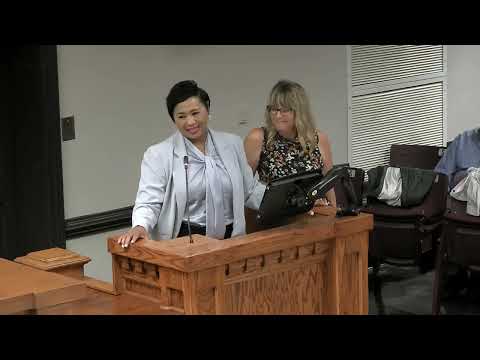
Parents and educators pressed the Sumner County School Board on inclusive playgrounds during public comment at the board’s May 2025 meeting, and the board responded by allocating $250,000 from next year’s capital budget to begin upgrades.
The most sustained testimony came from families of students with mobility and sensory needs. “Playgrounds need to be inclusive, not just ADA-compliant,” said Laurel Galan, a parent who told the board she had been told schools could ‘‘technically’’ accommodate her child but lacked staff and funds. Kevin Corden, another parent, laid out specific design priorities — ramps, smooth surfacing, ground-level features and sensory equipment — and urged the board to assess barriers at every elementary site and involve families in planning.
Dr. Langford, director of schools, presented the district’s site-by-site assessment and immediate priorities: ensure accessible pathways to existing equipment, install adaptive swings already ordered for some schools, pilot a lower-cost surfacing at Gallatin Early Learning Center and accelerate grant writing. “We can do some of this immediately — clearing mulch from pathways or ordering equipment — and study larger surfacing projects for capital funding,” Dr. Langford said.
Board members debated the scale and funding source of playground upgrades as part of a larger budget discussion. Mr. King proposed a $1.5 million allocation to tackle multiple schools; other trustees urged a more deliberate procurement and planning process including site visits, vendor bids and input from occupational/physical therapists. Ultimately the board amended that proposal and approved an allocation of $250,000 from the 2025–26 capital budget to be used specifically for inclusive playground equipment and surfacing. The motion passed on a roll call with Mr. King voting no; the remaining board members voted yes.
The board also directed staff to form a working group — including family and therapist input — to return with prioritized sites, procurement plans and grant-eligibility analysis. Dr. Langford said staff will accelerate a timeline so that recommendations and a procurement plan can be presented in the summer and prioritized by the September calendar.
What happens next: the $250,000 will be added to the capital line for playground improvements; staff will follow district purchasing rules (RFP/bid as required), consult therapeutic specialists and the Special Education Collaborative, and seek matching grants and community partners to stretch the dollars for phased upgrades across schools. If larger revenue streams materialize (state-designated funds tied to gambling revenue or targeted grants), the board indicated it would consider larger, multi-year allocations.