Senate concurs with House on K–12 finance recalibration after technical, budget clarifications
Loading...
Summary
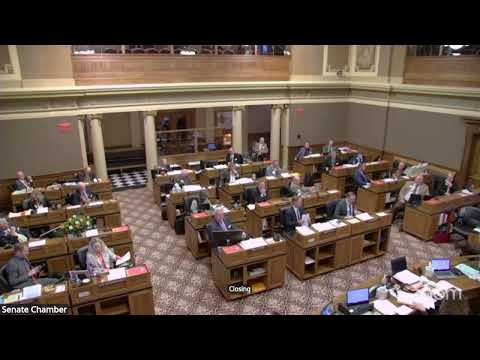
The Wyoming Senate on March 5 concurred with House changes to a K—612 public school finance recalibration bill after extended floor discussion about teacher pay calculations, FTE and health-insurance treatment and a $500,000 committee appropriation removal.
The Wyoming Senate on March 5 voted to concur with the House on Senate File 81, a recalibration of the K—612 public school finance model that senators described as largely technical but significant for how districts and the state treat certain calculations.
Senators who worked on the recalibration said the changes preserve the Senate's positions in most respects while adjusting several technical elements. On the floor, sponsors and committee members described edits that (1) remove a $500,000 appropriation tied to the recalibration committee, (2) alter how full-time-equivalent employees (FTEs) are calculated for employee group insurance eligibility and (3) consolidate appropriations to reduce susceptibility to line-item veto.
Sponsor remarks emphasized implementation fixes: language changing the health-insurance eligibility reference from an October 1 date to a monthly basis to align benefit calculations with monthly coverage, clarification of how FTEs would be counted for insurance eligibility, and preserving the core recalibration funding and mechanics. Senators also noted an earlier proposal to cap superintendent salaries at 233% was eliminated in committee action and then handled in subsequent amendments.
Senator Rothfuss, presenting the concurrence request, said the net fiscal effect of the House changes was a $500,000 reduction to the state budget tied to the recalibration committee appropriation. "The net effect from a financial standpoint to the state is just a reduction in total budget of $500,000," the senator said on the floor.
Supporters including recalibration committee members urged concurrence on the grounds that the bill fulfills the constitutional duty to adequately fund education and that the changes were minor or technical. Opponents raised concerns about particular impacts on smaller, consolidated or remote districts and asked for monitoring in the following year; one senator said she would bring further amendments if the model caused harm to small communities.
The Senate recorded a roll-call concurrence vote of 31 aye; the motion to concur passed and the bill proceeds toward enrollment processing.
Why it matters: Recalibration changes how state K—612 funding is distributed and how specific elements such as salary targets, insurance eligibility and special appropriations are handled. Even technical fixes can change district budgets and eligibility for programs, especially in small or rural districts.
Next steps: With concurrence on the floor, the enrolled version of Senate File 81 will be finalized for transmittal to the governor. Senators asked staff to monitor implementation and indicated they would revisit particular district-level effects during the interim if necessary.