Get Full Government Meeting Transcripts, Videos, & Alerts Forever!
Get email alerts on the Property Rights topic
No spam. Unsubscribe anytime.
House approves prescriptive‑easements bill after clarifying amendment to block industrial upgrades
Summary
The House passed Senate File 99, which formalizes prescriptive easements for longstanding utility lines but, after floor amendments, clarifies that industrial or manufacturing increases in wattage are excluded. The bill passed 47‑14.
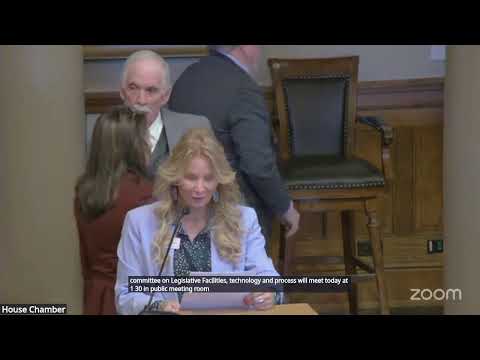
The Wyoming House approved Senate File 99 on March 5, 2026, clarifying how prescriptive easements for electricity delivery work and limiting the ability to use historic easements for industrial or manufacturing upgrades. The bill passed the House on a recorded vote of 47‑14.
Lawmakers debated whether two exception phrases in the bill could be read to permit a future developer or industrial user to supersize existing small residential lines and place larger towers in homeowners’ yards. Representative Bratton (speaker 11), who explained the bill’s intent, described two exceptions that had raised concern and then supported a clarifying amendment by Representative Geringer (speaker 19). Representative Pendergraft recounted a local case: “Think of the property evaluation through no fault of their own… and now all of a sudden, there’s a high power intensive line right between them and the mountain,” and asked who would decide what constituted a “reasonable expansion.”
Representative Geringer moved a technical amendment to replace ambiguous phrasing so the paragraph would read that such an exception “shall not include industrial and manufacturing related increases in wattage.” He said the change is “simply a technical correction to make sure… everybody is clear that this is not accepting the use of manufacturing and industrial uses.” Supporters argued the amendment preserved landowners’ rights while allowing necessary residential upgrades; opponents cautioned the language remains nuanced and some sought tighter drafting.
After debate the amendment was adopted and the House later approved Senate File 99 by roll call; the Speaker announced the bill had passed with 47 ayes and 14 noes. Supporters characterized the bill as formalizing longstanding handshake easements to give landowners notice when they buy property; several members urged careful statutory drafting to avoid unintended industrial expansion of those prescriptive rights.
The bill’s passage followed a prior withdrawn amendment and a floor exchange that stressed both private property protection and the need to document historic utility lines for safety and infrastructure updates. The House then moved on to subsequent business and a scheduled recess.