
Committee advances technical fix clarifying termination rights for gig‑economy contracts
Get AI-powered insights, summaries, and transcripts
Subscribe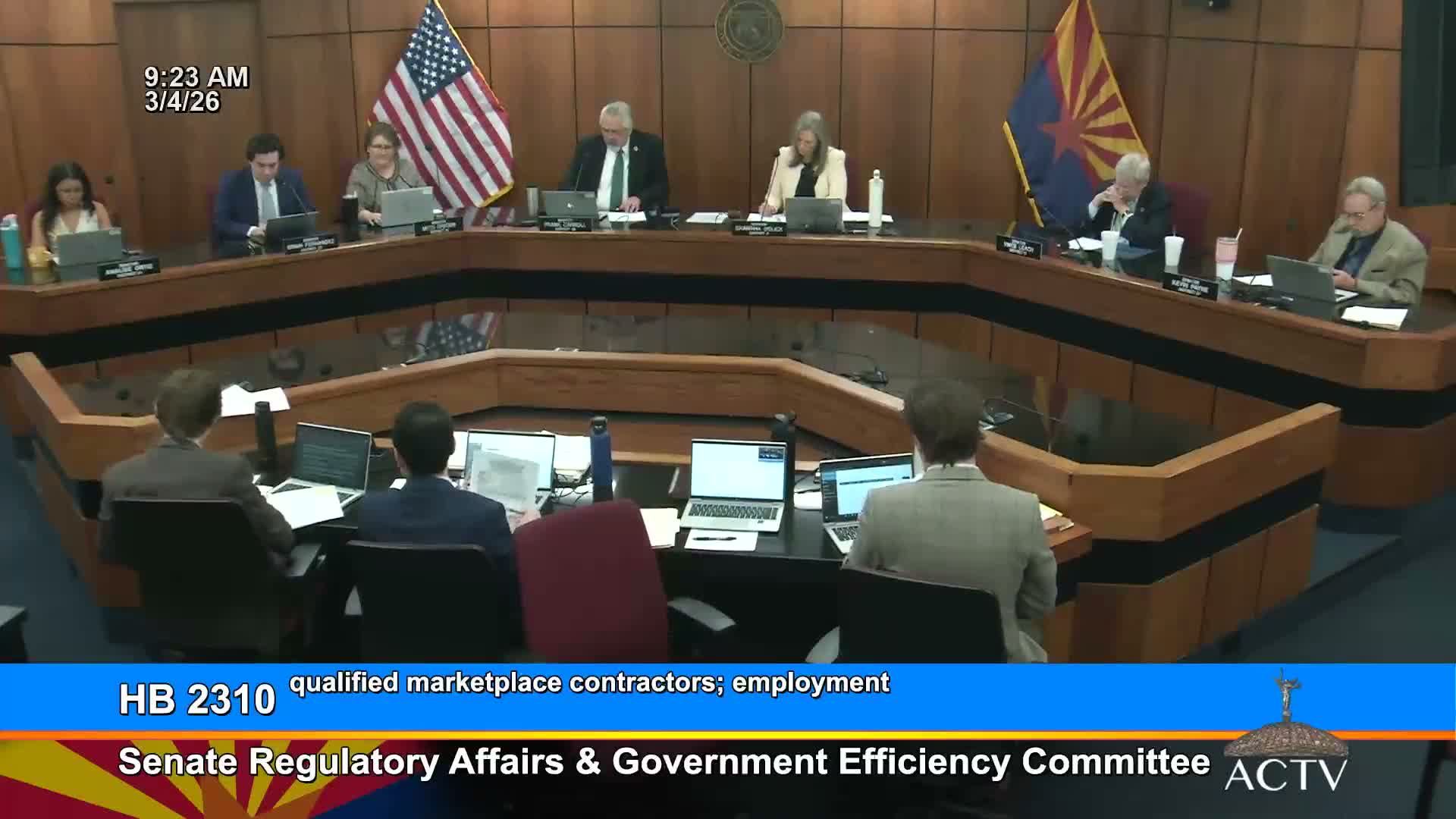
Summary
House Bill 23‑10 clarifies that qualified marketplace contractors and platforms may terminate contracts on reasonable notice and removes ambiguity that had led to litigation; the committee voted 7‑0 to advance the bill after industry testimony from Lyft.
House Bill 23‑10, described by proponents as a technical correction to Arizona's qualified marketplace contractor statute, received a unanimous do‑pass recommendation from the committee.
A presenter said the bill clarifies that contracts governing services by a qualified marketplace contractor can be terminated without cause on reasonable notice, and expressly recognizes a contractor's ability to unilaterally terminate under contract terms. Supporters characterized the change as removing legal ambiguity that can lead to unnecessary litigation.
Francis Avalos, senior public policy manager at Lyft, testified that the bill is a "straightforward technical fix" intended to protect drivers' independence and remove ambiguity in litigation over termination language. Avalos said the amendment preserves independent‑contractor framework and is narrowly limited to digital platforms defined in statute.
Some senators pressed whether the drafting is balanced and whether it clearly preserves termination rights for both platforms and contractors; Avalos and other presenters said the change explicitly maintains contractor termination rights and clarifies current statutory language.
The clerk read the roll call; Senators Epstein, Fernandez, Leach, Fortis, Payne, Carroll and Bullock were recorded as voting in favor, producing a 7‑0 vote to advance the bill.
The committee gave House Bill 23‑10 a do‑pass recommendation; the bill will move forward in the legislative process.