
Committee advances bill to protect minors’ earnings and offer takedown rights for content created as minors
Get AI-powered insights, summaries, and transcripts
Subscribe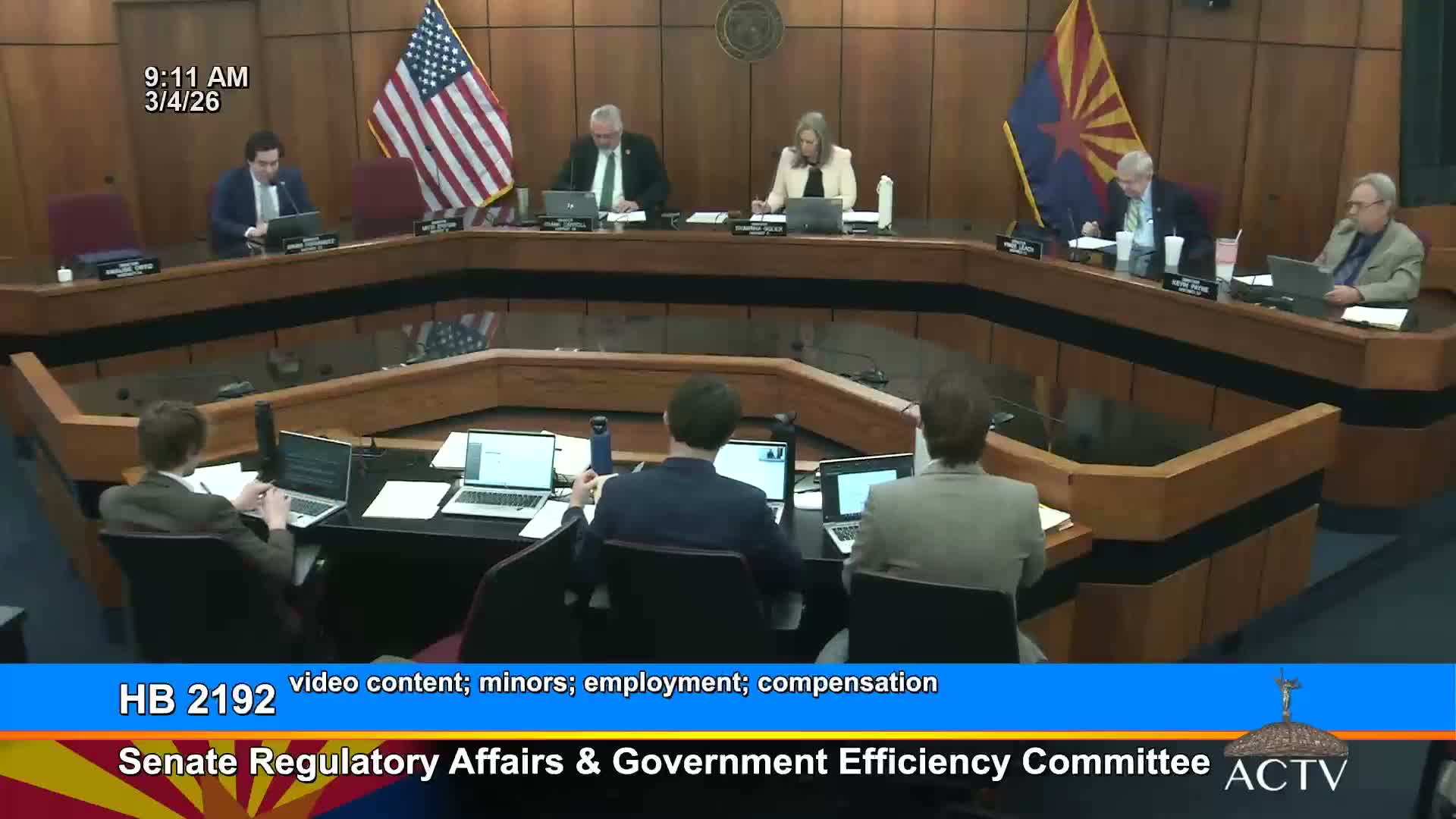
Summary
House Bill 21‑92 would require platforms and content creators to deposit minors' monetized earnings into trust accounts, preserve records, allow a now‑adult featured as a minor to request removal of identifying information, and create civil remedies; the committee voted 7‑0 to give the bill a due‑pass recommendation as amended.
The committee voted unanimously to give House Bill 21‑92 a due‑pass recommendation after adopting an amendment that narrows platform liability and allows platforms to use existing trust‑and‑safety systems to meet mitigation requirements.
The bill would require creators who feature minors in monetized video content to deposit gross earnings for the minor into a trust account preserved for the minor until age 18, and to retain records until the minor reaches 21. Minors 13 and older may create and publish their own content and keep compensation they earn. The measure also creates a civil right of action for minors or those who were minors when featured, permitting enforcement of the compensation and unlawful content provisions and prescribed damages.
A presenter described safeguards and an amendment offered March 3 that permits online hosting platforms to rely on existing trust and safety systems to fulfill a required risk‑based strategy for removing unlawful content and clarifies that compliant platforms are not subject to certain lawsuits tied to third‑party content.
Colin Larson, regional manager for Google/YouTube, testified in support and described the proposal as "model legislation" intended to mirror legacy protections for child actors such as the Coogan trust while creating a uniform national standard for child influencer protections. "This is an attempt to mirror some of those protections and again ensure ... there is some financial compensation left over for them," he said. Larson also described how platforms would be required to facilitate takedown requests and connect the requester to the content owner for verification.
Committee discussion clarified that trust funds belong to the minor once they turn 18 regardless of whether content stays online; if an adult featured as a minor requests removal and the content owner refuses, the bill creates a civil avenue to compel removal and requires a compliant platform to take down the content.
The clerk read the roll call and recorded Senators Epstein, Fernandez, Leach, Ortiz, Payne, Carroll and Bullock as voting 'aye', producing a 7‑0 vote to advance the bill as amended.
The committee adopted the amendment and gave House Bill 21‑92 a due‑pass recommendation; the bill will proceed according to the legislature's committee process.