
Minnesota DCYF February forecast shows modest biennial spending shifts across child and family programs
Get AI-powered insights, summaries, and transcripts
Subscribe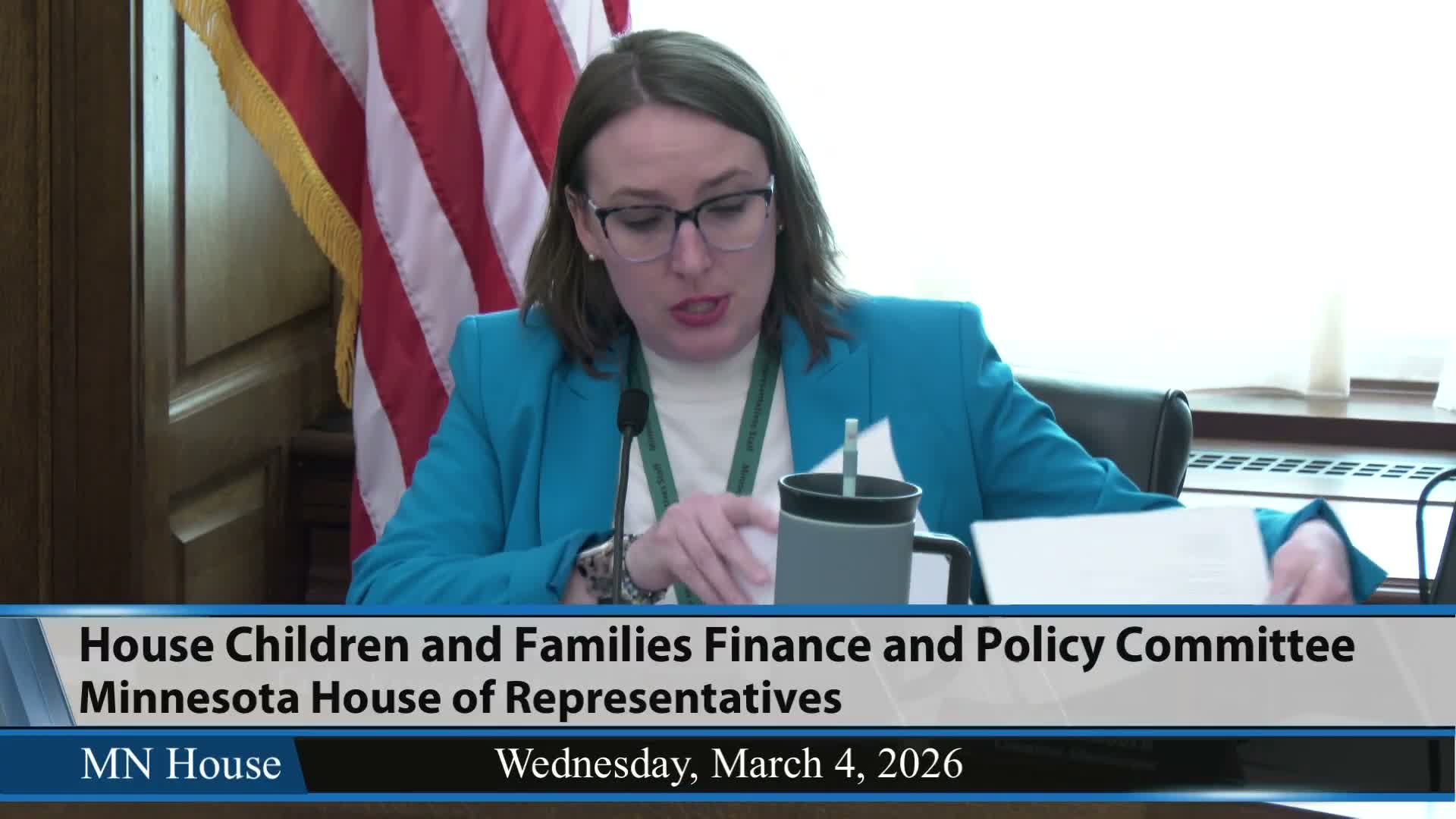
Summary
The Department of Children, Youth, and Families told the House Children and Families Committee that its February forecast reduces projected general fund spending by about $37.9 million across the forecast horizon, with program-level shifts driven by changes in SNAP eligibility, child-care caseloads, and higher average payments in North Star Care for Children.
Ashley Reisenauer, chief financial officer for the Department of Children, Youth, and Families, told the committee the February forecast shows modest net changes across five state entitlement programs that the agency administers.
Reisenauer said the forecasted net change is a $37.9 million decrease across the full horizon, with a 1.9% ($14.1 million) decrease in the 2026-27 biennium and a 2.5% ($23.8 million) decrease in 2028-29. She described three primary drivers: shifts from federally funded to state-funded food benefits for some MFIP participants after federal policy changes; lower-than-projected child-care assistance caseloads and variable federal carry-forward balances; and higher average payments and a shift toward kinship and adoption assistance within North Star Care for Children.
The agency highlighted program details. MFIP (Minnesota Family Investment Program) serves about 63,000 people per month; state general fund spending for MFIP is projected to rise from about $99 million in FY26 to $132 million in FY29, but the February forecast reduced MFIP's projected general-fund need by $16.8 million in 2026-27 relative to the November projection. Reisenauer attributed much of that change to federal SNAP policy adjustments and slower implementation timelines.
Reisenauer said the child-care assistance program serves roughly 4,900 families per month and that state general-fund spending for child-care assistance is projected to grow over the forecast period (from about $74 million in FY26 to a projected $165 million by FY29), reflecting changes in family counts and federal funding carry-forward assumptions. North Star Care for Children served about 18,300 children per month in FY25 and is projected to grow to roughly 19,200 per month by 2029, driven in part by increases in kinship assistance and adoption assistance, which have higher relative state shares.
Committee members asked for additional historical federal-share data and a deeper breakout of North Star assistance by component. Reisenauer said the February forecast assumes current federal awards remain steady and offered to provide the committee with more historical context and program breakdowns.
The committee did not take action on budget language at this hearing; the briefing was presented for information and for members to request further data to inform upcoming decisions.