Get Full Government Meeting Transcripts, Videos, & Alerts Forever!
Get email alerts on the State Budget topic
No spam. Unsubscribe anytime.
Sen. Gary Stevens warns budget constraints, outlines disaster aid and education concerns in Kenai Peninsula briefing
Summary
Sen. Gary Stevens told the Kenai Peninsula Borough legislative committee that recent storm damage strained federal benefits and that state budget limits — including a reduced Permanent Fund Dividend and a depleted budget reserve — will constrain help for education, retirement benefits and capital projects.
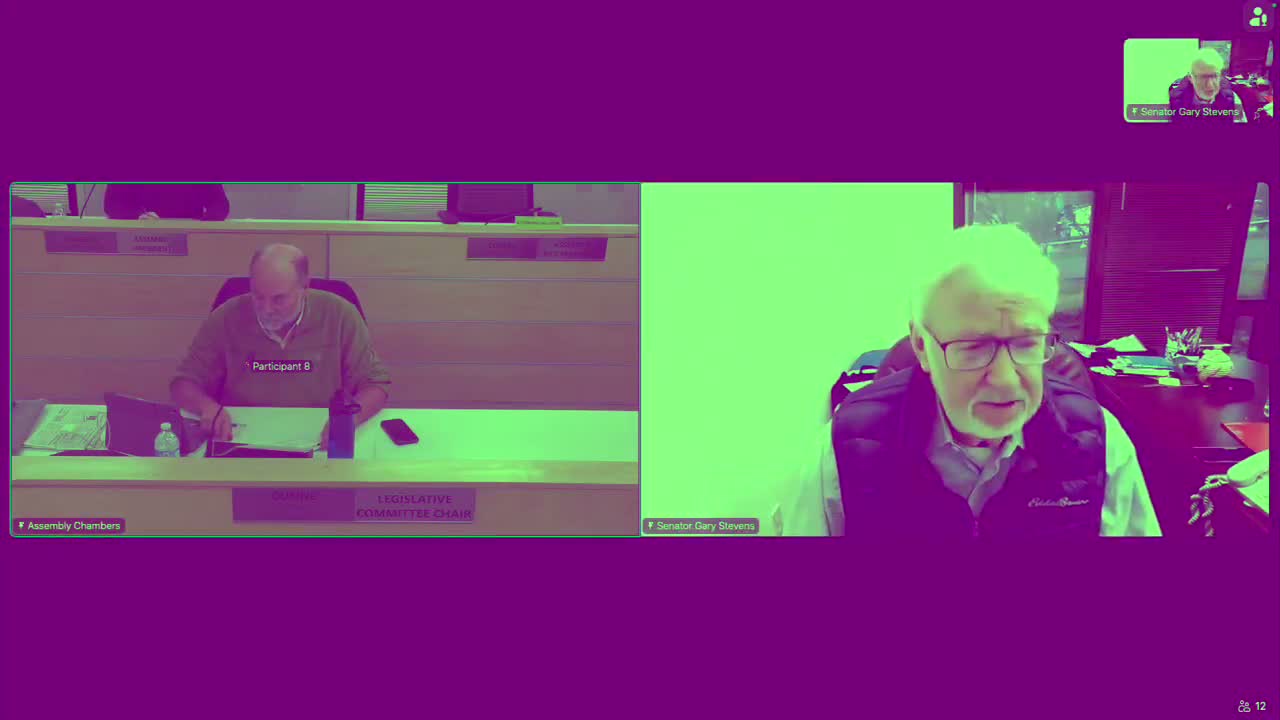
Sen. Gary Stevens, president of the Alaska Senate, briefed the Kenai Peninsula Borough Assembly’s legislative committee via Zoom on a range of state issues, saying recent storm damage, low Permanent Fund balances and long-term retirement liabilities will limit what the Legislature can deliver this year.
Stevens described the aftermath of a major storm that disrupted SNAP and other federal benefits, saying the state discussed short-term support "about $3,000,000 a week for food insecurity" and that combined interruptions to programs such as WIC, Head Start, essential air service and military pay amounted to figures he described as roughly "$25,000,000 a week." He said federal programs have since reopened but urged continued attention to relief and recovery efforts.
The senator emphasized limits on one-time payouts from the Permanent Fund. "This year, it was $1,000," he said of the Permanent Fund Dividend, and he warned the state’s savings are down to "under $3,000,000,000," arguing lawmakers cannot afford large supplemental checks without jeopardizing government operations.
On education, Stevens said the Legislature had overridden a gubernatorial veto last year to deliver additional funding but cautioned that increasing the base student allocation (BSA) further may be "unlikely" given current fiscal constraints. He urged lawmakers to consider bonding for capital projects, saying the state has not seen significant capital budgets in recent years and local school buildings and infrastructure remain a pressing need.
Stevens also raised workforce and retirement concerns, telling the assembly that retirement liabilities and benefits are driving some state workers — including teachers, firefighters and police — to leave. He said the Legislature continues to address an historic deficit in the old retirement system while trying to avoid repeating that situation.
Assembly members raised local concerns during a question-and-answer period. Mayor Peter Michicky asked Stevens to review intent language that appeared in Senate Finance regarding borough authority over local policing; Michicky said second-class boroughs such as Kenai Peninsula do not have police powers and asked for protection of local arrangements. Stevens said he did not know the full Finance intent but pledged to protect areas unable to support their own police departments and to follow up with Finance leadership.
Michicky also asked about extending "hold-harmless" protections to soften the impact of school consolidation. Stevens said he supports holding communities harmless where possible but noted any changes are subject to the governor’s veto and depend on available revenue.
On revenue, Stevens said he had supported a bill taxing out-of-state online companies that was vetoed by the governor and that the state needs to discuss whether oil producers are paying a fair share. He warned that the constitutional budget reserve has dropped from past highs of roughly $15–16 billion to about $3 billion, limiting the Legislature’s flexibility.
Stevens told the committee this will be his final year in the Legislature; he said he plans to retire in December after 26 years of service and pledged to help with the appointment process for his successor. Chair Dunn thanked Stevens for his years of service. The legislative committee adjourned without taking any formal votes.
The assembly’s next steps include monitoring the Legislature’s session in January and following up with Stevens and peers as the replacement appointments and specific legislative proposals move forward.