
Votes at a glance: Utah House advances tax cut, passes education and safety measures; several bills fail
Get AI-powered insights, summaries, and transcripts
Subscribe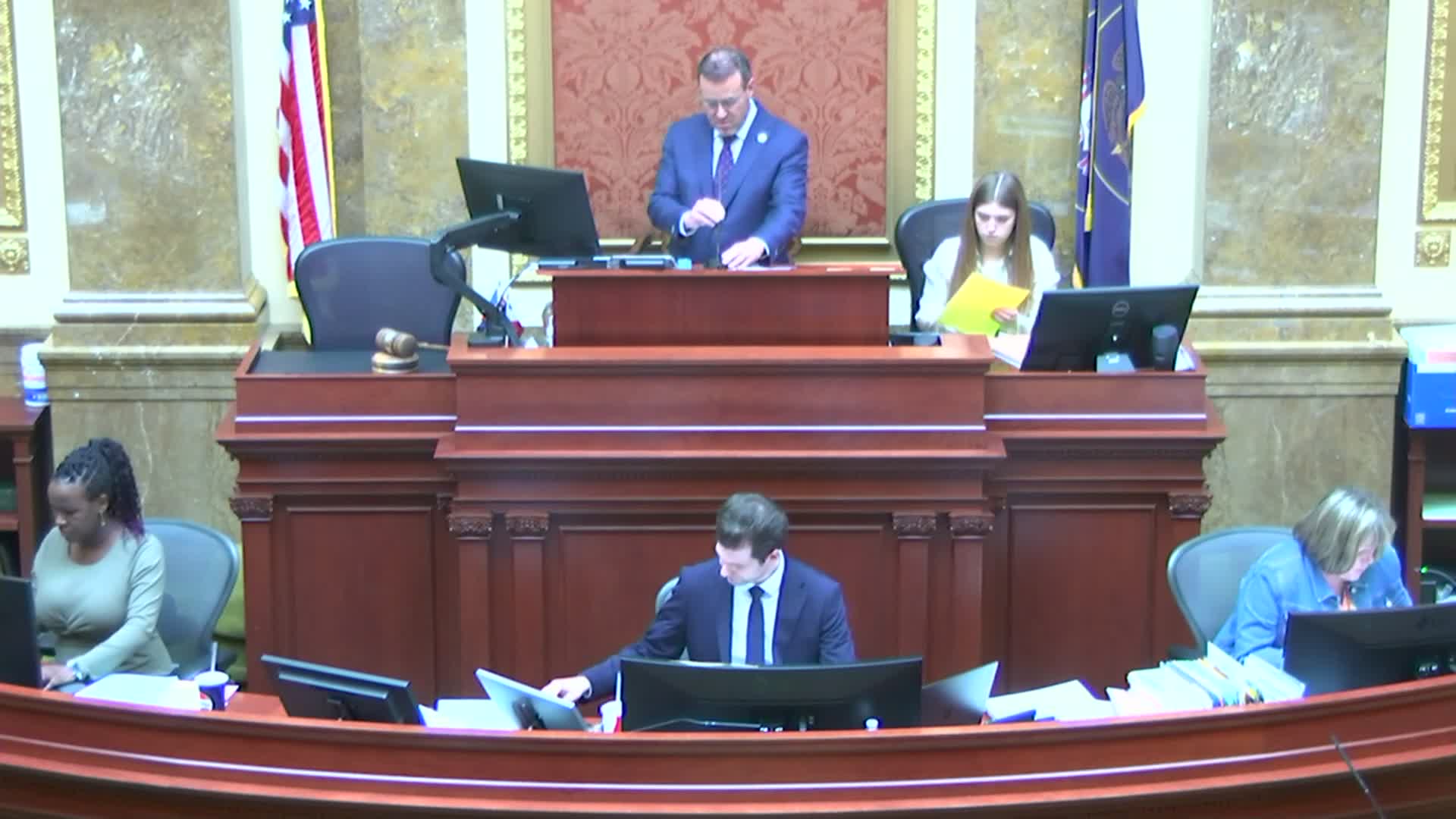
Summary
On March 4, 2026, the Utah House voted on a large slate of Senate-transmitted bills. Notable outcomes: SB60 (income tax rate cut) passed; SB152 (student data sharing amendment) passed; SB244 (cardiac emergency plans in schools) and SB158 (Medicaid recreational therapy) passed. Major measures including SB248 (Child Care Expansion Act), SB277 (Utah Homes program changes), SB124 (child welfare modifications substitute) and SB229 (state employee benefit overhaul) failed or were returned to staff.
The Utah House completed an evening of floor votes March 4, 2026, taking action on dozens of Senate-transmitted bills, advancing tax and education measures while rejecting several high-profile proposals. Key results included both policy votes and procedural calendar moves.
The House passed SB60, a 5-basis-point cut in the state income tax rate (from 4.50% to 4.45%), which the sponsor described as a modest, broadly beneficial reduction; the bill passed 61–11. Lawmakers said the change was aimed at easing cost pressures for households while noting Utah’s strong reserves.
On education, members approved SB152 with an amendment that narrows the definition of shareable "student directory" data so it excludes student behavior and discipline records; the amendment and bill passed unanimously (70–0). The House also approved SB186 (charter school funding technical fixes) and SB167 (student reintegration provisions) and adopted a substitute to SB151 to address a fiscal note and streamline funding for Highway Patrol hires.
Health and safety measures cleared the House: first-substitute SB244 (cardiac emergency response plans and funding for automated external defibrillators in schools) passed 65–1, and SB158 (expanding Medicaid reimbursement for recreational therapy in accredited settings) passed with a fiscal estimate discussed on the floor.
Several significant bills were defeated or returned to staff. SB248, a public–private approach to expand childcare by retrofitting a state-owned facility (which would reserve 50% of slots for state employees), failed on a 25–47 vote after multiple members called the approach inefficient or noted prior rejections of similar ideas. SB277, changes to the Utah Homes Investment Program (relaxing caps and extending the sunset to 2029), failed 9–61. A heavily debated second substitute to SB124 (child welfare modifications authorizing a narrowly scoped "child safety" warrant process) failed in the final tally (30–43), and the broad package to modernize state employee benefits (second → third substitute, Senate Bill 229) failed 34–40 after extended floor debate and substitution attempts.
Procedurally, the House temporarily suspended a rule so it could consider Senate bills that had not gone through a House committee hearing, and members handled numerous "circle" and "uncircle" motions used to pause or advance bills on the third-reading calendar. The House adjourned to reconvene March 5 at 9:30 a.m.
Votes listed above and other actions were recorded on the House floor; the clerk will transmit passed bills to the Senate for consideration or signature as appropriate.