Get Full Government Meeting Transcripts, Videos, & Alerts Forever!
Get email alerts on the Revitalization Districts topic
No spam. Unsubscribe anytime.
Casa Grande hears how revitalization districts would finance Marabella development; staff to return with policy
Summary
City staff and outside consultants briefed the council on revitalization districts—special landowner-controlled taxing districts—and developer representatives said the Marabella project needs financing for oversized infrastructure, including a one-time AWC fee of about $6.3 million that they propose to finance through a revitalization district.
A study-session presentation to the Casa Grande City Council laid out how revitalization districts work and why a developer of the proposed Marabella project is asking the city to consider the tool to finance major upfront infrastructure costs.
Staff opened the item by saying the session was informational and that no decision would be made that night. Financial advisor Nick Dodd of Raymond James described three Arizona special taxing districts—municipal improvement districts, community facilities districts (CFDs) and revitalization districts—and stressed that, unlike CFDs, revitalization districts are landowner-controlled and cannot issue general obligation bonds. "Once you form the district, it's like you have a baby and then you let it grow up on its own," Dodd said, noting the developer typically appoints a majority of the district board.
Bond counsel Zach Sajas (as introduced at the meeting) told council members the districts are separate political subdivisions that can levy special assessments, collect revenues and, where permitted, foreclose on delinquent assessments. He emphasized the city would not automatically be on the hook for district debt and that the district would have limited powers compared with municipal bodies: "City council does not sit as the board," Sajas said, "and there is no ability for the city to step in and constrain what the revitalization district engages in," aside from any terms the city includes in a development or intergovernmental agreement.
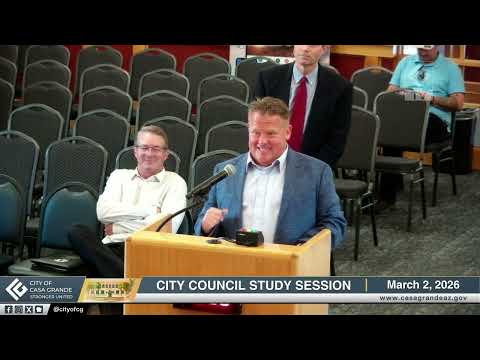
Pam Giss of Launch Development Finance Advisors, representing RMG Marabella, presented the project plan and financing challenge. She said Marabella is a roughly 104-acre development east of North Pert Road proposing about 500 housing units in two phases, and that required infrastructure upsizing — including four travel lanes where two would typically suffice, turn and bike lanes, and larger sewer mains (10"–12") — increases costs substantially. The developer also faces a one-time kickoff payment to the local utility (AWC) of about $6,300,000. "There's just no way for a project of our size to absorb those costs," Giss said, adding that a revitalization district could be structured to finance that obligation.
Council members asked how assessments affect buyers and tenancy. Staff and the developer explained that assessments typically run with the land, are disclosed in public reports to potential buyers, and can be prepaid without penalty; the repayment term commonly used for assessment bonds is about 25 years, sometimes 25–30 years depending on bond structure.
Staff told the council it previously drafted a revitalization-district policy about three years ago and would refresh that draft and return for policy direction likely in early summer. No formal motion or vote occurred during the session.
Next steps: staff will update the earlier draft policy, incorporate questions raised by bond counsel and the council, and bring a policy discussion back to council for potential direction before any district formation is considered.