Get Full Government Meeting Transcripts, Videos, & Alerts Forever!
Single-exit stair tag left largely unchanged; SBCC members debate how to interpret legislative intent
Summary
After a tag discussion, the council heard that the tag voted to keep the single-exit stair proposal as presented and not include draft item 21; members debated whether the council should define legislative intent for rulemaking or seek clearer language from legislators.
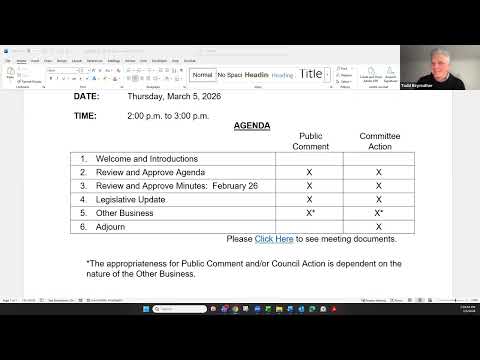
At the March 5 legislative committee meeting of the State Building Code Council, Roger Haringa summarized a recent tag discussion and reported that the tag voted to keep the single-exit stair proposal as currently presented and not include a draft language item (item 21) proposed by a council member.
Roger told the committee the tag had a “very good conversation” and reported that some code officials opposed allowing the same Type III construction on six levels only in single-exit buildings,…
Already have an account? Log in
Subscribe to keep reading
Unlock the rest of this article — and every article on Citizen Portal.
- Unlimited articles
- AI-powered breakdowns of topics, speakers, decisions, and budgets
- Instant alerts when your location has a new meeting
- Follow topics and more locations
- 1,000 AI Insights / month, plus AI Chat