Get Full Government Meeting Transcripts, Videos, & Alerts Forever!
Get email alerts on the Parking Enforcement topic
No spam. Unsubscribe anytime.
Arlington council reviews neighborhood parking rules and enforcement for oversized and commercial vehicles
Summary
Deputy City Manager Jennifer Wickman told the council that city code generally restricts oversized vehicles by size and time, that private-property parking is governed by code enforcement, and that police will prioritize complaints if residents call 911; staff will add neighborhood-parking guidance to the city website.
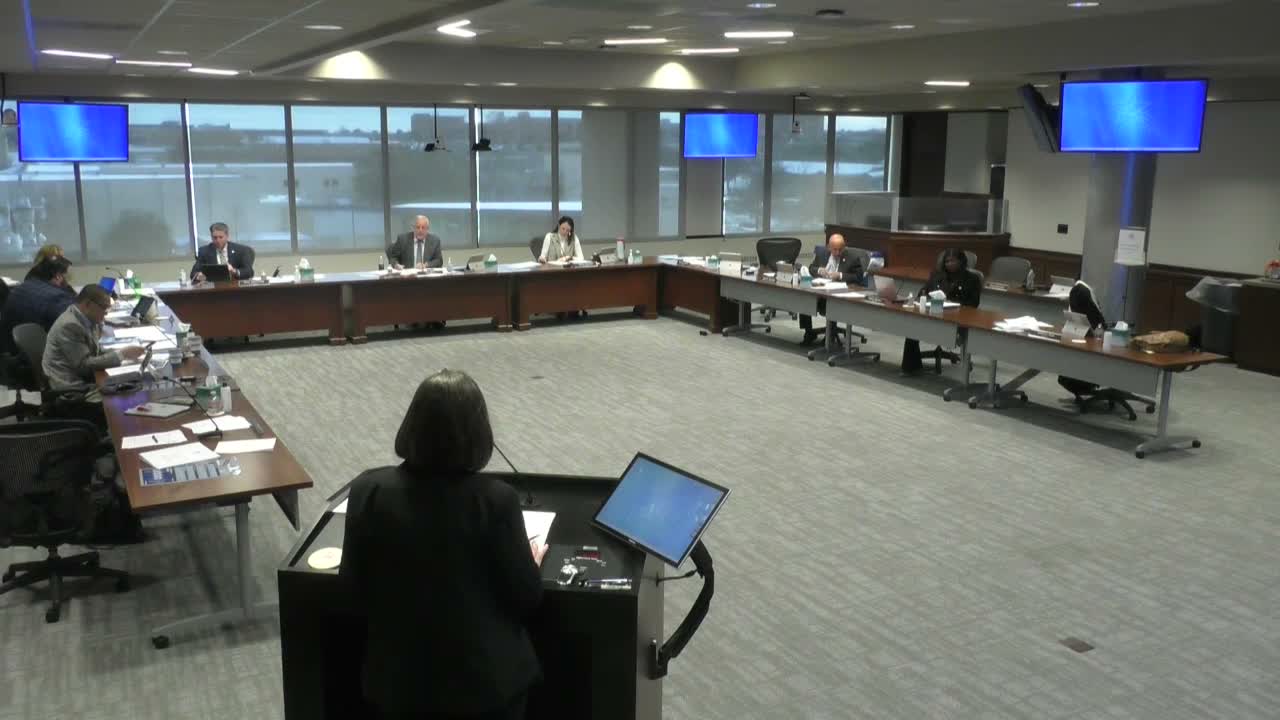
Deputy City Manager Jennifer Wickman told the Arlington City Council during the afternoon session that the city's parking rules focus on vehicle size, condition and time limits rather than on company logos.
Wickman said Article 5 of the city's traffic and motor vehicles chapter lays out general street-parking requirements, including a 24-hour move rule for vehicles parked on public streets and dimensional prohibitions: vehicles longer than about 22 feet or taller or wider than about 8 feet are restricted on many neighborhood streets. She also said private-property parking is enforced by code enforcement and generally must be on an all-weather surface; private drives can have larger vehicles (staff cited up to 30 feet in length and 12 feet high as private-property allowances).
"There's also a note I have here talking about there's no right to public parking in front of a private property," Wickman said, stressing that neighbors' expectations about who may park on the curb are not codified rights.
Wickman reviewed the city's definition of a junked vehicle (expired registration or inoperable conditions are among the characteristics staff use) and said enforcement typically follows a sequence of education or warnings, then citations by police service assistants or officers, with towing as a last step.
Chief of Police Al Jones urged residents to provide specific information when they report problems. "If it's expired, then it's illegal," he said, and asked councilmembers and the public to forward exact locations so officers or code staff can act.
Councilmembers asked practical questions about response timelines and signs. Councilmember Hunter asked what happens when a big rig parks in a residential area; staff said response timing depends on police capacity and that repeated reports may be necessary to move from education to enforcement. Hunter also asked whether the city can post "no big truck parking" signs at locations such as Vanderburgh Park; staff said the park lot is already off-limits to such vehicles and that a focused enforcement reminder to patrols might be sufficient but that signage could be considered.
Councilmember Gonzales and others noted residents often equate company logos with "commercial" status even when a vehicle otherwise meets neighborhood-size limits. Wickman said enforcement is based on vehicle size and condition, not the content of advertising on a vehicle's side.
Wickman told council that many reports come in through the Ask Arlington app but that Chief Jones has asked residents to call 911 for serious neighborhood impacts so police can dispatch more quickly. Staff agreed to add a "parking in neighborhoods" quick-reference guide to the city's website to give residents and councilmembers a single place to find definitions and reporting instructions.
The council did not take a formal vote on a code change but directed staff to prepare guidance and consider signage and other practical tools; members also discussed studying options for overnight truck parking or truck-stop solutions as part of future work.
What's next: staff will add neighborhood parking guidance to the city website and return to council with follow-up options and any recommendations for ordinance changes or targeted enforcement protocols.