Get Full Government Meeting Transcripts, Videos, & Alerts Forever!
Get email alerts on the Comprehensive Plan Implementation topic
No spam. Unsubscribe anytime.
City staff outline new tracking tool and report progress on Denton 2040 comprehensive plan
Summary
City planners presented an annual implementation update for the Denton 2040 comprehensive plan and described a new tracking approach in Envisio; commissioners praised the work but pressed staff on measurability, conflicting summary numbers and the need to prioritize goals ahead of a future plan update.
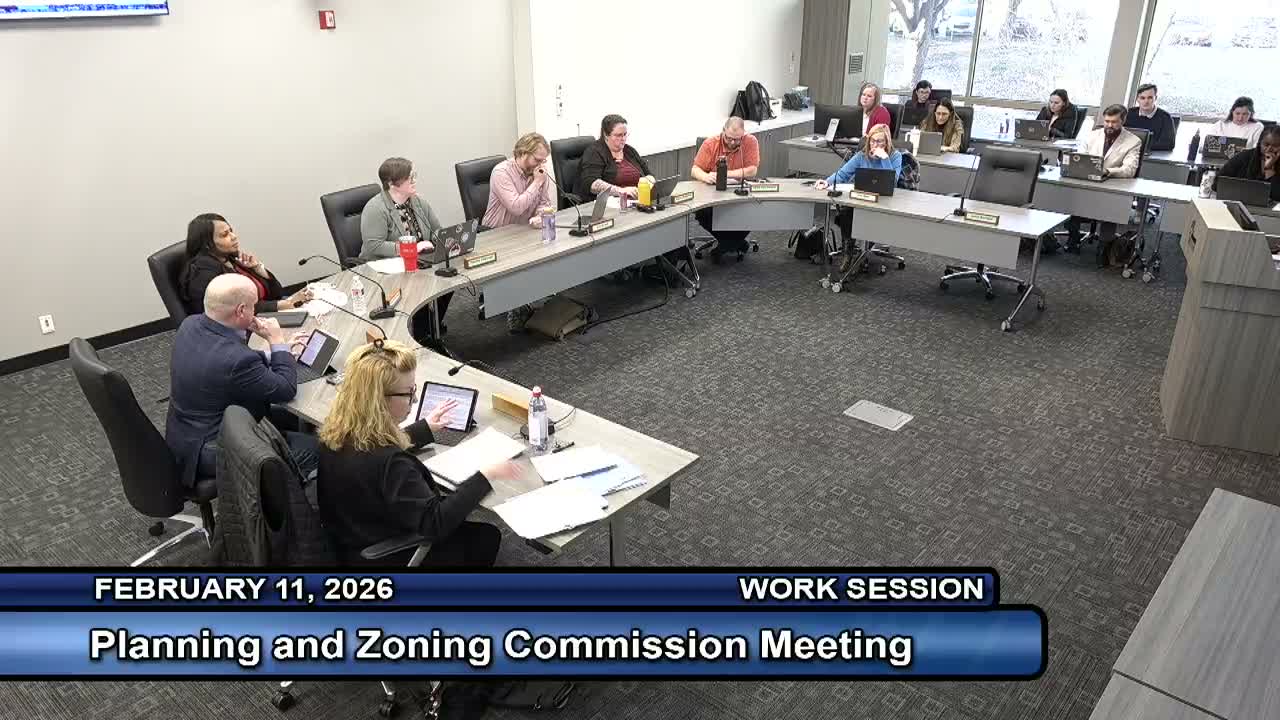
Julie Wyatt, principal planner for Denton, presented the Planning and Zoning Commission with an annual implementation update on the Denton 2040 comprehensive plan on Feb. 11.
“The Denton 2040 comprehensive plan gives us a road map for how the city can achieve the vision that the community has established,” Wyatt said, explaining staff had moved the plan’s discrete actions into a software dashboard (referred to in the presentation as Envisio) to monitor progress. She said staff had decomposed plan items into many smaller, trackable actions and that, combining ongoing work with short-, mid- and long-term actions, staff has worked on roughly 389 individual actions — “about 73% of the plan,” she said, while warning that summary figures should be read with caution because of translation and reporting differences between documents and the new tracking system.
The presentation walked commissioners through how the plan’s actions were broken into discrete tasks for reporting, and highlighted recent work across plan elements. Examples included process improvements from the development services project facilitation team; an inventory of underused commercial “big box” sites to guide future infill; transportation work tied to grant applications aimed at improving active-transportation planning; and parks coordination such as a land swap with Denton ISD to rebuild Borman Elementary and convert the old site to athletic fields. Wyatt also described the city’s air-quality sensor dashboard and said the Pecan Creek Trail design is funded and being readied for a council contract.
Commissioners welcomed the breadth of activity but pressed staff on how completion rates were calculated and on the plan’s long list of actions. Commissioner Dyer asked whether the next comprehensive update would be a 2050-horizon plan; staff said typical practice is to begin an update every five to seven years and that a 2050 horizon is likely for the next full update. Several commissioners urged prioritizing and shortening the list of goals so the city can focus resources on fewer, measurable outcomes.
Chair Pruitt questioned a staff summary line that said the city incorporates life‑cycle maintenance costs into road construction estimates and said he had not seen such figures in council materials. “I would love if that were true,” Pruitt said, noting he had not seen that information reported to council. Wyatt acknowledged reporting limitations and said staff are retooling how they present action status in Envisio so departments can provide consistent, comparable updates.
Why it matters: The comprehensive plan guides land use, mobility, parks and other policy decisions. Commissioners signaled support for the tracking effort but also asked for clearer, more measurable priorities before the next plan update so the city can better demonstrate progress.
What’s next: Staff said they will continue refining the dashboard, provide more granular explanations of the “pending” versus “upcoming” labels, and return with more detailed work-session briefings — including a proposed debrief on multifamily data and a deeper dive into compatibility analysis as requested by commissioners.