Get Full Government Meeting Transcripts, Videos, & Alerts Forever!
Get email alerts on the Utility Billing topic
No spam. Unsubscribe anytime.
DME proposes changing billing rules: limit underbilling recovery to six months, keep demand charge rules
Summary
Denton Municipal Electric staff recommended changing the city ordinance to refund overbillings for the full period back to the original error while limiting recovery of underbillings to six months; staff also recommended keeping the two‑consecutive‑month demand threshold and a 12‑month lock-in with an audit at month 13.
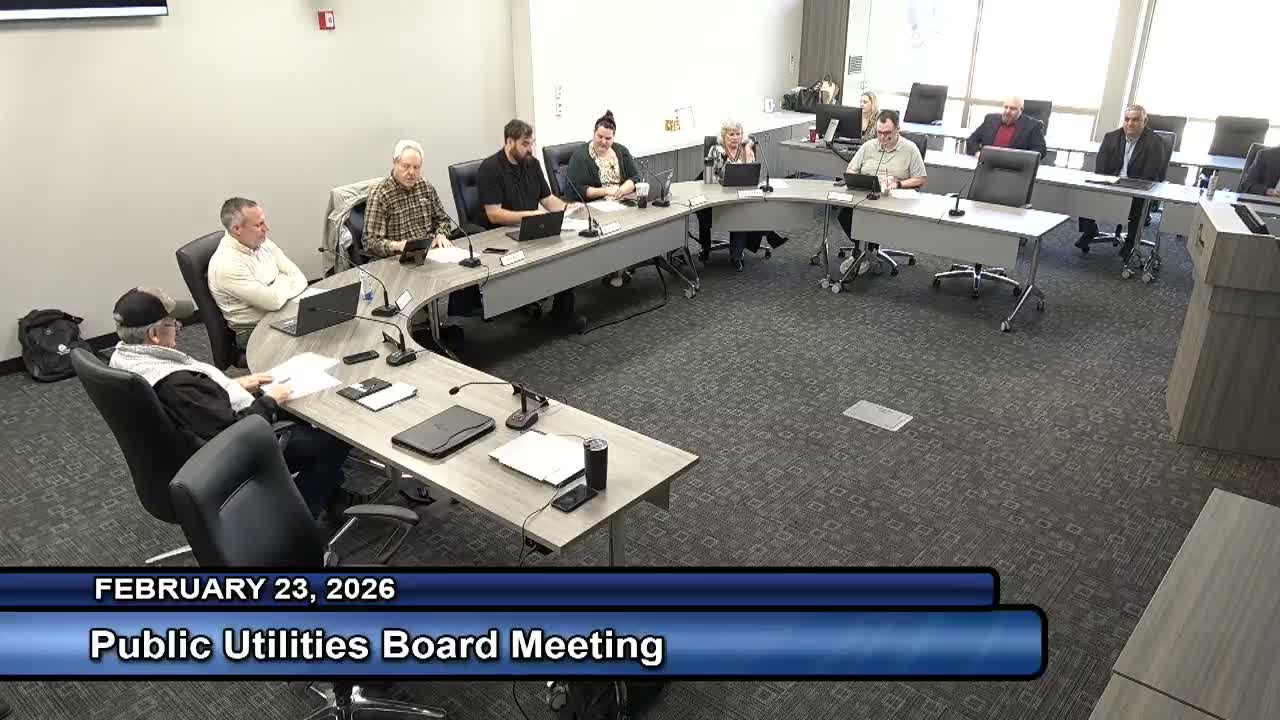
Tony Pointe, DME general manager, briefed the Public Utilities Board during a work session on Feb. 23 about proposed changes to the city’s billing practices and ordinance language in Chapter 26. Pointe said DME has about 71,000 electric meters overall, roughly 7,600 commercial meters, and that a recent review found 218 commercial accounts requiring adjustments. Staff reported recovered overbilling credits totaling about $331,000 and underbilling recoveries totaling about $382,000 for the review cohort.
Pointe told the board staff recommends two principal ordinance changes: first, when the city overbills a customer, refunds should go back to the date of the error (removing the two‑year cap previously applied); second, when the city underbills a customer, recovery should be limited to six months. Pointe said the six‑month recommendation is aligned with practices for retail electric providers and is intended to reduce the occurrence of very large retroactive bills.
On demand charges, Pointe proposed no change to Denton’s current application of a two‑consecutive‑month threshold to move a customer between commercial rate classes and kept the 12‑month lock‑in. He said staff will change current practice to perform an audit at the end of the 12‑month lock period (a practice that some peer utilities perform prospectively in month 13) and will move customers prospectively if the audit indicates they qualify.
Board members expressed concern about who bears costs if underbillings are not recovered beyond six months. Pointe acknowledged that unrecovered underbillings are effectively passed through to other ratepayers and said the recommendation balances industry practice, fairness and administrative burden. The board asked staff to provide clearer graphics and updated comparisons to other utilities and to return an ordinance draft that reflects PUB direction before the item goes to council.
Board direction: members generally supported the recommendations with requests for more outreach and clearer materials; staff will return with ordinance language, graphics and competitive comparisons at a future PUB meeting prior to council consideration.