
Fairfax County Public Schools showcases ‘bus of the future’ with cameras, RFID tracking and parent app plans
Get AI-powered insights, summaries, and transcripts
Subscribe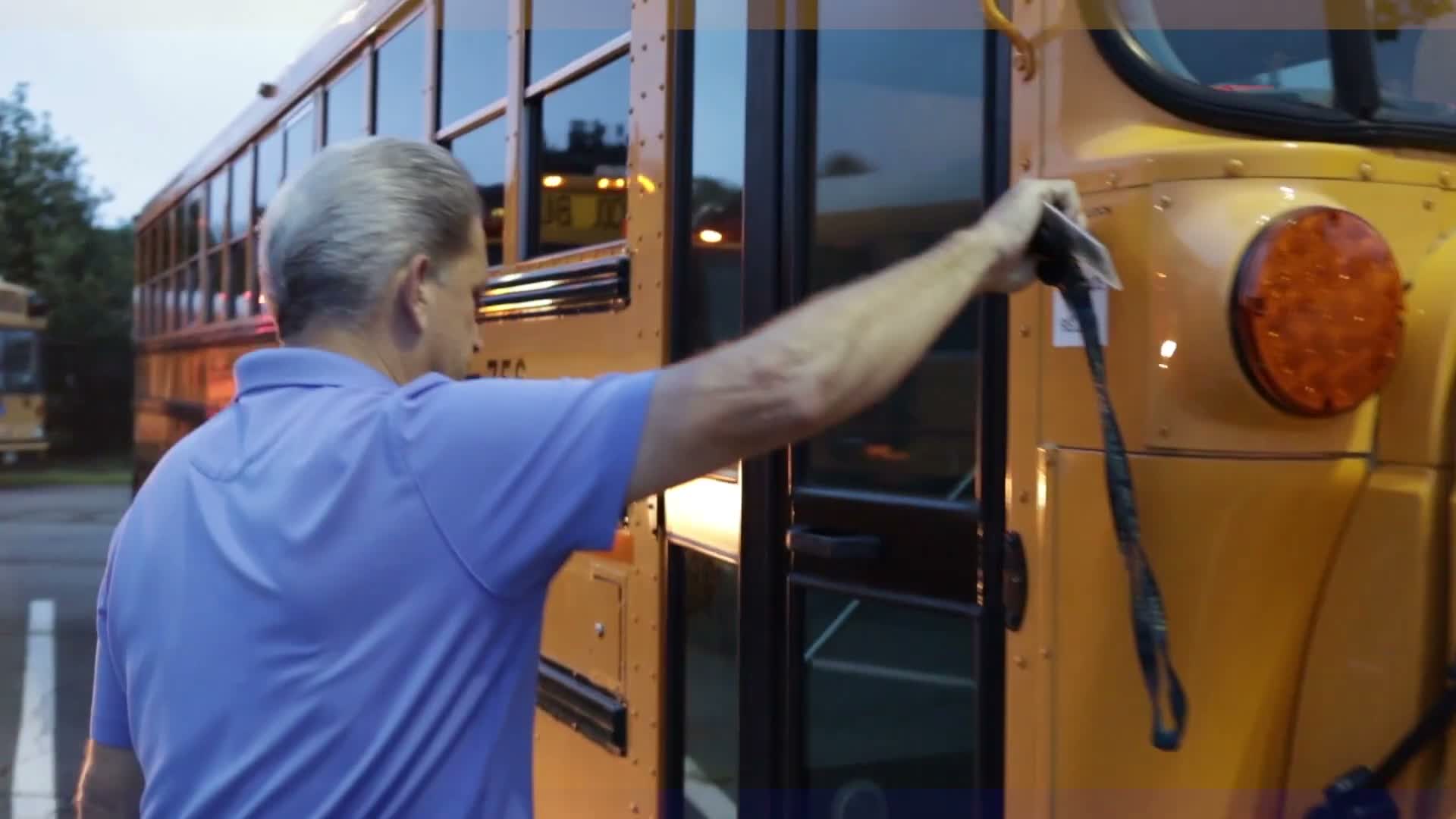
Summary
FAIRFAX CO PBLC SCHS staff demonstrated a new ‘bus of the future’ package—tablets with routing software, onboard cameras, RFID student scanning and a planned parent-tracking app—while highlighting student patrols and drivers’ roles in safety and equity.
Every morning, FCPS buses are the first classrooms of the day, Presenter (S1) said, stressing that transportation staff ‘‘set the tone for learning by ensuring every student arrives safe, supported, and ready to succeed.’’
At a short demonstration, staff described a multi-part upgrade intended to improve safety and communication. Presenter (S1) said tablets running new routing software will give drivers ‘‘real time updates to keep routes accurate and efficient,’’ and a staff demonstrator (S2) showed how the system indicates who is assigned to a stop and updates the onboard count when a student scans an RFID card: "They will show you all the students assigned to this stop. The student, they come to the bus, they'll scan their RFID card." S2 added that "eventually, the parents will be also be able to track the kids through their app in mobile devices in real time," noting that the parent-facing feature is a future capability rather than an immediately available service.
Presenter (S1) also introduced an upgraded camera system, saying, "Our new camera system takes safety to the next level," and framed the project as aimed at equity: "This isn't just technology for technology's sake. It's about equity and safety, making sure every student has the same reliable and supportive experience." The presentation repeatedly tied tools to relationships, with S1 stressing that technology cannot replace the role of drivers and student leaders.
Student patrols were described as active safety contributors. Meeting participant (S3) outlined patrol duties: front patrols ensure students exit safely and back patrols help keep students seated. Presenter (S1) noted external recognition for those roles, saying "not just 1, but 2 of our student patrols were honored by the American Automobile Association, AAA, as a safety patroller of the year."
Speakers also emphasized the human side of transportation. Presenter (S1) called drivers mentors and role models whose interactions with students can ‘‘change their whole day.’’ A staff member driving routes (S4) said, "I honestly care about your children," describing personal commitment to students on their runs. Another staff speaker (S5) said supporting drivers gives them "a really great sense of pride" and motivates efforts to ensure good trips and experiences.
What happens next: presenters described core functions—routing tablets, RFID boarding, cameras—and indicated the parent app is a planned enhancement; no vote or formal board action was recorded in the presentation. The demonstration highlighted technology and people as complementary safety measures and presented two student patrols’ AAA recognition as an immediate, verifiable outcome.