
Defense asks appeals panel to reverse Dion Glass convictions, alleging prosecutorial misconduct in jury selection and rebuttal
Get AI-powered insights, summaries, and transcripts
Subscribe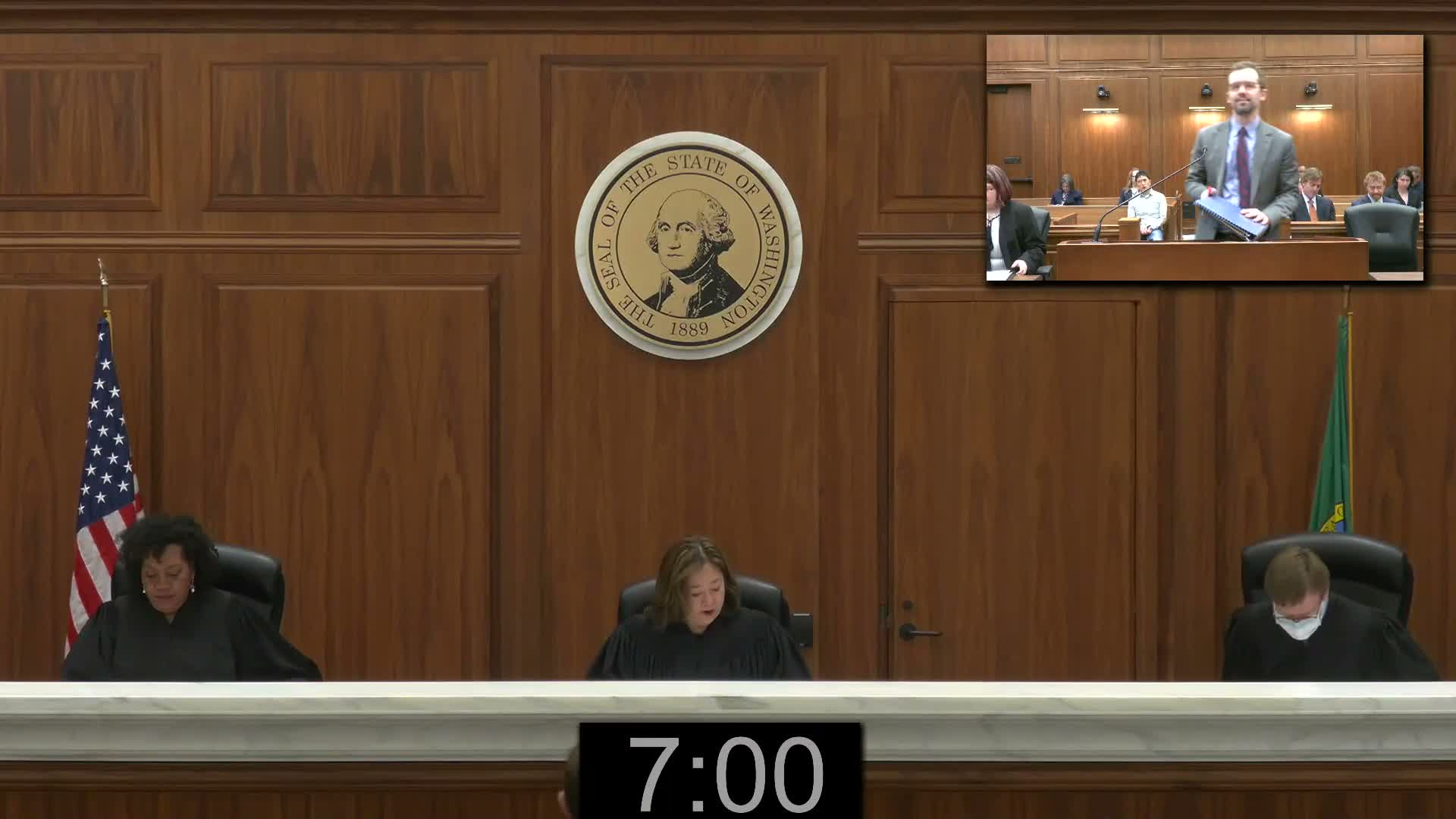
Summary
At a Washington appellate hearing, defense attorney Edward Wexler argued prosecutors used voir dire and rebuttal to "insulate" the state's case and lower its burden of proof; Snohomish County Deputy Prosecuting Attorney Ruth Batok said the questions were routine and any errors were harmless and unpreserved.
Edward Wexler, an attorney with the Washington Appellate Project, told an appellate panel that prosecutors committed "repetitive and pervasive misconduct" that deprived Dion Glass of a fair trial by using jury selection and rebuttal to insulate the state's case from doubt.
"The state stepped through categories of evidence that it knew that it did not have and suggested that the absence of that evidence would occur in any sort of normal case," Wexler told the court, arguing that those voir dire questions amounted to arguing the state's case before evidence was presented. He said the state also "told jurors that if you believe that testimony...you're required to convict," which he described as misconduct during rebuttal.
Wexler acknowledged there is no direct precedent finding misconduct at voir dire but pointed the court to State v. Frederickson to outline the proper limits of voir dire, saying a party "may not attempt to educate, compel a vote, or indoctrinate a jury." He urged the panel to view the challenged comments together with other alleged errors and to conclude the cumulative effect requires reversal and a new trial.
Ruth Batok, Deputy Prosecuting Attorney with Snohomish County, responded that the prosecution's questions during voir dire were "common in these types of cases" and intended to determine whether jurors could follow the court's instructions. "It is appropriate to get a baseline, if you will, of what the panel immediately expects to see," she said, citing concerns that television portrayals can skew juror expectations.
Batok argued the defense must meet a heavy standard to show flagrant, ill-intentioned misconduct and noted the record shows many of the defense's points were not objected to at trial. She said that, even if the court found misconduct, the defense failed to show prejudice or that the trial court could not have cured any error with an instruction.
On the question of closing and rebuttal argument, Batok said prosecutors may urge jurors to weigh credibility and noted that summations for both parties will typically urge jurors toward different verdicts; she urged the panel to affirm four convictions in the case.
Wexler used his reserved rebuttal to press that the state's rebuttal tied a witness's testimony too closely to the burden of proof and that the state leveraged its institutional authority in a way that discouraged juror scrutiny. He again argued the errors were cumulative and could not be cured.
The panel took the case under submission after counsel concluded arguments.