
Sweetwater commission urges state action to let municipalities use building fees for operations
Get AI-powered insights, summaries, and transcripts
Subscribe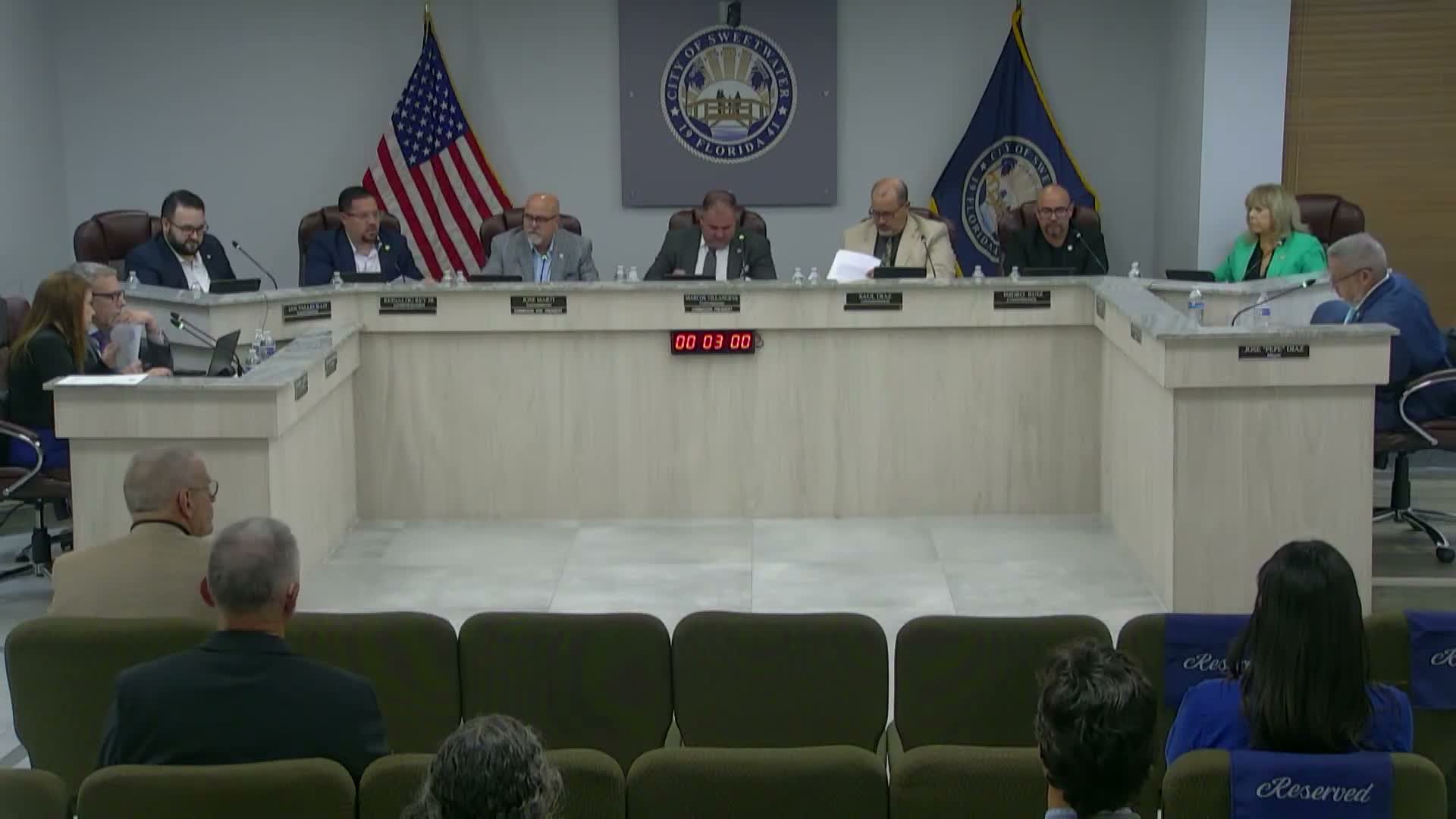
Summary
The commission unanimously passed a resolution asking the state to authorize county and local governments to use building and impact fees to offset general operating expenses; commissioners raised long-term fiscal risks from proposed state changes to ad valorem tax rules and emphasized the need for a state‑level fix.
The City of Sweetwater commission on March 2 adopted a resolution urging the state of Florida to consider legislation to allow counties and municipalities to use building and impact fees to help offset general operating expenses.
Commission President Marcos Villanueva framed the resolution as a response to fiscal pressure the city expects from proposed state actions affecting ad valorem taxes and exemptions for certain housing types. Villanueva said Sweetwater holds its largest-ever balance in building and zoning accounts and argued those funds could be deployed more broadly to sustain municipal services if state law allowed it.
Mayor Diaz and multiple commissioners supported the resolution, saying development-driven fees and increased non‑homestead exemptions at the state level could otherwise leave municipalities short of revenue. The city attorney explained constitutional and statutory limits on fee revenue, noting that under current law building fees are generally restricted to offsetting the cost of the building function (for example, renting space or purchasing capital for the building department); impact fees can cover capital costs tied to the development’s impact.
Commissioners debated notification language in the resolution, adding an expansive list of recipients to ensure state officials, county leaders, municipal clerks and others are aware of the request. The resolution directs the clerk to disseminate the document to the governor, legislative leaders, county and municipal clerks and other officials as deemed appropriate.
A motion to approve by Commissioner Yano, seconded by Commissioner Saul Diaz, passed unanimously. The resolution is advisory and asks the state for statutory or constitutional changes rather than imposing any local fiscal changes.