
Wyoming lawmakers debate wind taxation options, including severance/generation tax
Get AI-powered insights, summaries, and transcripts
Subscribe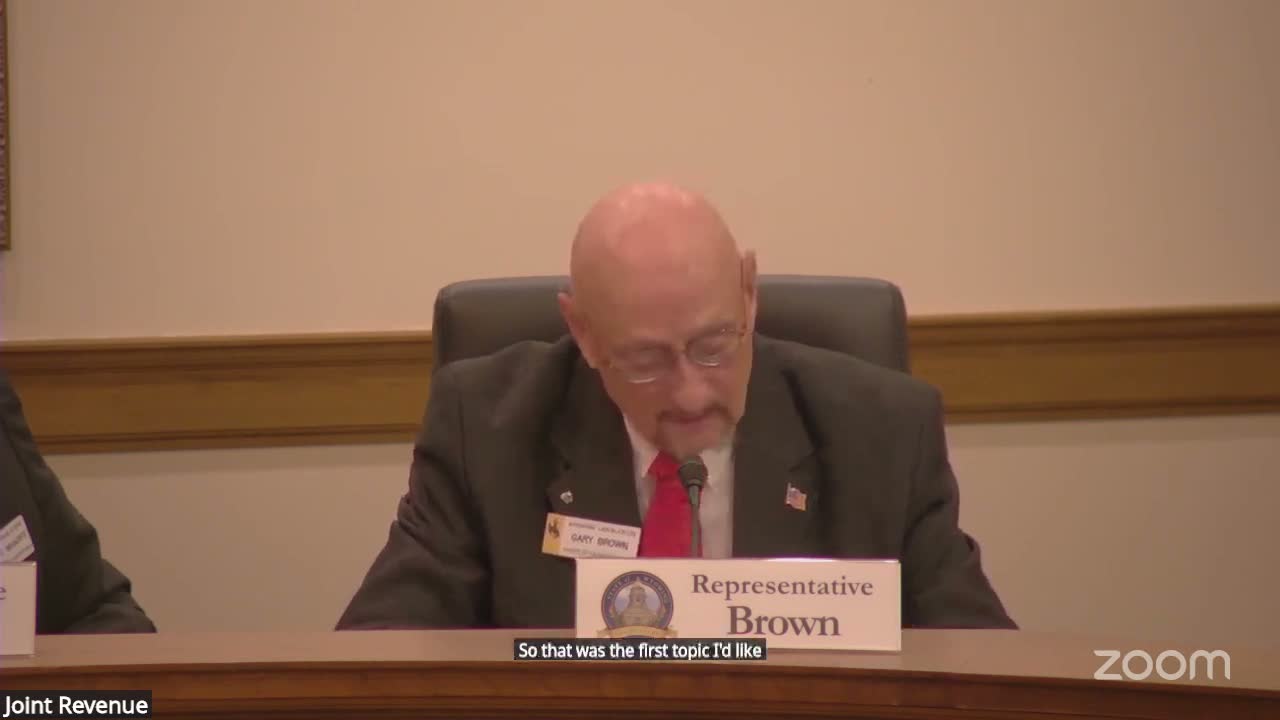
Summary
At an interim joint revenue meeting, legislators discussed changing how wind-energy infrastructure is taxed—proposals ranged from reclassifying wind property from agricultural to industrial to considering a severance or generation tax to compensate for permanent landscape and infrastructure impacts.
Lawmakers and witnesses at the March 7 interim session discussed multiple approaches to taxing wind-energy projects, including reclassifying wind infrastructure from agricultural to industrial property and considering a severance or generation tax to capture value from permanent infrastructure and landscape changes.
Senator Case argued for rethinking taxation of electricity generation, calling for a renewed look at a generation tax and citing prior legal work on commerce-clause questions that could allow Wyoming to tax generation. "When you build a wind farm ... transmission lines are an enormous deal ... so that property is extremely valuable for the production of electricity," Case said, arguing that long-lived infrastructure and transmission create enduring value that could justify a severance-style charge and revenue-sharing mechanism.
Representative Brown asked the committee to explore a formula to move wind-related property from agricultural to industrial taxation, using the road infrastructure and turbine footprints (areas cattle cannot graze) as the basis for reclassification and apportioning tax liability.
Treasurer Kurt Meyer urged a management audit of lease agreements for state lands and said Wyoming may not be receiving sufficient return from some leases. "I don't think we're getting enough out of those lease agreements," Meyer testified, asking for a management audit to review lease terms and payments.
Why it matters: Lawmakers framed these proposals as ways to compensate future generations for permanent landscape and infrastructure changes and to capture state-level revenues that could otherwise concentrate locally. Members raised distributional questions and flagged the need to balance local county revenues with statewide equity.
Next steps: Committee members requested further study, including audit work and potential formula development. No formal tax changes were proposed or adopted in the session; the committee agreed to include the topic among interim priorities for deeper review.