Lawmakers pitch several property-tax reforms including vehicle-tax overhaul and base-year assessments
Loading...
Summary
At a joint revenue interim meeting, legislators and witnesses proposed multiple property-tax reforms — from treating motor vehicles like real property to adopting base-year assessments and a possible transfer/‘sales’ tax on real-estate sales — and heard a departmental cost estimate for one option.
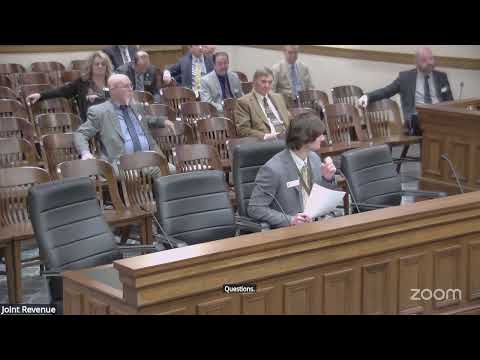
Lawmakers at a joint interim meeting on March 7 outlined several proposals aimed at easing or reshaping property-tax burdens in Wyoming, including a motor-vehicle property tax change, a base-year assessment model and a proposed real-estate transfer tax.
Dan Noble, a former director of the Department of Revenue testifying as a private citizen, described a plan to tax noncommercial vehicles like real property — applying a depreciated fair-market value, the residential assessment ratio and local mill levies — and said an initial department estimate put the program’s fiscal cost at roughly $120,000,000. "It's extremely expensive," Noble said, offering a spreadsheet modeling several scenarios and saying the change would benefit renters and people on fixed incomes by aligning vehicle taxation with real-property methods.
Supporters and other lawmakers urged broader reform as well. Representative Chestick proposed adopting a base-year assessment system that would freeze property assessments for a set period (for example, five to 10 years) and let local taxing bodies adjust mill rates to accommodate rising costs, a change he framed as "treating the disease, not the symptoms." Proponents said the model would damp sudden local valuation spikes while preserving local control over tax rates.
Separately, some members discussed replacing residential property tax with a one-time transfer tax (a 2 percent sales or transfer tax on home sales was given as an example) as a possible long-term replacement for recurring residential levies. Representative Bridal framed a 2 percent transfer tax on a $400,000 home as a $8,000 payment, roughly equivalent to several years of property taxes, and asked the committee to run numbers on replacement feasibility.
Why it matters: Committee members said these approaches aim to broaden relief beyond narrowly targeted exemptions and to address uneven valuation growth across counties. Noble’s vehicle-tax option would spread relief to renters and fixed-income residents but comes with a large estimated state fiscal impact; the chest-of-options approach — incremental reforms, pilot programs or partial adoption — was discussed as an alternative.
Department and next steps: Noble offered to share his spreadsheet with the committee. Members and department officials flagged the need for detailed fiscal analysis and coordination with county assessors. Committee leaders asked members to prioritize topics for interim study and scheduled interim meetings in June, late August and November to flesh out proposals.
The committee did not take formal votes on any of the proposals during this session; members agreed to pursue educational briefings and further study in interim meetings.