Get Full Government Meeting Transcripts, Videos, & Alerts Forever!
Get email alerts on the Advisory Boards topic
No spam. Unsubscribe anytime.
PGCPS committee backs name change and governance reforms for disabilities advisory board
Summary
The Policy and Governance Committee voted 4-0 to recommend Policy 1700 (Disabilities Issues Advisory Board) to the policy sponsor for revision, endorsing a proposed name change, staggered appointments, bylaws alignment and member replacement for low attendance.
The Prince George’s County Board of Education Policy and Governance Committee voted to recommend Policy 1700 — the Disabilities Issues Advisory Board (DIAB) policy — to the policy sponsor for revision after members endorsed a set of changes intended to improve continuity, clarity and oversight.
Board member Deborah Brown, who reported recommendations from DIAB, said the advisory body asked to change its name to remove a perceived negative connotation; Brown said the group suggested “Advisory Council on Disability Affairs.” She outlined additional recommendations the committee supported: allowing flexibility in reporting language (changing mandatory wording such as “shall” to “may” where appropriate), staggering appointments to avoid wholesale turnover, adopting bylaws that align with Robert’s Rules of Order and the Open Meetings Act, clarifying DIAB’s role relative to CCAC to prevent duplication, establishing two subcommittees (human resources and new construction), and replacing members who failed to meet the policy’s 50% attendance requirement.
“We think that staggered appointments will make the work doable and preserve institutional knowledge,” Brown said. She asked that items requiring legal review be sent to counsel before finalizing changes.
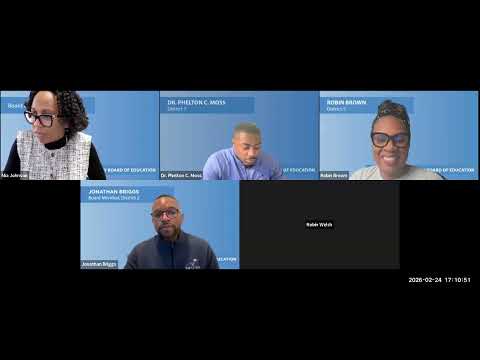
Miss Welch, the administration’s legislative/policy presenter, confirmed the committee’s recommended changes should be included in the next draft returned by the sponsor and that the administration will coordinate the legal review and drafting. Chair Dr. Felton Moss said those revisions should appear in the next version that comes back to committee so the board can debate and decide on the final language.
The committee took a formal voice vote and recorded four affirmative votes to recommend Policy 1700 to the policy sponsor for revision approval. The chair instructed staff to incorporate the recommended edits — including the proposed name change and governance clarifications — into the next draft and return it to the committee for subsequent consideration.
Why this matters: The DIAB updates affect how the district solicits input and oversees services for students with disabilities, including clarifying roles and accountability for implementation. The committee specifically asked for legal review of overlap with other advisory bodies and for language that preserves the board’s governance authority while improving transparency and continuity.
What’s next: The policy sponsor will receive the committee’s recommended revisions; staff said the revised policy will be returned for additional committee review and then move through the board’s policy process.