
Holyoke disability commission approves mailbox variance for Brights (Wright's) Block renovation
Get AI-powered insights, summaries, and transcripts
Subscribe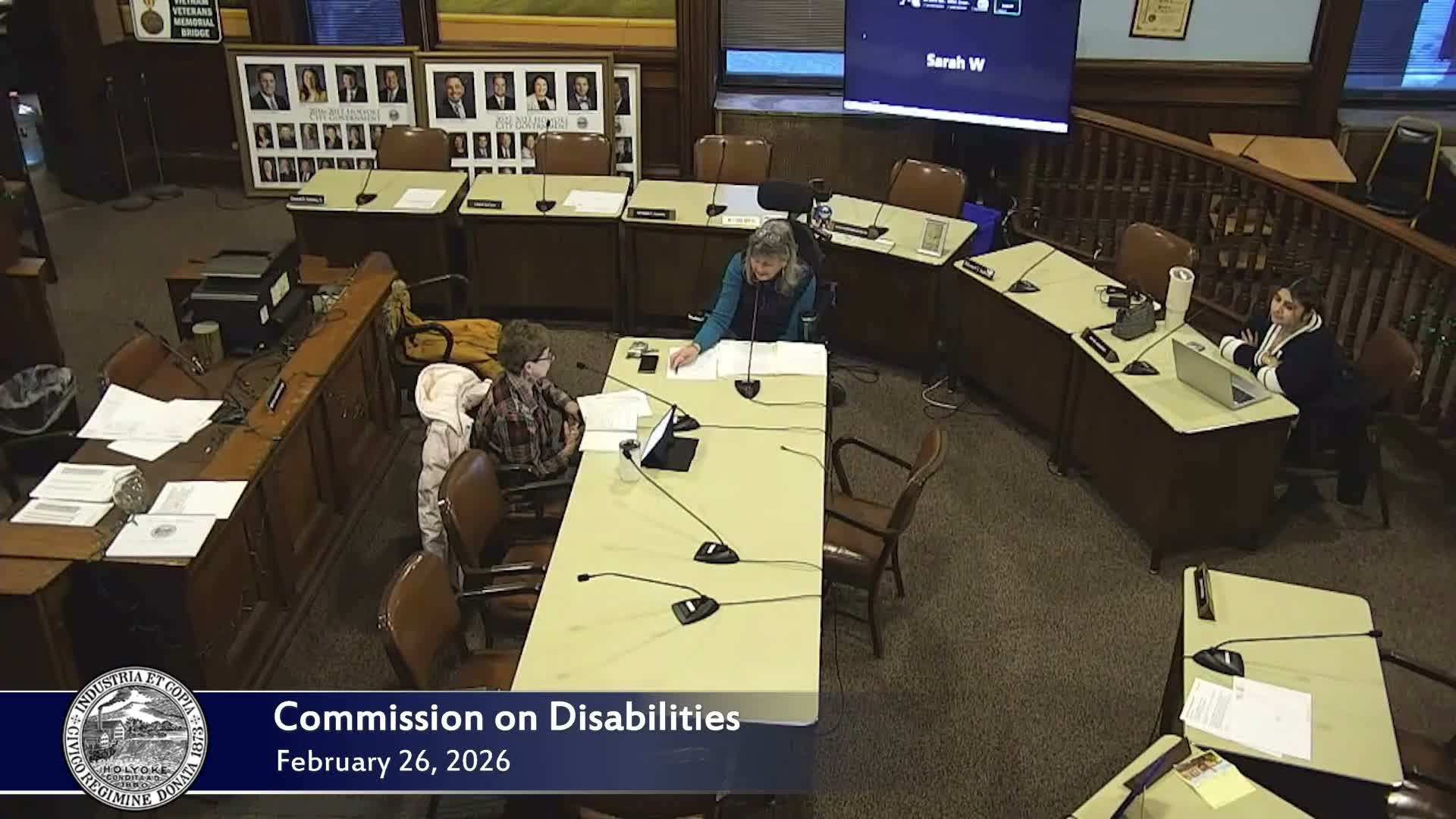
Summary
The Holyoke Commission on Disability voted to accept a variance request allowing resident mailboxes to remain in their historic storefront locations on High Street despite not meeting current clearance requirements; developers said facade protections and historic tax credits limit structural changes and proposed alternative accessible mailbox options.
The Holyoke Commission on Disability on Feb. 26 voted to accept a variance that allows resident mailboxes at the Brights (Wright's) Block redevelopment on High Street to remain in their current locations even though the surrounding clearance does not meet current code turning-radius requirements.
Developer Vadim Tolshinsky, who presented the project with partner Bill Wamldorf, said the four-buildings-on-one-block rehabilitation—marketed as Brights Block—uses historic tax credits and other subsidies that restrict altering facades and moving load-bearing walls. "So we are here for our project, lovingly called Brights Block," Tolshinsky said, noting three of four storefronts already have accessible entries and the fourth will be modified with a side-access deck. Wamldorf added that historic facades make it “difficult to ... open up and create a larger” clearance and that solving the issue structurally would be costly.
Commission members pressed the applicants on process and documentation. Chair Lynn Horan said she was concerned the commission had not received timely notice of the variance and that an earlier letter to the historic commission inaccurately claimed prior commission support. "We did not get notified. That is part of the process," Horan said, asking for truthful, complete application materials including an assessment of the building’s value to judge the financial reason for the variance.
Developers told the commission they had obtained city and state funding—including a Housing Development Incentive Program (HDIP) grant and historic tax credits—and publicly provided assessment information during the meeting (commission members later received an assessment figure the chair described as about $304,000). They said residents’ apartments in the project begin on the second floor and are accessed by stairs; the mailboxes in question serve those residential units rather than the ground-floor storefronts. To provide an accessible option if needed, Wamldorf suggested installing an external, freestanding, post-office-approved pedestal mailbox on the exterior.
Members also asked about bringing full mobility access to the upper-floor apartments. Tolshinsky said the team studied adding an elevator but determined it would add roughly $2,000,000 to the project and was not feasible within the program. The applicants said they are designing interior finishes with future adaptability in mind (blocking for grab bars, level porches aligned with future elevator landings).
After discussion, Commissioner Betty Larabee moved to accept the variance "as presented"; the motion was seconded and approved by roll call with all members voting in favor. Commission staff said the historic commission will make its own determination on the historic-review elements in their March meeting.
Next steps: the historic commission will review the historic-related approvals on March 9; the commission will receive notice of that decision and may take further action if it files a contention or request for additional mitigation.