Get Full Government Meeting Transcripts, Videos, & Alerts Forever!
Get email alerts on the Pay To Participate topic
No spam. Unsubscribe anytime.
Board reviews pay‑to‑participate practices and preliminary revenue estimates
Summary
Presenters summarized pay‑to‑participate fees in peer districts and local participation counts, and the board discussed equity concerns and uncertain revenue estimates; no fee policy was adopted.
Presenters identified as Heather and Matt gave the board an overview of pay‑to‑participate structures in Lorain County and comparable districts and provided participation counts for Elyria activities, prompting a discussion of both possible revenue and equity impacts.
The presenters reported that middle‑ and high‑school athletic fees in surrounding districts commonly range from about $100 to $300 per sport, with some sports or activities (for example, golf or hockey, which include course or ice costs) substantially higher. Districts use a mix of flat per‑sport fees, tiered pricing and family caps (examples included $300 per child, third‑sport free, or a family cap such as $750 in some districts). The presenters said some districts calculate costs by averaging four years of athlete participation and assigning supplemental cost shares.
A staff back‑of‑the‑envelope estimate was discussed as an example: using a $100 baseline per sport could produce revenue, but the presenters and superintendent emphasized the uncertainty. “We were talking about anywhere from a 125 to a $175,000 a year for that,” a staff member said during the discussion, acknowledging the estimate’s rough nature.
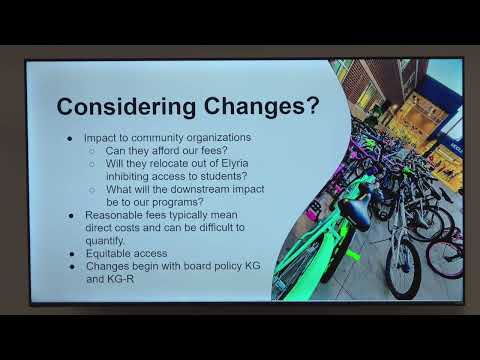
Board members and Superintendent Anne Slosch raised concerns about access for low‑income families and the administrative burden of collecting many small fees. Slosch and others noted that k–8 fee collection previously cost more to administer than it recovered and that limiting participation could harm academic outcomes tied to extracurricular involvement.
No motion was made to adopt pay‑to‑participate fees at the March 4 meeting; board members asked staff to collect comparative data from districts with similar demographics and return with more detailed analysis before any policy decision.