
Agencies map expanded transit, street‑closure and staffing plans to move fans for FIFA; federal and state transit funds cited
Get AI-powered insights, summaries, and transcripts
Subscribe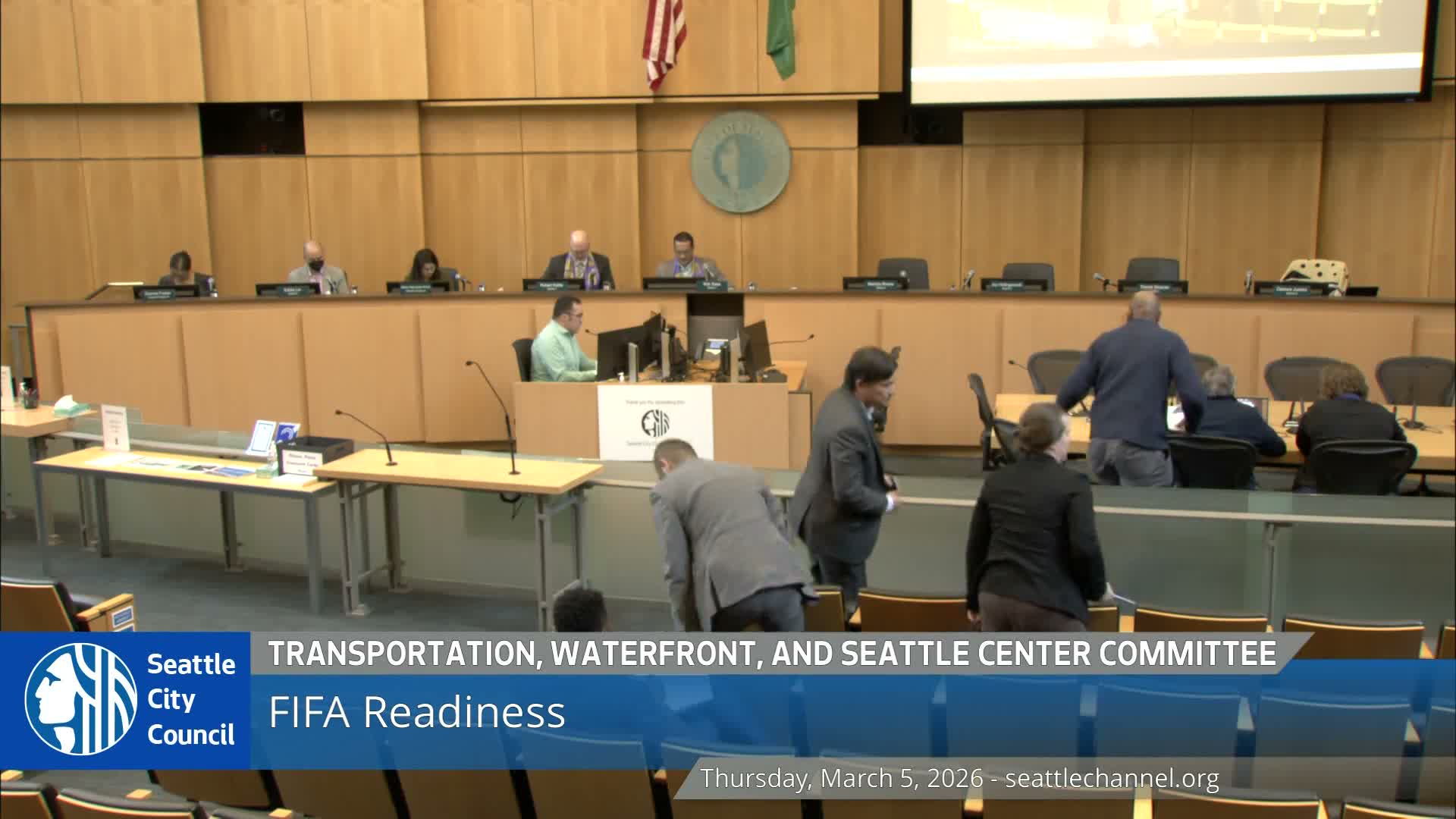
Summary
Seattle and regional transit agencies told the committee they are adding buses, special trains and a match‑day shuttle; federal ($8.4M) and state ($9M) transit allocations will help expand service, implement tap‑to‑pay and support visitor passes, while SDOT plans street closures, micromobility corrals and a construction moratorium on key corridors during the tournament.
City and regional transportation agencies outlined a coordinated plan March 5 to expand transit service, manage street closures and provide last‑mile access for the 2026 FIFA World Cup.
SDOT Deputy Director Liz Sheldon said the city’s goals are to maximize safety, preserve community mobility and push mode share to transit and active transportation. Sheldon noted the tournament’s weekday schedule and longer visitor stays create different planning demands compared with typical stadium events.
April Putney and agency partners said the region has secured supplemental funding to expand service: Putney and SDOT referenced a federal allocation of $8.4 million for transit (to be distributed by the Puget Sound Regional Council) in addition to about $9 million appropriated by the state legislature. Agencies said those funds will support service increases, enhanced communications and safety staffing.
King County Metro described an expanded match‑day service plan that will add roughly 60 buses on match days and scale a match‑day coach shuttle. Jonathan Rose said the match‑day shuttle will use 35–40 60‑foot coaches and can move "over 2,800 people per hour" from a staging area west of the stadium; the shuttle will operate three hours before kickoff through three hours after the match.
Sound Transit said Link light rail will run frequent headways on game days (as often as every four minutes north of the CID) and will deploy additional Sounder and special event trains; the agency emphasized multi‑station routing to distribute crowds and staffing at high‑use stations. Sound Transit also cited efforts to integrate temporary added service into public trip planners so riders see shuttle and special runs in Google Maps and other apps.
Operational details from SDOT include significant street closures around the stadium starting about four hours before matches and planned reopenings two to three hours after, staging areas for taxis and TNCs, micromobility corrals (SDOT said 24 corrals are installed with more planned), and a proposed construction moratorium on roughly 15% of streets in key corridors for the tournament window.
On passenger experience and fare access, agencies noted the recent tap‑to‑pay deployment and a three‑day visitor pass that can be bought with cash to help international visitors; agencies plan wayfinding, street teams and multilingual toolkits to assist travelers.
Council members asked for more granular route lists, headways and station‑by‑station capacity numbers; agencies said they are refining those details and will follow up with the council. Agencies also affirmed plans for an after‑action debrief to catalog lessons learned and consider which innovations should be retained beyond FIFA.
Next steps: agencies will finalize route‑level service plans, publish wayfinding and trip‑planning materials to the public, deploy match‑day staffing, and coordinate ongoing neighborhood service and public‑safety preparation.