
Court hears challenge over whether state law bars interim SEPA appeals in Seattle—IS dispute
Get AI-powered insights, summaries, and transcripts
Sign Up Free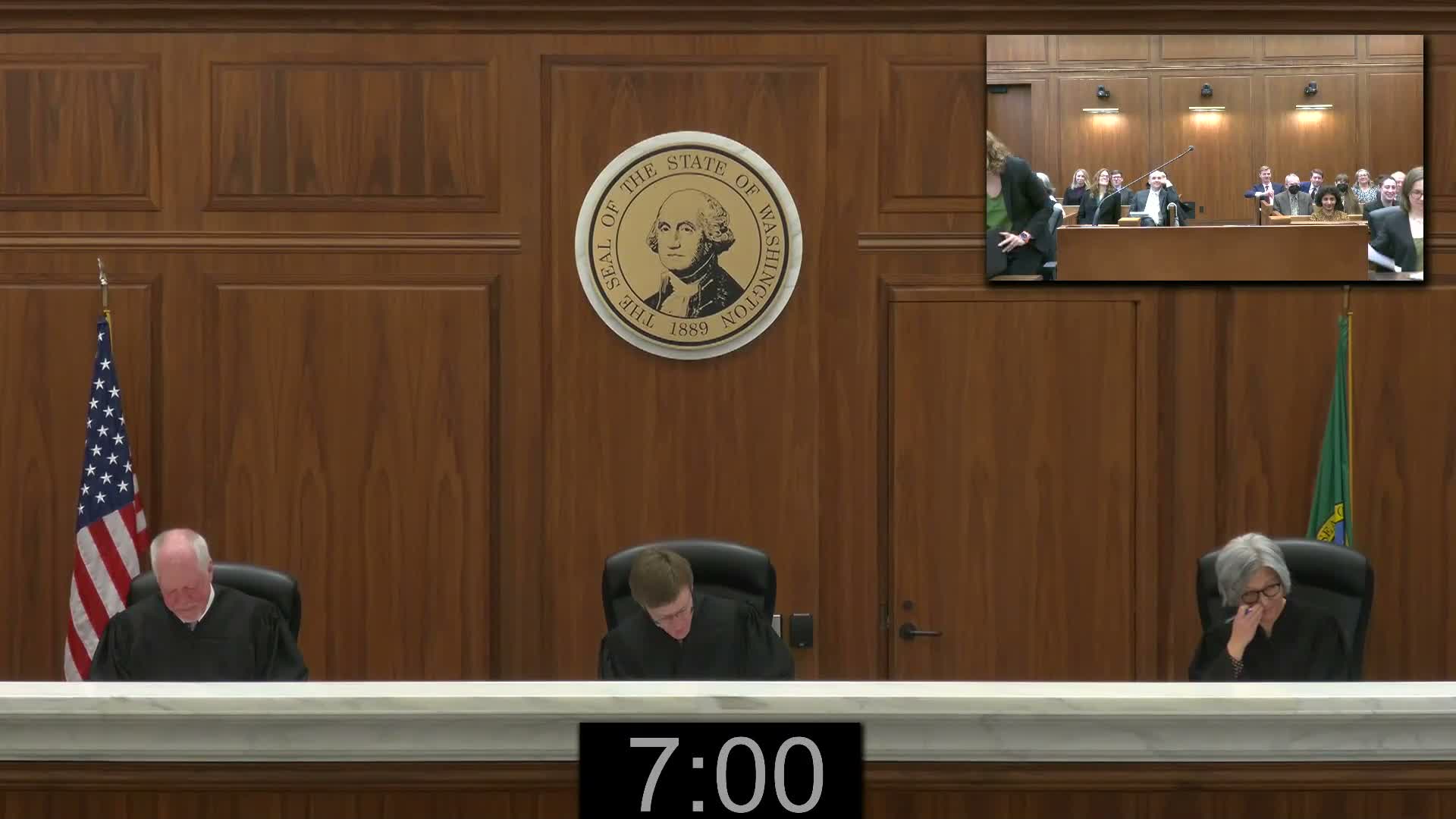
Summary
At oral argument, appellants asked the court to review a hearing examiner ecision that dismissed appeals of Seattle—itywide EIS review, saying state appeal-prohibition statutes do not bar a city—xaminer ppeal; the City argued the statutes and city code foreclose such interim appeals and urged denial of writs; decision is pending.
The court heard oral argument in consolidated appeals over whether Seattle ppellants could have an interim administrative review of a final environmental impact statement before the City Council acted.
Appellants—ounsel Chris Shouts, representing Friends of Ravenna, Cowan and John Carey, told the panel the narrow question is jurisdictional: whether the hearing examiner erred in dismissing the SEPA appeals under recent statutory appeal prohibitions and whether a writ of review to the superior court is the appropriate remedy. "This case concerns a review process that SEPA and Seattle's own code expressly allow: review by a hearing examiner of the adequacy of a final EIS," Shouts said, adding that the challengers were not asking the court to decide the merits of the environmental analysis.
The city—ontended the statutes cited in the briefing bar pre-decision or interim appeals of the kind brought here and that a writ of review is an extraordinary remedy not warranted in these circumstances. "The legislature prioritized promoting housing construction and limited SEPA appeals," Max Burke, counsel for the City of Seattle, told the court, arguing the statutory package and the city's code provisions make these appeals unavailable.
Counsel for Jennifer Godfrey, Toby Thaler, said Godfrey's issues focus on fish-habitat protections, which he said fall within statutory exceptions permitting review. Thaler also argued the case is not moot because the FEIS will inform a stream of future land-use decisions; losing the ability to challenge the EIS now, he said, would foreclose meaningful review of subsequent actions that rely on the document.
Judges pressed both sides on remedies and statutory construction. The bench explored whether, had the hearing examiner taken and then affirmed the FEIS on the merits, there would be any further judicial review; counsel agreed an examiner ffirmance would likely foreclose additional review. The court also asked whether the Growth Management Hearings Board would be an available forum absent the interim examiner appeal; appellants said it would not be able to review an "orphan" EIS or the examiner's procedural denial prior to enactment of ordinances.
The city emphasized statutory language and legislative purpose, including citations to code provisions (SMC 25.05.680(F)) and state law that, the city argued, were adopted to reduce delays to housing production by limiting certain SEPA and Growth Management Act appeals. Appellate counsel acknowledged the statutory language is not a model of clarity but argued statutory context and related provisions support a broad bar on the appeals at issue.
Appellants said the city's own SEPA materials and notice procedures invited these appeals, noting multiple petitions were filed under the process described in the administrative record. Shouts also urged that petitioner John Carey not be foreclosed from pursuing appeals on matters that only became apparent after the draft comment period.
No ruling was issued at argument. The court heard roughly an hour of argument from counsel for the consolidated appellants and intervenors, and counsel for the City, and took questions about mootness, statutory interpretation, and the availability of administrative and judicial remedies. A decision and any accompanying order addressing whether the hearing examiner had jurisdiction and whether writ relief is appropriate remain pending.