Citizen Portal

Washington court hears argument over whether child-abuse reporting immunity shields Seattle Children's from negligent-training suit

Other Court · March 4, 2026

Get AI-powered insights, summaries, and transcripts

Subscribe
AI-Generated Content: All content on this page was generated by AI to highlight key points from the meeting. For complete details and context, we recommend watching the full video. so we can fix them.

Summary

In oral argument, counsel debated whether Washington's mandatory reporter statute bars a direct negligence claim against Seattle Children's Hospital for alleged failures in training and supervision tied to a staff member's report to CPS. The court recessed without issuing a ruling.

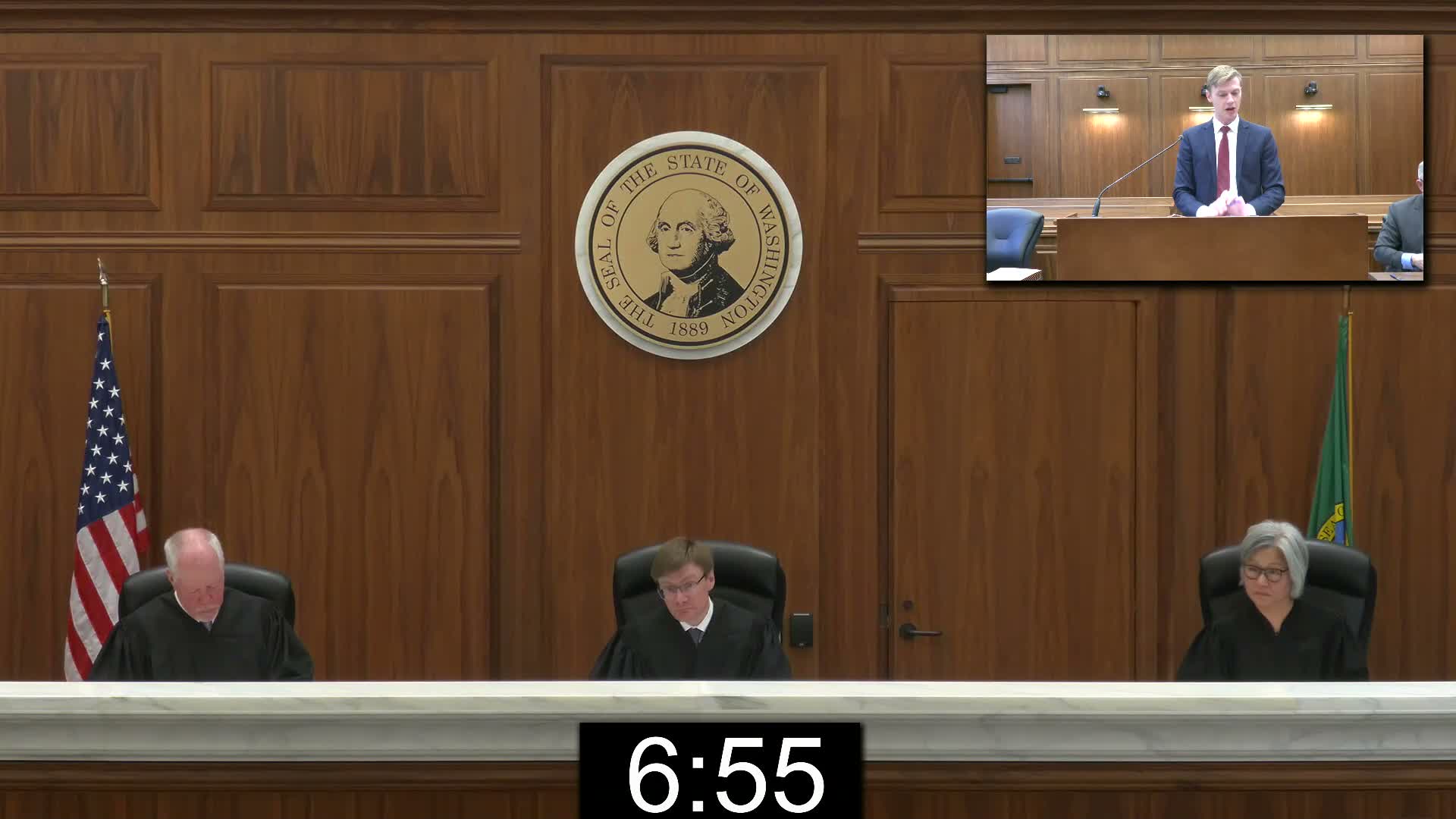
The court heard oral argument in Farrah v. Seattle Children's Hospital over whether Washington's mandatory child-abuse reporting statute bars a negligent-training and supervision claim against the hospital.

Brennan Johnson, counsel for Seattle Children's Hospital, told the panel that hospital employee Amy Tainter observed conduct in a February 2022 exam room that led her to report her concerns to the hospital's Safe Child and Adolescent Network (SCAN) Team and, under mandatory-reporting rules, to CPS. Johnson said the report led to the plaintiff's arrest and later was followed by dropped charges after investigative interviews. Johnson argued that, as a matter of law, the plaintiff cannot maintain negligent-supervision or training claims for three independent reasons: statutory immunity for good-faith abuse reports extends to the employer; an employer cannot be said to have a duty to discourage an individual mandatory reporter from making a report; and claims arising from reports made within the scope of the reporter's employment are barred.

"It is undisputed that this is or was a good faith report," Johnson said during argument, and he urged the court to read Washington precedent and the statute to extend civil immunity to Seattle Children's as the reporter's employer.

Daniel Whitmore, counsel for the plaintiff (identified in the transcript variably as Abdulazir/Abhinasir Farah), argued the reporting statute protects participation in good-faith reporting but does not clearly extinguish an employer's independent duty of reasonable care in training and supervising employees. Whitmore said the remaining claim against the hospital is not a challenge to the act of reporting itself but an allegation that institutional failures in training or supervision existed before the report and that the report is evidence of those failures.

"The reporter in this case is immune," Whitmore told the court, but he emphasized that immunity should not automatically erase antecedent negligence by an employer or convert the protected act into a categorical superseding cause as a matter of law.

The presiding judge pressed Whitmore on causation, asking whether the plaintiff's theory—if better training would have prevented the report and its consequences—runs counter to the statute's purpose of directing suspected abuse to law enforcement for investigation. Whitmore replied that proximate cause is a fact question for trial and that the narrow legal question before the court is whether the statute forecloses any employer-duty inquiry as a matter of law.

Counsel for Seattle Children's replied that investigation and verification duties belong to the state, that the duty to report is an individual duty with a layperson standard under Washington law, and that the statute's civil-immunity language covers civil liability "arising out of" the making of the report and related upstream activities—arguments Johnson said support affirming the trial court's dismissal of the employer claim.

No decision was announced at the hearing. The court moved the argument calendar and recessed after the parties concluded oral argument.