
Scurry County court backs resolution urging state to divert small motor‑fuel tax share to county roads
Get AI-powered insights, summaries, and transcripts
Subscribe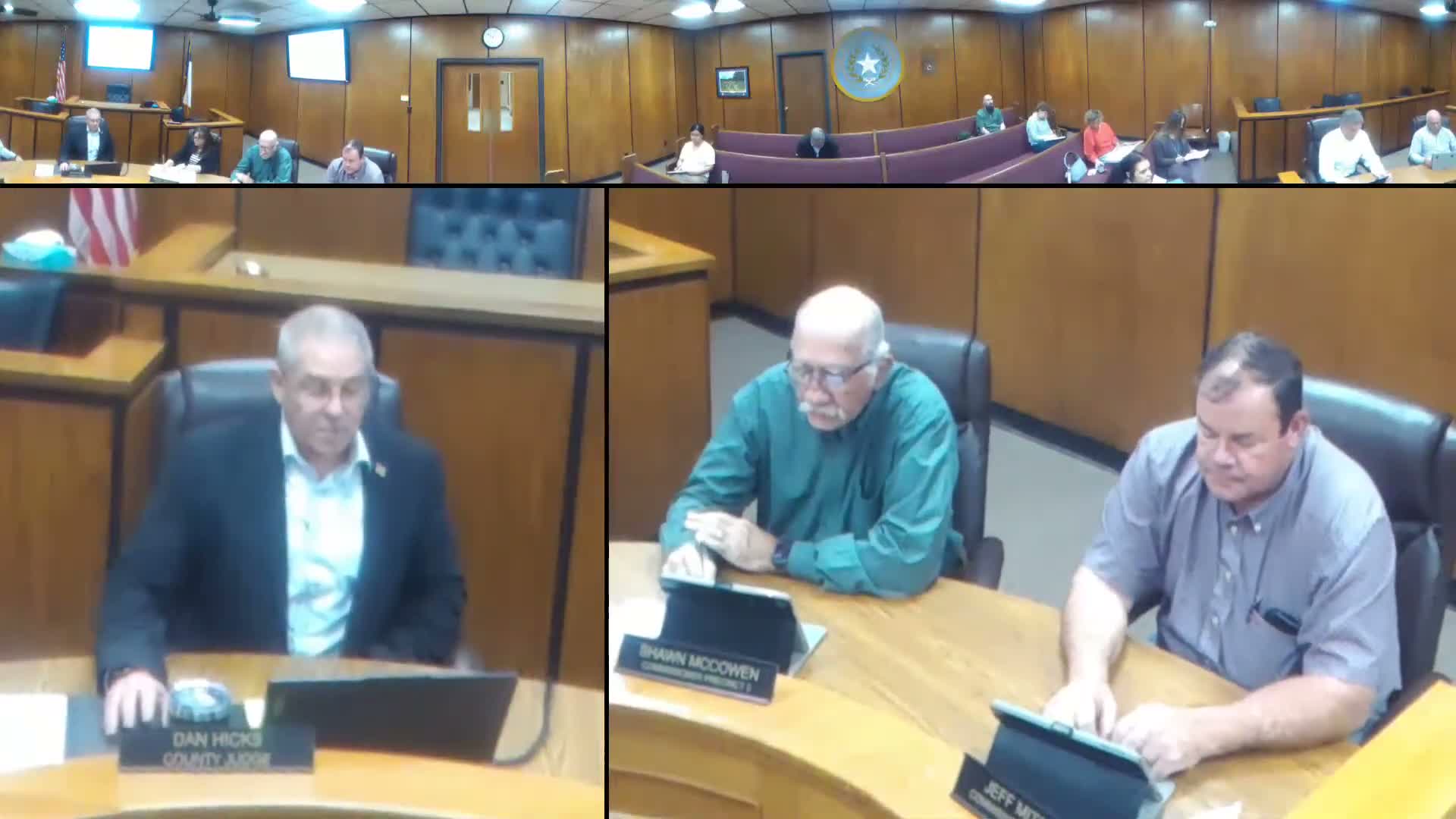
Summary
The Scurry County court approved a resolution asking the state to redirect a one‑twentieth share of the state motor fuels tax to county and road district highway funds to reduce reliance on local property taxes and boost county road maintenance funding.
The Scurry County court voted to approve a resolution supporting state legislation that would divert a small share of the state motor fuels tax to county and road district highway funds, the court said during its public meeting.
The measure, described to the court as drafted and circulated by Cass County Judge Travis Ransom, would change the allocation of the state motor fuels tax so that a one‑twentieth (1/20) share would be directed to the county and road‑district highway fund. The presiding official said the resolution is intended to reduce reliance on local ad valorem property taxes for road maintenance and to establish a county “pay‑as‑you‑go” policy to limit borrowing for roads.
“State motor fuels tax was set at 20¢ per gallon in 1991 and has remained unchanged,” the court’s presiding official said, adding that the tax generates about $3,900,000,000 annually and that a 1/20 share would yield an estimated $190,000,000 statewide. The official also said roughly 45% of Texas roads are county roads and cited a statistic that seven percent of fatal crashes occur on county roads.
Court members noted that some counties have already passed similar resolutions and that the change would use existing statutory distribution formulas to direct funds to counties. One member said the plan would not necessarily cover all local road and bridge needs — the court’s road and bridge budget was described during the meeting as approximately $4,300,000 — but would reduce the burden on county taxpayers if enacted at the state level.
A committee member moved to approve the resolution; the motion received a second and the court approved it by voice vote. The transcript records general assent but does not include a roll‑call tally.
The resolution was presented as a state‑level legislative request rather than a local ordinance; the court did not write new county law but formally expressed support for the proposed state allocation change. The court also noted electric‑vehicle registration or fee mechanisms could be used to offset any reduction in motor‑fuel revenues to other state accounts.
Next steps identified in the discussion were to publish the resolution on the agenda and the county website for public record; the court did not specify further local legislative actions or a timeline for follow‑up beyond that publication.