City of Tampa unveils first draft of modernized land development code; consultants seek public feedback
Loading...
Summary
City staff and Clarion Associates released Installment 1 of a three-part Land Development Code update covering zoning districts, use regulations and definitions; consultants emphasized the draft is an early, changeable draft and invited public comment on district consolidations, ADUs, parking and flood concerns.
Abby Feeley, the City of Tampa—s administrator of development and economic opportunity, opened a public presentation on the city—s Land Development Code update and said the first installment of the draft was released Feb. 17 for community review. She asked residents to subscribe to the Tampa Forward outreach list and to submit comments through the online feedback form or at Tampaforward@TampaGov.net.
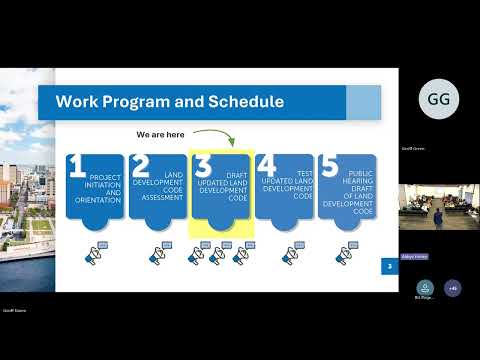
Jeff Green, a consultant with Clarion Associates, said Installment 1 covers Article 3 (zoning districts), Article 4 (use regulations) and Article 9 (definitions and measurement rules) and is one of three installments that will together replace the city—s 1,400-page code. "Everything is wide open," Green said, stressing the release is an early draft intended to generate public input.
The draft reorganizes and consolidates several zoning districts, introduces three mixed-use district types (Neighborhood Mixed Use, Corridor and Mixed Use Regional Center) and consolidates multiple use tables into a single, cross-referenced Article 4. Green said the team adopted a three-tier use classification to help zoning administrators place new or unnamed uses into categories based on impacts, and created a limited adaptive-reuse provision for some vacant, nonresidential structures in residential areas.
Christian Leuschmidt, a Clarion colleague, described navigation aids and footnotes included in the draft to explain what is carried forward from the existing code and where language is new or unresolved. "Those footnotes will not be included in the final LDC," Leuschmidt said, calling them a collaborative tool to record changes and rationales during drafting.
On housing, consultants said sections of the draft open some residential districts to additional housing types such as duplexes, triplexes and small multi-unit forms to expand attainable housing options without mandating change. Green described modest building-design standards for some single-family districts intended to address compatibility, particularly around garage placement and facades.
On plan developments (PDs), the draft proposes a minimum PD size to reduce spot zoning and unpredictability; drafters used a 2-acre threshold in early text but said that figure is subject to change after public input and that smaller minimums (for example, 1 acre) are under consideration.
Consultants said some topics are intentionally excluded from this installment, including citywide development review procedures (variances, rezonings), comprehensive development regulations such as parking and tree requirements, and nonconformity and enforcement sections that will appear in later installments.
Throughout a public Q&A, residents raised issues ranging from ADU definitions and floodplain fill to neighborhood compatibility and incentives for mixed-use redevelopment. On ADUs, Feeley said the code views an accessory dwelling as a self-sustaining unit that must stand alone and that permitting guidance has evolved; staff will continue to clarify permitting distinctions between ADUs and extended-family residences.
Several attendees urged reductions or elimination of minimum parking standards; Green said parking and street-parking standards will be addressed in Installment 3 and that the project—s transportation subconsultant will help calibrate off-street requirements.
Feeley and the consultants urged continued participation in public review, saying the draft will be revised after public and staff comments and further installments are released. The consulting team will present an update to the Tampa City Council the following Thursday as part of the ongoing outreach plan.
The City of Tampa did not adopt any code changes at the meeting; the draft remains open for comment and revision.