Get Full Government Meeting Transcripts, Videos, & Alerts Forever!
Get email alerts on the Education K 12 topic
No spam. Unsubscribe anytime.
Orting Elementary reports midyear reading gains and drop in playground referrals
Summary
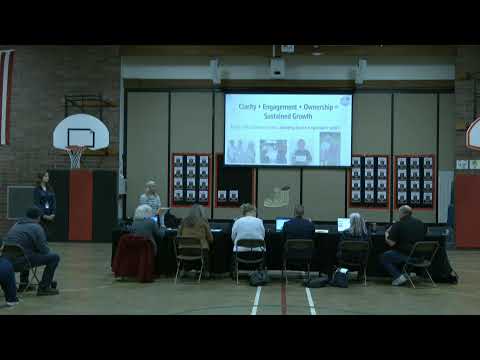
Orting Elementary staff told attendees the school saw strong midyear reading growth across priority standards, reported gains on i-Ready and literature units, and credited interventions and Playworks junior coaches for a roughly 65% drop in playground referrals.
Orting Elementary staff reported midyear improvements in student reading and classroom behavior during a presentation to school leaders and community members. Teachers said schoolwide i-Ready diagnostic results rose from about 37% meeting grade-level standards in the fall to 56% in the winter, and they described instructional changes and interventions they say produced gains.
"We grew across the entire six priority standards," said Jacqueline Musakis, a fifth-grade teacher, presenting the winter diagnostic graphs and noting a 19-percentage-point jump in students scoring at grade level. Teachers linked those gains to clearer learning progressions, frequent pre- and mid-unit checks and targeted small-group work.
The fifth-grade team described using complex literature (The Westing Game) and scaffolded tasks to push students toward higher-order thinking. "The text is super complex," one fifth-grade presenter said, and teachers are creating standards-aligned assessments and student-friendly rubrics where the curriculum lacks them.
Staff also highlighted tiered interventions. Katie Roberts, a resource-room teacher, and Ruth Morris reviewed the school’s MTSS (multi-tiered systems of supports) goals for tier-3 reading students. Presenters told the group the school had set a goal to reduce the share of students two or more grade levels below from 25% to 15% by spring 2026; winter diagnostic results showed the share at 11% and the share at-or-above grade level at 47%. "We met our winter goal," Roberts said, and staff proposed tighter targets for spring.
Teachers described classroom practices that support student agency, including goal-setting templates and student tracking of pre/mid/post results. Two students who spoke about the work said peer partners and graphic organizers help them find evidence in texts and set clear targets. "When I reach a goal that I’ve been working at, it makes me feel really good and proud," a student named Claire said.
Presenters credited Playworks and a junior-coach recess model with improving playground behavior. "As of three days ago when I pulled the data, our playground referrals are down 65% from last year," said Abby Yelvaney, a presenter on community partnerships, reporting referrals fell from about 429 to roughly 160. Staff said a coaching partner (named Coach Casey in the presentation) and monthly coaching weeks help train junior coaches and teachers.
School leaders also reviewed family- and community-engagement goals tied to the Panorama survey. The presentation said the school’s current family-involvement metric is 80% and the team aims to reach 90% by spring by emphasizing two-way engagement — inviting parent input on learning decisions rather than only communicating behavior or grades.
Presenters named several programs and tools used across the school: Playworks junior coaches for recess, Walk to Reading and 95 RAP/UFLI for phonics and fluency, and i-Ready and Panorama surveys for diagnostics and climate measures. Staff said they will continue to use mid-unit checkpoints and job-embedded professional development to refine instruction.
The presentation closed with leaders urging continued focus on clarity and coherence in instruction so students are ready for middle school. The team said they will monitor spring diagnostics and report next steps after the spring assessments.