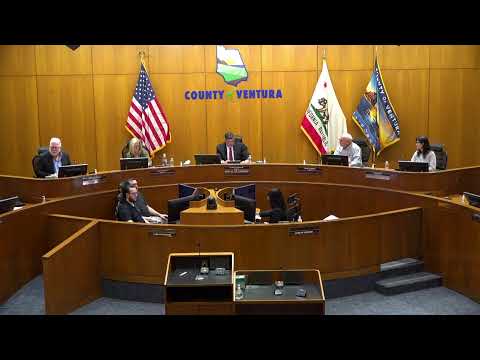
Planning commission approves variance to legalize 8-foot fence and waive gate setback at 11465 Nardo Street

Ventura County Planning Commission · March 6, 2026

Get AI-powered insights, summaries, and transcripts

Subscribe
AI-Generated Content: All content on this page was generated by AI to highlight key points from the meeting. For complete details and context, we recommend watching the full video. so we can fix them.

Summary

The Ventura County Planning Commission granted a variance for PL250095 to legalize an 8-foot solid wood fence that encroaches into a flood-control right-of-way and to waive the 20-foot vehicle gate setback at 11465 Nardo Street in Saticoy; the motion passed unanimously and the fence must still complete follow-up permits.

The Ventura County Planning Commission voted unanimously on March 5 to approve a variance (case PL250095) that would legalize an existing 8-foot solid wood fence and allow an encroaching vehicle gate at 11465 Nardo Street in the Saticoy area of unincorporated Ventura County.

John Okendo, senior planner with the Ventura County Planning Division, described the request as an after‑the‑fact variance to the noncoastal zoning ordinance to legalize fencing that exceeds area‑plan height limits and encroaches into part of the Watershed Protection District’s flood‑control right‑of‑way. Okendo told the commission staff’s recommendation is to grant the variance subject to conditions and to require follow‑on permits including zoning clearance, building permits, and an encroachment permit with County Public Works.

“Very, very quickly, the variance would legalize an 8‑foot‑tall solid wood fence, allow encroachment into the required 20‑foot vehicle setback for the driveway and allow encroachment into the watershed protection district’s flood‑control right‑of‑way,” Okendo said in presenting staff’s analysis. He also said staff found the project categorically exempt from CEQA under Guidelines sections 15301 and 15303 and had provided a consistency analysis tied to variance standards in the NCZO.

Commissioners asked about access and whether Flood Control objected to the encroachment. Okendo said the Watershed Protection District and Public Works had been notified, provided conditions of approval, and did not object to the requested deviation. Assistant County Counsel David Edsel emphasized that the commission’s action is discretionary authorization to deviate from code and that “the fence itself does not become legal until it completes the conditions of approval,” including any Watershed permitting.

Kevin Cohen, representing the applicant (Elevated Entitlements on behalf of Blue Energy Holdings LLC), told the commission Flood Control has had a keyed lockbox for access for about two years and that the fence had been in place since approximately 2017, before his client purchased the property: “So, the fence has been there about 2017.” He said there had been no neighborhood complaints and described security concerns — graffiti, loitering and trespass — as the primary reason for the solid fencing.

The commission opened the public hearing and, with no members of the public requesting to speak on the item, moved to act. Commissioner Kesely moved to approve staff’s recommendations; the motion was seconded and carried on a unanimous roll call vote. The approval is conditioned on the items listed in exhibit 6 and still requires the applicant to obtain required subsequent permits (zoning clearance, building permits, and an encroachment permit) before the fence is legalized.

The commission’s action records and supporting materials are to be kept by the planning commission clerk at 800 South Victoria Avenue in Ventura, California. The case planner said the property is a legal nonconforming single‑family dwelling within an IND (Saticoy area plan) designation and that no new principal structures are proposed with this variance request.