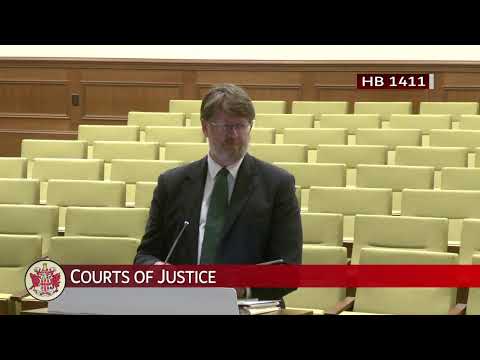
Courts committee narrows bill to let judges order respondents to contribute to rent or mortgage in protective orders
Loading...
Summary
The Senate Courts of Justice Committee amended a House-origin bill to clarify that judges may require a respondent to 'contribute to or pay' rent or mortgage as part of family-abuse protective orders and reported the bill to the Finance Committee for further consideration.
The Senate Courts of Justice Committee on March 7 amended a House-origin bill to explicitly allow judges, when granting a family-abuse protective order, to require a respondent to contribute to or pay rent or mortgage for the residence awarded to the petitioner. The committee reported the bill to the Finance Committee as amended.
The bill's patron told the panel the change is intended to make explicit what some judges already do and to ensure unrepresented petitioners know they can ask for this relief. "This bill is just providing clarification," a committee supporter said, arguing that subsection 10 of the existing code already allows courts to grant "any other relief necessary for the protection of the petitioner," including temporary possession of the residence.
Several senators expressed concern that the original draft could be read as allowing a judge to force a respondent to pay a petitioner’s rent or mortgage for up to two years without the protections available in other proceedings. "I find that very problematic," said Sen. Carol Foy, who said she offered a friendly amendment to limit the period to 60 days; the patron declined that change. Foy warned that respondents in civil protective-order proceedings often lack counsel and could face substantial financial obligations without an attorney to advise them.
To address those concerns, the committee adopted language clarifying that a court "may require the respondent to contribute to or pay rent or mortgage," rather than imposing an all-or-nothing requirement to pay the entire amount. Supporters argued that the change would help petitioners who are unrepresented and at risk of losing housing, while leaving the ultimate decision to judicial discretion.
The committee chair said members still retain the court's catchall authority under subdivision 10 of the statute and emphasized that the bill as amended is permissive, not mandatory. The bill was reported and referred to the Finance Committee for additional consideration.
The committee also noted that courts currently can order temporary child support as part of protective orders and that protective orders are reviewable on an expedited docket.
Next steps: The bill will go to the Finance Committee; no further floor date was announced in committee remarks.