Get Full Government Meeting Transcripts, Videos, & Alerts Forever!
Get email alerts on the Environment topic
No spam. Unsubscribe anytime.
Council member raises dust, drainage and health concerns over nearby gravel-processing operations
Summary
A council member described persistent dust from local gravel/processing operations, said state permits limit the city's authority, and urged exploring regulatory or legislative changes (citing House Bill 355) and cooperation agreements to control dust and protect storm drains and residents.
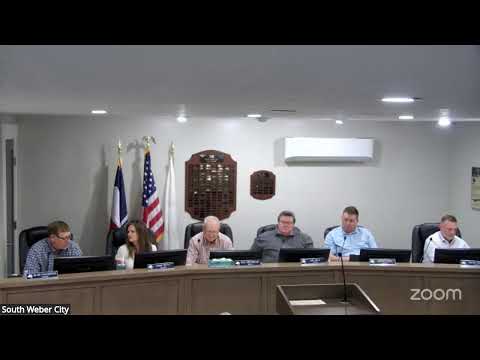
A council member (S8) told the South Weber City Council on Sept. 23 that residents are reporting excessive dust from nearby gravel-processing operations and that local options to compel mitigation are constrained by state permitting.
The council member described repeated communications from residents, property impacts such as dust buildup in storm drains and basements, and said the state Division of Air Quality issues the permits that govern many of the operations. “There’s some misinformation out there,” the speaker said, and added that while the city can negotiate cooperation agreements and pursue ordinance changes, state law and existing permits mean the city’s options are limited without legislative changes. The speaker referenced House Bill 355 as part of the legal backdrop that allows mining activity and said the city would explore whether state law or water-quality authorities could give the city more leverage.
The speaker urged the city to seek stronger regulations, closed stockpiles where wind tunnels form, and work with state agencies to prevent dust from entering storm drains and water infrastructure. Residents and council members described visible dust accumulation and property impacts during recent weather events.
Why it matters: Chronic dust from industrial operations can degrade air and water quality, create property damage, and pose health and nuisance concerns for nearby residents. The council’s options depend on state and federal permitting frameworks, so council members said they plan additional conversations with the Division of Air Quality and state water authorities and to examine legislative remedies.
What’s next: Council staff will pursue conversations with state regulators and representatives to define the city’s regulatory authority and potential legislative or permitting remedies; no formal ordinance or enforcement action was adopted at the Sept. 23 meeting.