
Union County budget director reviews grant activity, cites $61 million in expenditures and potential tax savings
Get AI-powered insights, summaries, and transcripts
Subscribe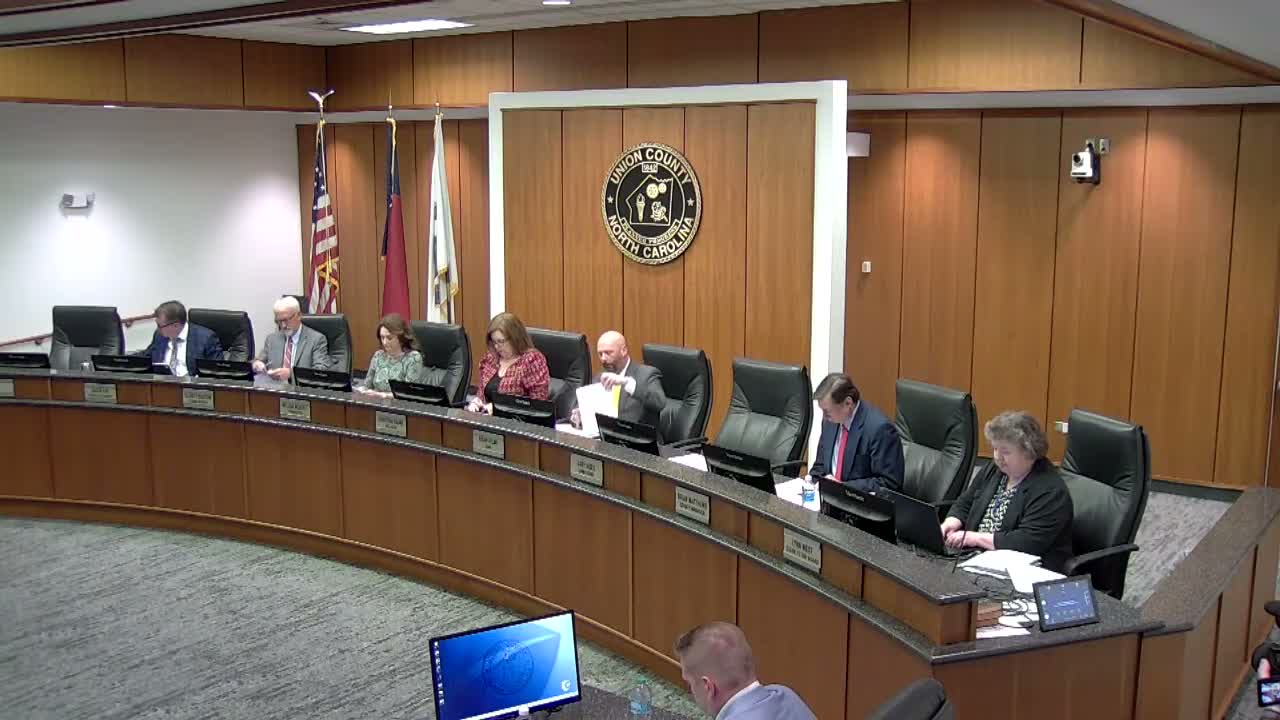
Summary
Budget and Grants Director Jason May told the Board that seven years of grant expenditures reached about $61,000,000 in 2025, the county has applied for 19 grants this fiscal year (more than $30 million in potential funding), and that better grant management could avoid additional cents on the ad valorem tax rate; he also outlined tools and staffing to manage grants.
Jason May, Union County’s director of budget and grants management, presented an update on the county’s grants activity and strategy during the board’s business session.
May said the county’s grant-related expenditures (not awards) rose to about $61,000,000 in 2025 and that consolidating budget and grants oversight has let staff count grant-driven cost avoidance against taxes. "If you look over the past 7 years, on average, we have avoided 6¢ in tax," May said, adding that the county avoided about "10¢ in taxes last year in FY 2025" when comparing grant-driven cost avoidance to the tax rate. He told the board that the county has applied for 19 grants so far this fiscal year, totaling more than $30 million in possible funding, and that four of those applications have been awarded to date.
May described the county’s grant approach as a four-pronged strategy to manage the full lifecycle from application to closeout, noting past problems with closeout costs that sometimes made smaller grants burdensome to administer. He highlighted specific grant opportunities: an Economic Development Administration application tied to an agricultural manufacturing-processing (barn) project and a Golden Leaf Open Grant the county is pursuing (about $150,000) to support a proposed food hub and related agriculture-services projects.
Board members thanked May and emphasized being strategic about which grants to pursue because some come with undesirable "strings attached," as one commissioner put it. A commissioner asked how many people were actively working on grants; May said the team includes himself and a grant specialist in addition to existing staff support and that the county uses software tools — an eSibis search platform and Power BI for reporting — to increase capacity. May said the county will begin providing quarterly grant reports attached to agendas in FY27 so the board can track applications, timelines and expected expenditure schedules.
Why it matters: grants can bring significant outside funding into county projects but also create obligations and long-term lifecycle costs; the county’s effort to coordinate grants and budgeting seeks to reduce tax pressure and better manage program closeout costs.
No formal board action on grant approvals was taken at this meeting; the board approved the consent agenda and adjourned after the presentation.