Get Full Government Meeting Transcripts, Videos, & Alerts Forever!
Get email alerts on the Water Finance topic
No spam. Unsubscribe anytime.
Mount Clemens commission approves application for $45 million water-plant loan after 4–3 vote
Summary
After hours of public comment and a divided debate over joining the Great Lakes Water Authority, the Mount Clemens City Commission voted 4–3 to apply for a $45 million Drinking Water State Revolving Fund loan to build an 8-million-gallon-per-day filtration plant. Commissioners said planning will continue even if funding is not awarded.
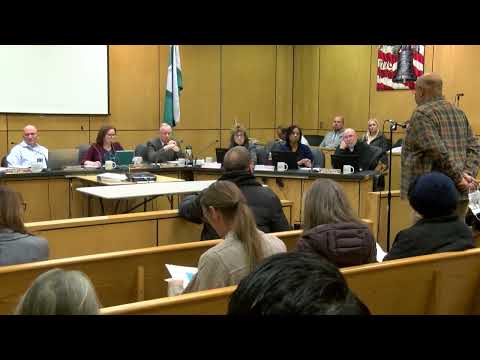
The Mount Clemens City Commission voted 4–3 to approve an application for a $45,000,000 Drinking Water State Revolving Fund loan to construct an 8-million-gallon-per-day water filtration plant, following extended public comment and a split discussion among commissioners.
Supporters of building a local plant argued it preserves local control and is a long-term investment. "We need our own plant," said the commissioner who led the motion, noting the plant would be an asset the city could market to neighboring communities. Several residents echoed that view, saying local control ensures quality and preserves a revenue source.
Opponents and cautious commissioners warned about the city’s ability to shoulder long-term debt and the impact on low-income residents if rates rise. "Forty to fifty percent delinquency on water bills indicates many households already struggle," the mayor said in explaining a vote against immediately endorsing debt that could hike rates for customers.
Brian Baker, the county’s appointee to the Great Lakes Water Authority and chief deputy at Macomb County Public Works, told the commission GLWA offers system redundancies, intake options, and potential savings: he said the community could avoid roughly $28 million in upfront costs by joining GLWA and that GLWA provides low-income bill-assistance programs.
Commissioners also questioned timing and contingency plans. Several members asked whether the city could accept a state funding priority and later decline it; staff replied that the city may turn down funding if it chooses, but taking and later rejecting funds has potential practical and reputational consequences for future grant seeking.
The final motion authorized the city manager to submit the DAWSRF application for the $45 million loan; the motion passed 4–3. Commissioners said they will continue planning for either outcome — pursuing a local plant or other options — and discussed putting a funding question before voters if needed.
What happens next: staff will complete the application and await the state’s priority list; commissioners said they expect to learn more about awards in September and October and will continue parallel planning work so the city is prepared whether or not the loan is approved.