Get Full Government Meeting Transcripts, Videos, & Alerts Forever!
Get email alerts on the School District Budget topic
No spam. Unsubscribe anytime.
Sumner County Schools preview $338M budget with $31M state boost and proposed raises
Summary
At a May 16 budget workshop, Sumner County Schools officials outlined a proposed $338 million consolidated budget that includes roughly $31 million in new state revenue from the TISA formula, a $1,500 certified pay increase and a $1‑per‑hour increase plus step adjustments for classified staff; board members pressed staff on recurring costs, iPad replacement and special‑education assistant pay.
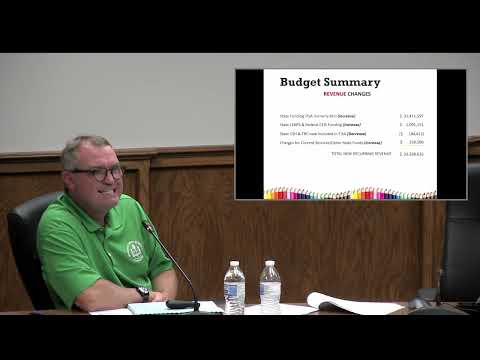
At a May 16 budget workshop, Sumner County Schools staff presented a proposed $338 million consolidated operating budget that officials say includes roughly $31 million in additional state revenue tied to the new TISA funding formula.
The presenter emphasized that the district—xpects the TISA change to increase state aid by about $31 million next year, raising total state support to near $200 million while local maintenance‑of‑effort is projected at about $126.4 million. "TISA funds about a little over $31 million more in revenue this year," the presenter said, noting the district will still need to plan for recurring local obligations.
Why it matters: the district must balance one‑time and recurring revenues. The presenter warned that pay raises and new recurring positions are permanent budget commitments and urged caution when using temporary dollars. He also reminded the board that under state law a continuation budget would take effect if the county has not approved a budget by July 1 and that "if a budget is not approved by September 1, school will not operate," underscoring statutory timing constraints.
Staff proposals and personnel costs: the budget package includes an $11,795,000 increase tied mostly to compensation. The district proposes a $1,500 across‑the‑scale increase for certified staff and a $1‑per‑hour increase plus step adjustments for classified employees, which would raise the classified starting wage from $11 to $12 per hour. The presenter walked the board through examples showing how steps and scale changes affect employees at different experience levels and said recurring personnel costs require scrutiny before adoption.
Positions and enrollment changes: the proposed staffing additions include 14 academic teachers and six ELL teachers to meet growth and state‑mandated ratios; guidance counselors and other positions were described as tied to student population changes. Staff confirmed White House Intermediate and the Liberty Creek campus are scheduled to open next fall, requiring some redundant or new administrative and support positions.
Devices and ESSER funding: the presentation outlined a recurring district device fund of $750,000 and noted this year general‑purpose capital line includes $3,510,800 for iPads. Staff said ESSER 3 funds will provide about $5.79 million in the first wave, covering high‑school student devices and teachers; staff estimated roughly 21,200 devices in the initial rollout. Board members pressed for planning on replacement costs; staff estimated a three‑year useful life and suggested a residual trade‑in value of about $100 per device, which would require multi‑year planning to avoid future funding gaps.
Textbooks, instructional supplies and capital: instruction leaders said the district increased annual textbook and instructional‑supply allocations by about $940,000 to reflect changes in how those purchases were previously capitalized and to better align recurring instructional costs with current practice. Capital outlay lines for campus projects were clarified as district projects distinct from county bond funding for new school construction.
Budget safeguards: the presenter noted the state requires districts to set aside a mandatory fund balance; this year the district—alculated that mandatory amount at about $16,632,000. He said the difference between budgeted revenue and expenditures is smaller this year than in recent years, and that the district retains an undesignated fund balance to address emergencies.
Concerns and follow‑up: board members asked whether certain groups—specifically some special‑education assistants—were included in range or step increases; staff acknowledged some SPED assistant categories were not included in this year's range changes and agreed to review the positions. A board member asked whether bus drivers who decline employer insurance receive compensation; the presenter said the district had investigated the question and believed federal law prevents paying employees to decline insurance. Several members urged careful planning to avoid funding recurring expenses with one‑time dollars.
Next steps: staff said the board will be asked to approve the budget and plans call for the district to present the budget to the county, where a June 5 county meeting is expected; final county timing may vary. The presentation materials and detailed budget notes will be posted online for public review.
(Attributions: quotations and paraphrases above are taken from the district presenter and staff during the May 16 budget workshop. Other remarks in the workshop were questions and clarifications from board members and staff.)