Caregivers, lawyers and advocates urge 'kinship first' reforms, automatic enforcement of timelines after case accounts and missing‑child failures
Loading...
Summary
Advocates and caregivers described cases they say show failures to follow statutory timelines and called for enforceable 'kinship first' practices, stronger missing‑child response, mandated training, and mechanisms to escalate missed deadlines under Jacob's law.
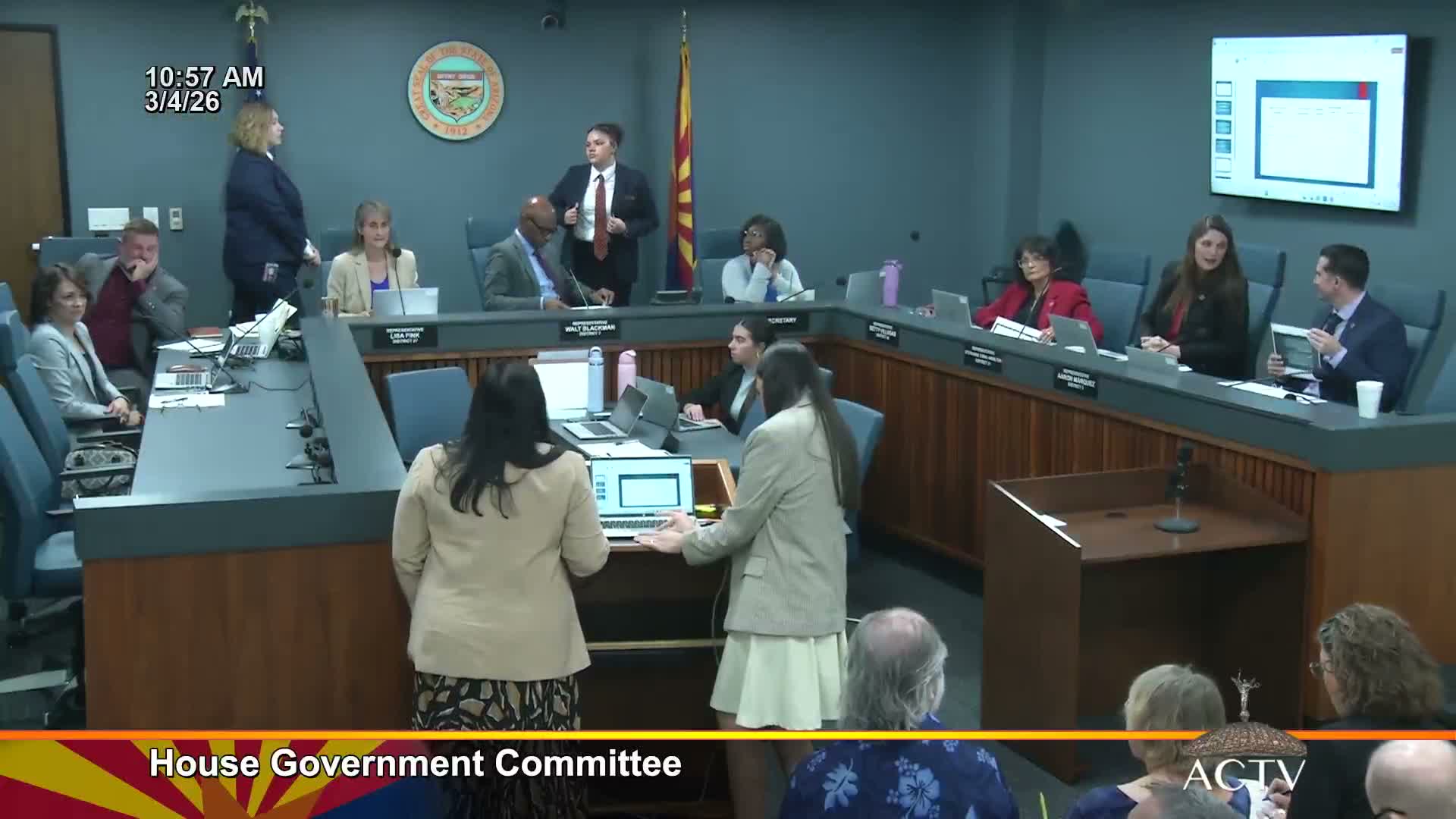
Speakers from children's advocacy groups, community organizations, attorneys and foster parents told the House Committee on Government that Arizona must enforce existing laws and build auditable escalation when required timelines are missed.
January Contreras of Children's Action Alliance summarized the Family First Prevention Services Act and urged attention to how QRTP waivers and exceptions are being used. Roy Dawson, executive director of the Arizona Center for African American Resources, described community efforts to reduce disproportionate removals of Black children and urged culturally informed supports.
Attorneys and former DCS staff recounted case examples they said demonstrate practice gaps: late or missing placement documentation, inconsistent forensic interview practices, and rapid movement of children into group homes despite the presence of willing kin. One attorney described a recent case in which seven children were split across multiple homes after a kinship placement was denied; another witness described a guardian who said her grandchild was taken and placed far from school and family for months.
Seneca Robinson, a longtime foster parent and advocate, proposed concrete enforcement changes: automatic incident reports when Jacob's Law deadlines are missed; mandatory training for caregivers and DCS specialists on escalation and out‑of‑network access when health plans cannot provide timely services; prompt, documented missing‑child protocols; and faster, auditable group‑home licensing investigations. "If the 21‑day deadline is missed, escalation should be automatic," she told the committee.
Committee members thanked witnesses and asked staff to prepare enforcement mechanisms and to reconvene with additional testimony and written materials. The committee did not adopt new statutory language during the hearing, but members signaled a focus on enforceable operational changes rather than only new directives.