
Committee backs bill to lower CCW fees for residents, director can adjust out‑of‑state charges
Get AI-powered insights, summaries, and transcripts
Subscribe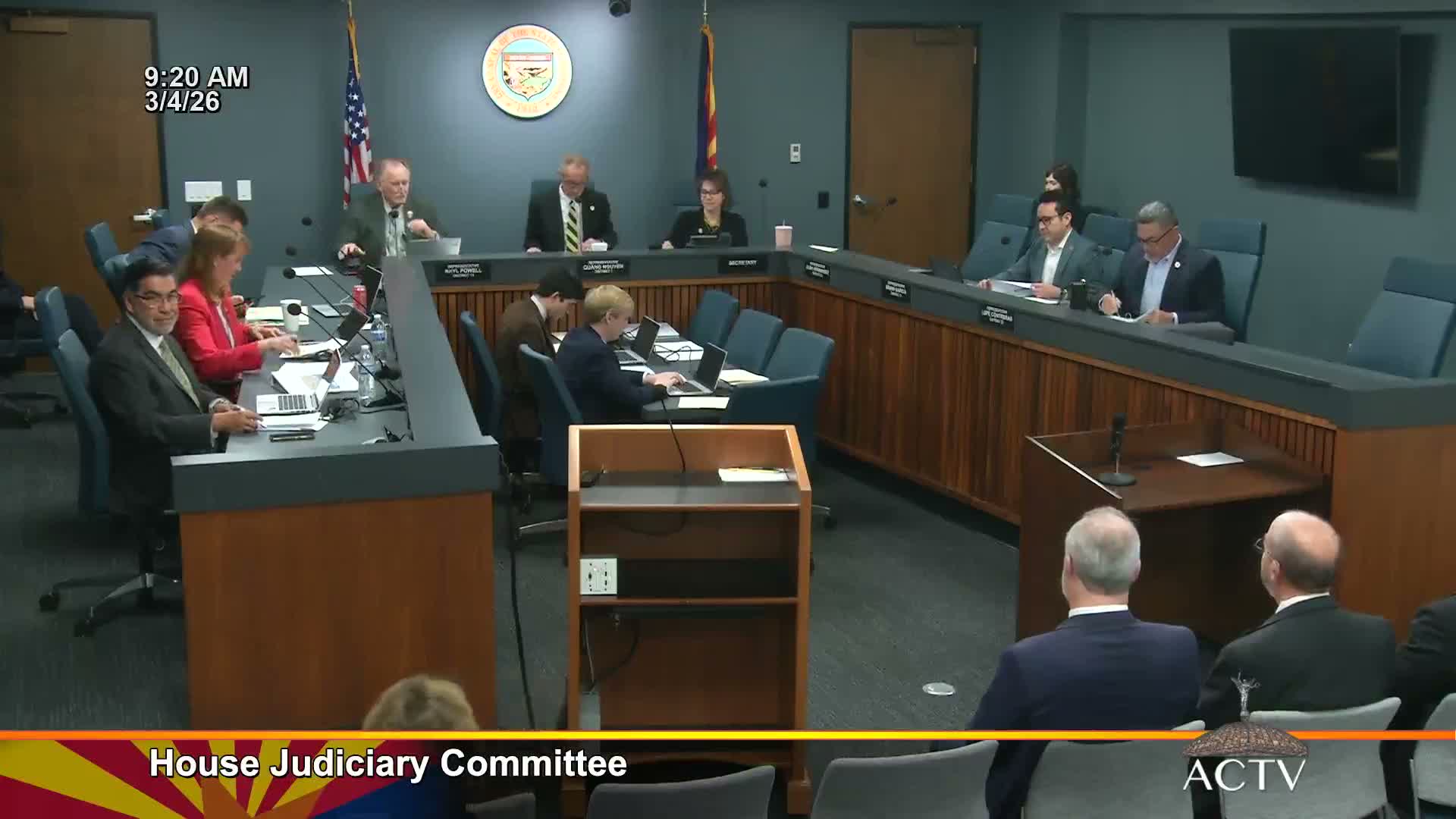
Summary
SB 10‑53 would force DPS to charge residents 10% of what nonresidents pay for CCW permits; proponents said the director can adjust out‑of‑state fees to keep the change revenue neutral and emphasized background‑check benefits from more CCW permits; the committee recommended the bill pass.
Senate Bill 10‑53, as presented to the Judiciary Committee, would change the fee structure for concealed‑carry weapons (CCW) permitting so that Arizona residents pay 10% of what nonresidents are charged.
Sponsor remarks and testimony from Michael Infantzen representing the Arizona Citizens Defense League, the Arizona State Rifle and Pistol Association and the Arizona firearms industry emphasized that the bill is intended to be revenue neutral because the director of DPS can adjust out‑of‑state fees to offset the discount. "In the bill, it allows the director to adjust costs to make sure that it is revenue neutral," Infantzen told the committee, adding that processing is often done by an out‑of‑state vendor and that residents should not carry that added burden.
Members asked whether DPS had authority to alter out‑of‑state fees to maintain revenue neutrality, and staff and proponents said the director could set such fees. Some members urged consideration of caps to prevent out‑of‑state fees from becoming excessive; proponents said the director can balance rates and that the bill simply sets the parameter for resident discounts.
After testimony and discussion, the committee returned SB 10‑53 with a due‑pass recommendation (vote recorded as 6 ayes, 2 nays, 1 absent).
Why it matters: The bill would change CCW fee burdens and could increase the number of permits processed through state systems (with attendant background checks), while raising questions about fee caps and how out‑of‑state charges will be set.