
Rep. Gillette warns procurement and payment rules may be driving overreliance on congregate care
Get AI-powered insights, summaries, and transcripts
Subscribe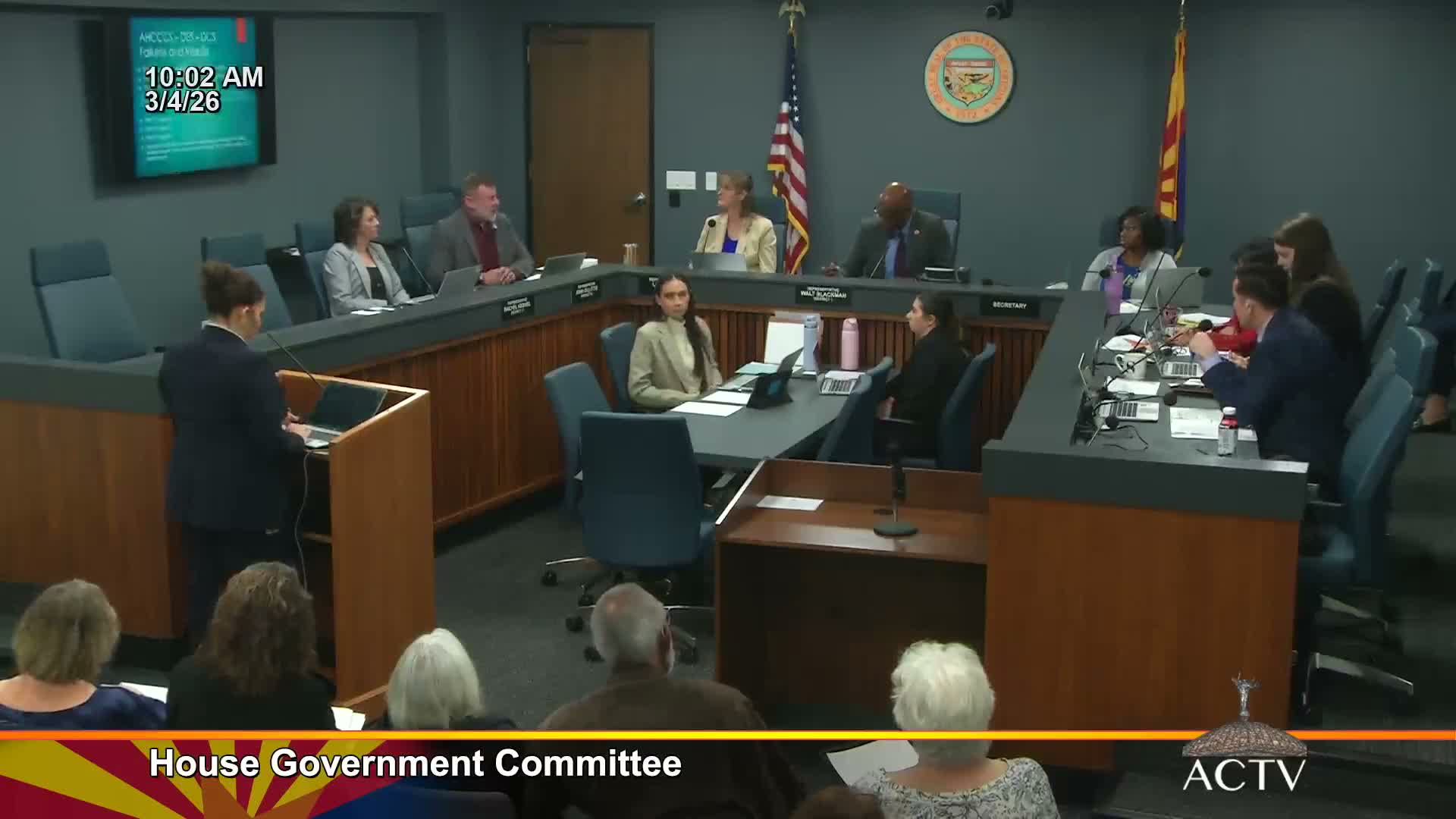
Summary
Rep. John Gillette told a committee review that DCS procurement carve-outs, flat‑fee contracts and per‑placement payments create volume incentives and identified a correlation between the Guardian case‑management rollout and increased removals; he urged a forensic audit. DCS leadership said materials will be shared with special counsel and that further review is needed.
Representative John Gillette presented an extended operational review to the House Committee on Government, focusing on how contract design, procurement carve‑outs and payment structures may influence DCS placement decisions.
Gillette cited state statute ARS 8‑4‑51 to explain that DCS procurement operates differently from normal state procurement. He showed internal slides and budget figures and argued that flat‑fee or capitated payment structures and vendors with large bed inventories create financial incentives for placing children in congregate care rather than with kin. "If it's a flat fee, the only way the vendor can make more money is by more volume," he said, and noted that congregate care spending accounted for large shares of the out‑of‑home budget in his slide materials.
Gillette pointed to the timing of Guardian's statewide implementation (he referenced January 2022) and said removals, out‑of‑home placements and investigation volumes rose afterward; he described the pattern as "suspect" and said the operational design merited further investigation. He also outlined a pattern of vendor concentration and cited concerns about unit‑based billing and other patterns the federal government has associated with improper payments in other contexts.
The director and other witnesses responded that while the agency sees trends and measurement changes tied to events such as high‑profile fatalities, there are multiple causes (including changed measurement tools and provider capacity) and that some issues (for example, trafficking allegations at particular facilities) involve law enforcement and other agencies. Ptak said the department will follow up with local law enforcement on trafficking reports and that some information is being sent to special counsel.
Committee members asked for written material and follow‑up. Gillette said his full set of materials will be provided to the special counsel; he also urged attention to procurement rules and to the budgetary flows that tie access, DES and DCS together.
Because Representative Gillette's remarks include formal accusations about systemic design and possible improper payments, the committee treated them as findings to be examined further; the director did not concede wrongdoing and the committee did not make any legal determinations at the hearing.