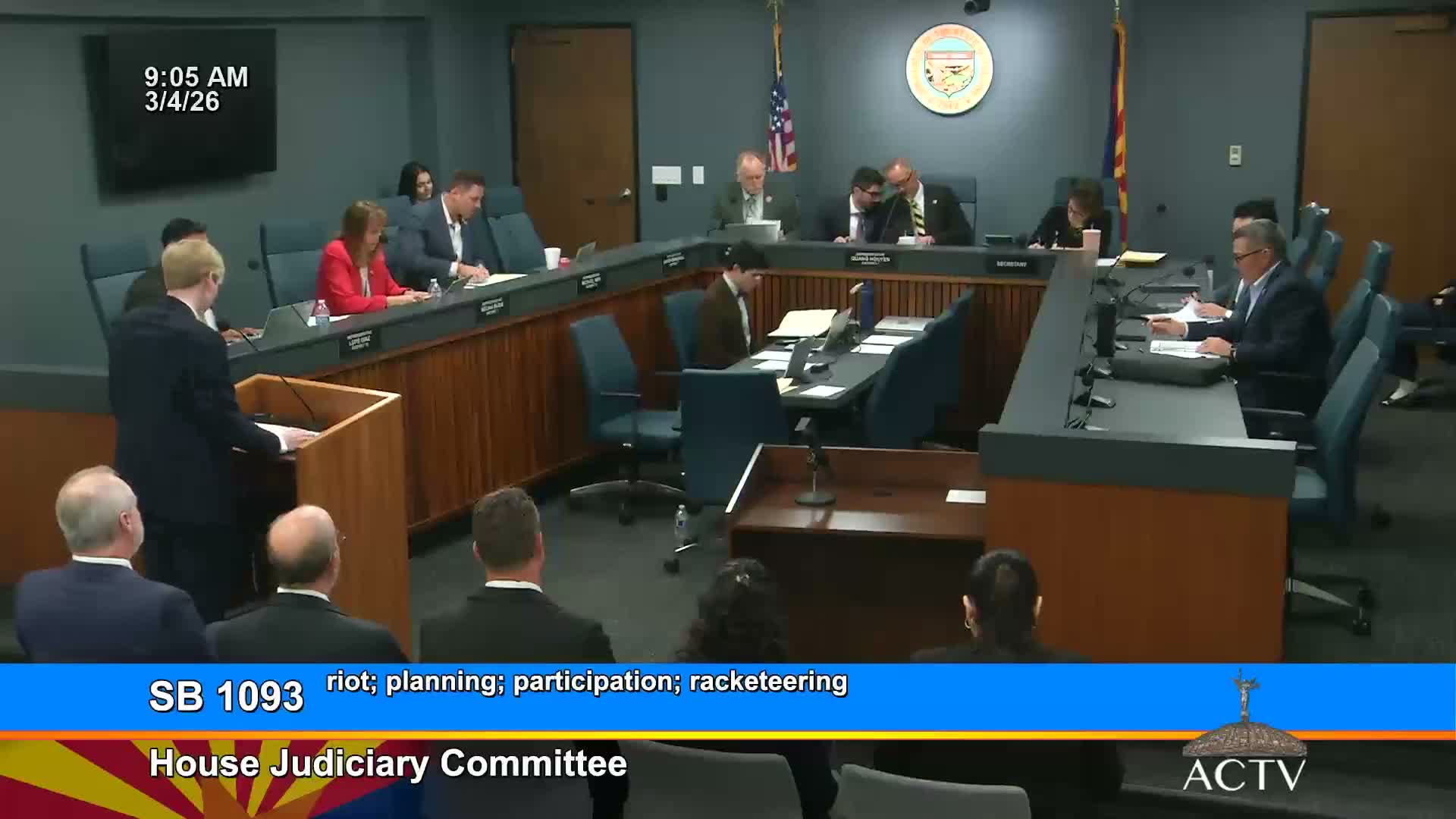
Panel advances bill to broaden 'riot' definition and add it to racketeering; criminal‑justice group warns of overbreadth
Loading...
Summary
SB 10‑93 would expand the definition of riot to include property damage and add riot to racketeering statutes; an opposing witness said the change could sweep in minor acts and eliminate the overt‑act requirement for conspiracy charges; the committee returned the bill with a favorable recommendation.
The Judiciary Committee voted to return Senate Bill 10‑93 with a pass recommendation after staff described the measure as amending the classification of riot to include force or threats that damage property and adding riot to the racketeering list for conspiracy and racketeering prosecutions.
Pamela Hicks of Arizona Attorneys for Criminal Justice testified in opposition. "The first clear and obvious [change] is changing the definition of riot," she said, arguing the proposed language could capture acts as minor as throwing a sandwich or breaking a window and broaden racketeering to sweep in individuals who did not profit from organized crime. Hicks also warned that removing the overt‑act requirement from conspiracy would permit charges without a concrete act: "Now you can charge people for just thinking or thinking about things that don't ever actually come to fruition."
The bill sponsor defended the measure as targeting those who "rent a riot crew" and engage in organized disruptive conduct. The sponsor urged accountability for actors who disrupt government or public order for pay. Following discussion and no additional speakers in favor, the committee moved the bill; the roll call reflected five ayes, two nays and two absences, and the bill was given a pass recommendation.
Why it matters: Supporters framed SB 10‑93 as meant to hold organized, paid actors accountable when riots produce property damage; opponents said the statutory changes risk criminalizing participants in less serious disturbances and removing procedural safeguards in conspiracy law.