
Committee advances bill making surreptitious or coercive administration of abortion drugs a felony
Get AI-powered insights, summaries, and transcripts
Subscribe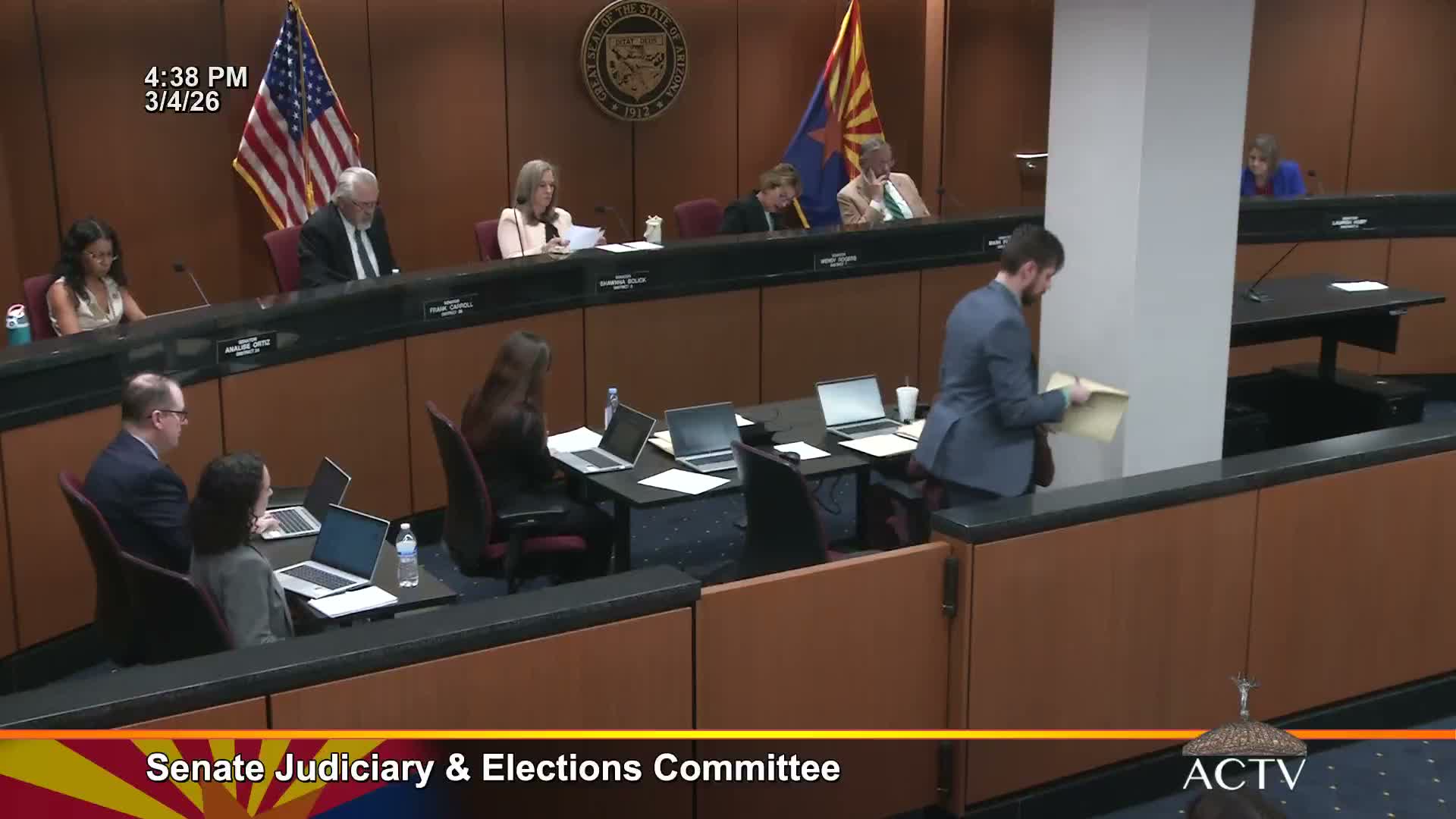
Summary
HB 2411 would criminalize knowingly administering an abortion‑inducing drug without the pregnant person's knowledge or consent as a class 2 felony; supporters cited rare but serious cases, while defense and criminal‑justice advocates said similar conduct is already prosecutable under homicide, assault or food‑contamination statutes.
The Senate Judiciary and Elections Committee gave House Bill 2411 a due‑pass recommendation after hearing testimony about a narrowly described conduct: secretly or coercively administering an abortion‑inducing drug to a pregnant person.
The sponsor told the committee the bill does not change Arizona’s existing abortion law but creates a standalone offense for knowingly giving or administering an abortion‑inducing drug to a pregnant person without her knowledge or consent with intent to cause an abortion. "Providing such medications secretly or through deception would also be prosecuted as a class 2 felony," the sponsor said.
County attorneys and proponents described anecdotal cases where people alleged their reproductive decisions were undermined by coercion or deception. Pinal County Attorney Brad Miller said prosecutors have seen situations in which perpetrators attempted to force or secretly induce abortions, and he argued the statute fills a gap when death does not occur. "If the drug is still administered with the intent to cause the abortion, this would still apply," Miller said when explaining why he supports the measure.
Opponents, including witnesses from the Arizona Attorneys for Criminal Justice, said existing statutes — from assault to manslaughter and homicide — already reach much of the conduct at issue and expressed worry about unintended consequences and prosecutorial discretion. Several senators pressed both sides about whether current law suffices and how the new offense would interact with homicide statutes if a death occurred.
After debate, the committee recorded a 4‑3 vote to give the measure a due‑pass recommendation to the Senate.