
Panel advances bill to require counties to transmit cast vote records to Secretary of State
Get AI-powered insights, summaries, and transcripts
Subscribe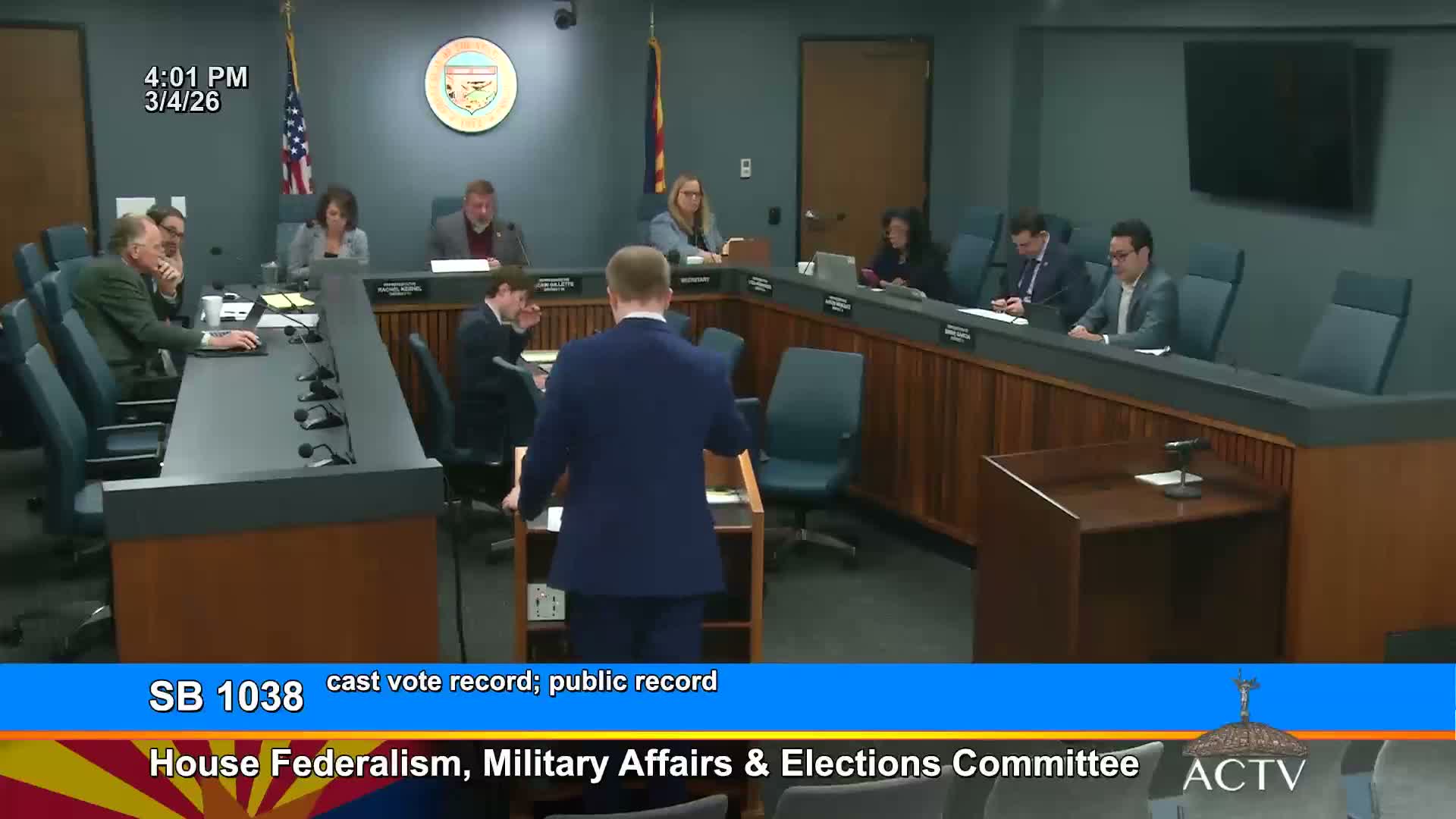
Summary
Senate Bill 1038, which would require county boards or elections officers to transmit the cast vote record (CVR) to the Secretary of State and bar alteration of the transmitted CVR, received a due‑pass recommendation after debate on whether the CVR is already a public record and why the change is needed.
The committee returned Senate Bill 1038 with a due‑pass recommendation following staff explanation and member questioning about current practice and public‑record status of the cast vote record (CVR).
Staff said SB1038 would require a county board of supervisors or an officer in charge of elections to transmit the cast vote record to the Secretary of State and would prohibit the transmitted CVR from being altered unless otherwise prescribed. "SB1038 requires a county board of supervisors or an officer in charge of elections to transmit the cast vote record to the secretary of state and prohibits the transmitted cast vote record from being altered unless otherwise prescribed," staff told the committee.
Members asked whether CVRs are already transmitted to the Secretary of State. Representative Collin noted that counties transmit certified results to the Secretary of State but said it was not clear whether CVRs were routinely transmitted. "They obviously transmit the certified results at the county level up to the SOS...it would be advantageous to have the CVR transmitted to the secretary of state as well," Collin said, arguing the bill would clarify current practice and help preserve a consistent public record.
Other members questioned why a bill is necessary if altering a public record is already prohibited; Chairman Gillette said he was uncertain why the bill was needed unless alteration had occurred in practice. After discussion, the committee voted 4–3 to give SB1038 a due pass.
The committee did not record public testimony for this item during the hearing. The bill will proceed according to legislative procedure.