Get Full Government Meeting Transcripts, Videos, & Alerts Forever!
Get email alerts on the Board Governance topic
No spam. Unsubscribe anytime.
Sheridan SD 48J training stresses governance boundaries, communication protocols and superintendent evaluation
Summary
A training session for Sheridan SD 48J focused on distinguishing board governance from management, establishing communication protocols and preparing for superintendent evaluations. Participants discussed how to raise concerns about spending, information requests, and emergency messaging; no formal votes were taken.
The presenter led a training session for Sheridan SD 48J on tools for collaborative governance, communication protocols and the superintendent evaluation process, stressing that boards should set direction and hold leadership accountable while avoiding operational control.
"Your role is the direction and the accountability and not the operational decisions on the management side," the presenter said, framing the session around the distinction between governance and management and urging members to rely on evidence and clear goals when raising concerns.
The session included practical guidance on how board members should handle concerns about district spending or administrative choices. When a board member asked how to respond if they thought the superintendent was spending district funds inefficiently, the presenter recommended starting a conversation, setting priorities and then reviewing budget line items rather than taking direct managerial action.
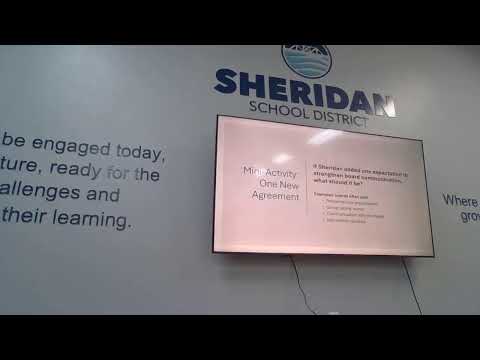
Participants also reviewed communication protocols and emergency messaging. The presenter advised funneling official communications through established alert pathways and district staff to keep the public-facing message consistent, and encouraged members to identify one board strength and one area for improvement in their communications.
A hypothetical scenario prompted discussion about information access: the presenter described a case in which the superintendent refused a board member's request for records, and members debated the balance between the board’s need for information and staff privacy concerns. One board member said the default impulse is to back the superintendent unless facts indicate otherwise; others urged checking with the superintendent before making public statements.
The session covered curriculum adoption procedures and data review, with members noting the importance of examining vendor-supplied studies alongside contradictory evidence and sample materials from curriculum committees. Participants emphasized that staff should provide supporting materials with the agenda when possible to allow informed oversight.
The meeting ended with an accountability discussion about tracking attendance at district events and an exercise in which members identified communication strengths and items to revisit. No motions or formal votes were recorded in the transcript.
The training provides procedural guidance for board members as they prepare for future superintendent evaluations and ongoing governance work.